



Why an autoclave makes sense for keto
In a home kitchen, an autoclave is often thought of as a tool for preserves, but in low-carb cooking its role is broader. It lets you prepare meat, poultry, fish, pates and dense protein-fat foods in closed jars without sugar, grains, flour or starch. What would otherwise require constant watching in a pot or oven becomes a more predictable process: the jar is sealed, the food is heated under pressure, the temperature can rise above the normal boiling point of water, and the final texture becomes softer and more even.
This is especially useful for keto because many practical staples are built around protein and fat: pate, canned meat, chopped meat, fish, offal and meat spreads. These foods do not need sugar as a preserving aid or starch as a thickener. Flavor and structure come from salt, fat, collagen, egg yolks, cream, spices and correct heat treatment. Still, an autoclave is not magic. It does not rescue poor hygiene, old lids, overfilled jars or an uncertain cooking regime. It works only when the whole process is controlled: clean jars, suitable lids, correct headspace, reliable temperature, enough time and safe cooling.
How it differs from an oven and a pressure cooker
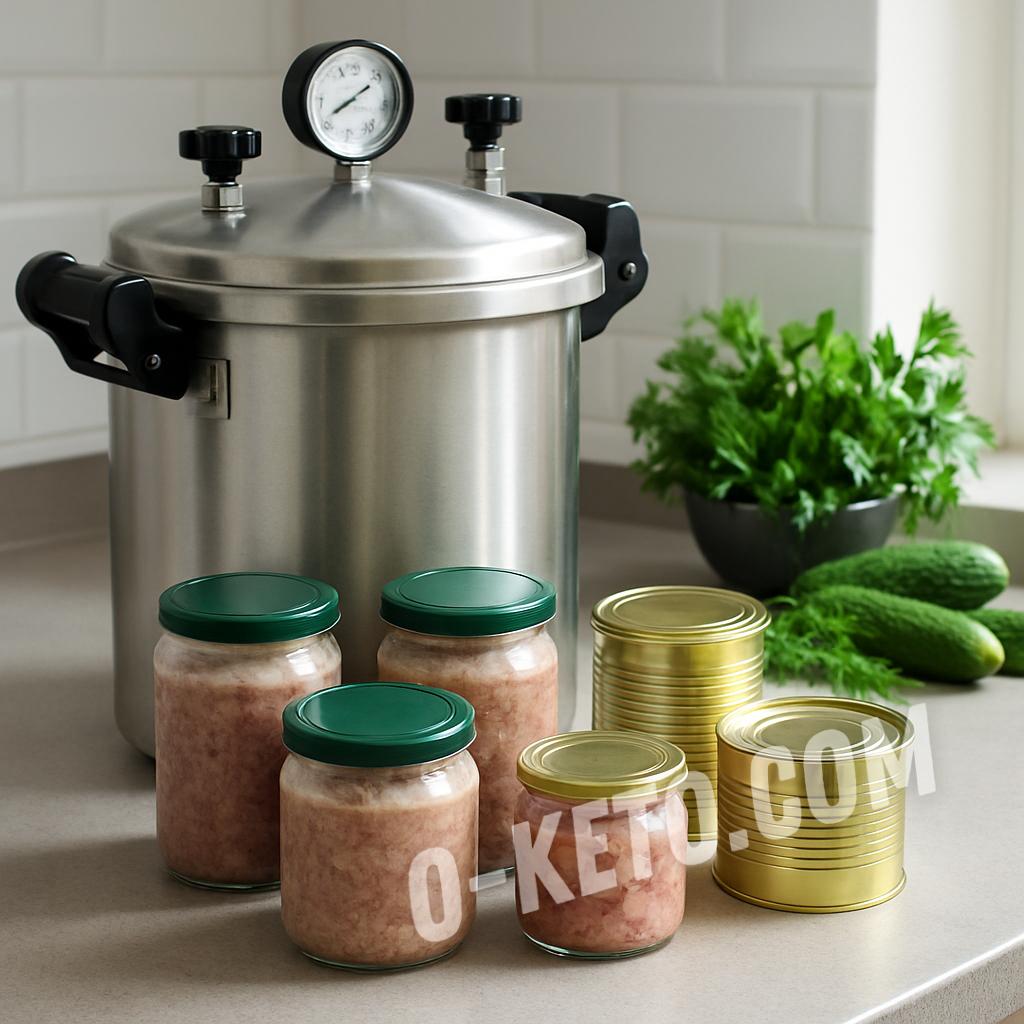
The key feature of an autoclave is processing closed containers under pressure. In an oven, jars usually heat more gently and less evenly, and the result should be treated more like cooked food that needs refrigerator storage. A pressure cooker also works under pressure, but not every model is designed for stable jar processing, controlled venting and a canning-style temperature profile. An autoclave is built specifically for closed jars, so it is easier to control water or steam level, temperature, pressure and holding time.
Water and steam autoclaves are not identical. In a water autoclave, jars are usually surrounded by water, heating is more gradual, and cooling takes time. In a steam autoclave, the appliance may reach the working temperature faster, but the instructions matter even more: the model must vent air correctly, build pressure safely and hold the required regime. Do not move timing mechanically from one type to another. If a recipe gives one schedule for water and another for steam, use the schedule that matches your appliance.
Safety of meat jars
Meat and poultry are high-risk foods when stored in sealed containers, so autoclave preparation should never be done by intuition alone. Jars must be clean and free of chips, and lids must be new or approved for reuse by the manufacturer. Fill the jar only to the shoulders, not to the top. During heating, the contents expand and release juice, fat and steam. Without headspace, the lid may fail, the jar may leak, or the seal may become unreliable.
Temperature and time depend on the autoclave model, jar size, density of the food and composition of the recipe. A pate, chopped meat and a solid piece of meat do not heat at the same speed. Heat moves more slowly through a thick paste than through broth, which is why even packing and reasonable jar size matter. Nitrite salt in meat recipes supports flavor, color and technological stability, but it is not a replacement for pressure processing and does not justify shortening the regime. Phosphate, when used, improves texture and moisture retention; it is not an independent safety guarantee.
Open the autoclave only after pressure and temperature have dropped safely. Early opening is dangerous for both the cook and the food: jars can boil violently, lids can loosen, and liquid can escape. After cooling, check the lid, the jar surface and the appearance of the contents. Swelling, leakage, hissing, unexpected cloudy liquid, mold, gas or an unpleasant odor are reasons to throw the jar away without tasting.
How it fits an LCHF routine
Practically, an autoclave is valuable for people who eat low-carb for months, not for one weekend. One batch can give you several jars of reliable protein: pate for vegetables, meat for salads, fish for a quick dinner, or a base for soup and sauce. This reduces dependence on random snacks, sausages with sugar, commercial pates with starch and convenience foods whose labels need detective work.
Autoclave food is still food, not a medical protocol. Salt tolerance, fat content, total protein intake and ingredient quality still matter. For everyday keto, choose meat without sweet marinades, spices without sugar, cream and cream cheese without starch, and if a recipe needs a small sweet note, use allulose or another suitable low-carb sweetener in a minimal amount. Used this way, the autoclave is not a separate preserving hobby but a calm, practical tool for home cooking.


