


"Orthomolecular Medicine for Everyone: Megavitamin Therapeutics for Families and Physicians," Abram Hoffer, Andrew W. Saul, 2008
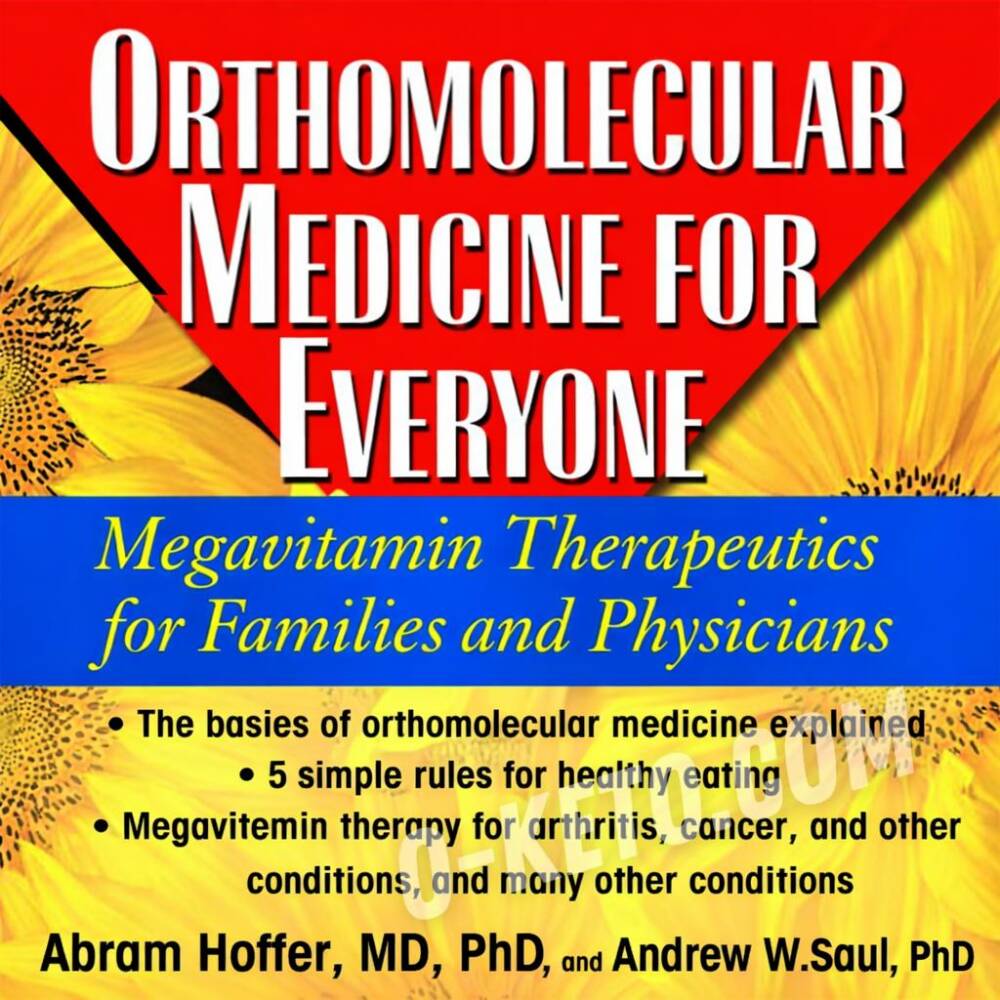
This book is a systematic and practical introduction to orthomolecular medicine — an approach based on the use of optimal, rather than minimal, doses of vitamins, minerals, and other nutrients to maintain health and treat diseases. The authors demonstrate that many chronic and mental illnesses are the result of biochemical individual differences and nutrient deficiencies that cannot be corrected by standard dietary recommendations or solely by medication therapy. Special attention is given to niacin (vitamin B3), vitamin C, vitamin E, vitamin D, other B vitamins, and minerals, as well as their role in the treatment of mental disorders, cardiovascular diseases, arthritis, cancer, allergies, epilepsy, and age-related brain disorders.
The key idea of the book is the principle of individuality: nutrient needs can vary by orders of magnitude, and it is precisely the consideration of these differences that allows for sustainable therapeutic results. Ultimately, the authors arrive...

29.01.2026. "The Proof: Successes with Cellular Nutrients Confirm Vitamin Research Findings," Matthias Rath, 2012
The book is a collection of documented testimonies from patients with various oncological diagnoses who used the approach of cellular...

27.01.2026. "Road Map to Health," Matthias Rath, 2007
The book is a manifesto of orthomolecular and cellular medicine, in which Matthias Rath asserts that the main chronic diseases of mod...

This book is a manifesto of orthomolecular medicine, written by a practicing physician and a student of Linus Pauling's ideas. Kunin...

In this book, Abram Hoffer — one of the founders of orthomolecular psychiatry — summarizes over half a century of experience working...

24.01.2026. "Progesterone in Orthomolecular Medicine," Raymond Peat, 1993
In this work, Raymond Peat considers progesterone not as a "reproductive hormone," but as a universal protective and regulatory facto...

This book is a comprehensive collection of works and clinical observations by 65 leading specialists in the field of orthomolecular m...

In this book, one of the founders of orthomolecular psychiatry elaborates on the biochemical concept of schizophrenia and an approach...

20.01.2026. Orthomolecular Medicine: Healing Cancer, Abram Hoffer, Linus Pauling, 2004
The book is dedicated to the orthomolecular approach in the treatment of oncological diseases and considers cancer not only as a loca...

19.01.2026. "Ortho-Molecular Nutrition: New Lifestyle for Super Good Health," Abram Hoffer, Morton Walker, 1978
This book is one of the key practical expositions of the orthomolecular approach to health, based on the idea that for the normal fun...

18.01.2026. Nutrition and Mental Illness: An Orthomolecular Approach, Carl C. Pfeiffer, 1988
In the book, the author systematically presents the orthomolecular approach to mental disorders, considering them as a consequence of...
What Is Orthomolecular Medicine?
Orthomolecular medicine is based on the idea that health and disease are determined by the biochemistry of the body and individual nutrient needs. It focuses on the use of "the right molecules in the right amounts," meaning vitamins, minerals, amino acids, and fatty acids in doses that are optimal for the individual rather than averaged across the population.
The principle of individuality is emphasized: differences between people in absorption and needs can be significant, so standard norms often do not work for chronic and mental illnesses.
The Use of Food Supplements
Dietary supplements are viewed as a necessary tool for correcting deficiencies that cannot be met by diet alone. Modern food is low in nutrients, and stress, infections, toxins, and medications significantly increase the body's needs. Supplements are used not as a replacement for nutrition but as a way to restore normal biochemistry and create conditions for self-healing, often in doses that exceed official recommendations.
Niacin (Vitamin B3)
Niacin plays a central role in orthomolecular therapy, especially in psychiatry. It is involved in energy metabolism, the functioning of the nervous system, and the regulation of lipid profiles. The book shows that high doses of niacin may be necessary in cases of schizophrenia, depression, anxiety disorders, and the effects of chronic stress, as well as in cholesterol metabolism disorders. It is emphasized that B3 deficiency can be functional and may require gram doses for correction.
Vitamin C (Ascorbic Acid)
Vitamin C is considered not only as an antioxidant but also as a key factor in immune protection, detoxification, and tissue repair. The authors describe its role in infections, allergies, cancer, and stress conditions. It is emphasized that the need for vitamin C sharply increases during illness, and therapeutic doses can far exceed preventive ones.
Vitamin E
Vitamin E is presented as an important protector of cell membranes and a regulator of inflammatory processes. It plays a significant role in the prevention and support of treatment for cardiovascular diseases, degenerative processes, and immune function disorders. It is emphasized that the effectiveness of vitamin E depends on dosage, form, and balance with other antioxidants, rather than on minimal daily norms.
The Other B Vitamins and Vitamin A
Other B vitamins are viewed as an interconnected system that supports the functioning of the nervous system, energy metabolism, and detoxification processes. A deficiency of one B vitamin is often masked or exacerbated by deficiencies of others.
The authors emphasize the importance of thiamine, riboflavin, pyridoxine, folates, and vitamin B12 in neurological, psychiatric, and metabolic disorders.
Vitamin A is presented as a key regulator of growth, immunity, and the integrity of epithelial tissues, with a focus on the fine line between deficiency and excess consumption and the need for individual dose adjustments.
Vitamin D
Vitamin D is described not as an ordinary vitamin but as a hormone-like substance that affects immunity, bone metabolism, muscle function, and the nervous system. Its role in the prevention of chronic inflammatory, autoimmune, and degenerative diseases is emphasized.
The authors point out that standard recommendations often do not cover real needs, especially in cases of insufficient sunlight, and that correcting deficiencies may require significantly higher doses.
Other Important Nutrients
This category includes amino acids, fatty acids, and other biologically active substances necessary for normal brain function, hormonal regulation, and tissue repair. The significance of tryptophan, tyrosine, and other amino acids in regulating mood and sleep, as well as the role of essential fatty acids in maintaining the structure of cell membranes and anti-inflammatory processes, is noted. It is concluded that ignoring these nutrients significantly reduces the effectiveness of any therapy.
Minerals
Minerals are viewed as fundamental cofactors in enzymatic reactions and regulators of neuromuscular conductivity, hormonal balance, and detoxification. Special attention is given to magnesium, zinc, calcium, selenium, and iron, deficiencies of which are widespread and often undiagnosed. It is emphasized that mineral needs are highly individual, and standard norms do not reflect real physiological needs in cases of stress, chronic diseases, and metabolic disorders.
Gastrointestinal Disorders
The gastrointestinal tract is considered a key link in health, affecting nutrient absorption and overall body condition. The authors emphasize that many gastrointestinal disorders are related not only to infections or structural damage but also to deficiencies of B vitamins, vitamin C, magnesium, and other nutrients. Restoring the mucosa, normalizing acidity, and enzymatic activity require targeted nutritional support, without which medication provides only temporary relief.
Cardiovascular Disease
Cardiovascular diseases are viewed as a consequence of chronic metabolic disorders, inflammation, and oxidative stress. Special attention is given to the role of niacin in normalizing lipid profiles, vitamin C in supporting vascular walls, and magnesium in regulating heart rhythm. It is emphasized that correcting deficiencies can significantly reduce the risk of complications and slow disease progression, especially in the early stages.
Arthritis
Arthritis is described as an inflammatory and degenerative condition where nutrition and nutritional status play a crucial role. The authors show that deficiencies of vitamin C, vitamin E, niacin, and minerals exacerbate inflammation and slow the recovery of connective tissue. The orthomolecular approach aims to reduce the inflammatory background, support collagen synthesis, and improve quality of life, rather than just suppressing symptoms.
Cancer
Cancer is viewed in terms of disrupted cellular metabolism, antioxidant protection, and immune response. The book discusses the role of high doses of vitamin C, vitamin A, and other nutrients in supporting the body during illness and treatment. It is emphasized that nutritional therapy does not replace standard methods but can enhance the body's resilience and reduce the side effects of aggressive treatment.
The Aging Brain
Brain aging is linked not only to age but also to accumulated nutrient deficiencies, chronic inflammation, and oxidative stress. The authors emphasize the importance of B vitamins, niacin, antioxidants, and fatty acids for preserving cognitive functions and preventing dementia.
The orthomolecular approach views age-related changes as largely reversible with timely correction of brain biochemistry.
Psychiatric and Behavioral Disorders
Mental and behavioral disorders are viewed as manifestations of disrupted brain biochemistry rather than solely psychological or genetic issues. The authors show that deficiencies of B vitamins, niacin, vitamin C, amino acids, and minerals may underlie depression, anxiety disorders, psychoses, and behavioral disturbances. The orthomolecular approach aims to restore neurotransmitter balance and reduce the need for symptomatic psychotropic medications.
Epilepsy and Huntington’s Disease
In epilepsy and Huntington's disease, the role of metabolic and nutritional factors in the severity of symptoms and the rate of progression is emphasized. The book discusses the significance of B vitamins, magnesium, and other cofactors for stabilizing nerve conductivity and reducing neurotoxicity. Nutritional support is viewed as a way to improve quality of life and increase the resilience of nerve tissue to degenerative processes.
Allergies, Infections, Toxic Reactions, Trauma, Lupus, and Multiple Sclerosis
These conditions are united by the common theme of immune system overload and detoxification disorders. The authors point to the importance of vitamin C, vitamin A, antioxidants, and minerals in regulating immune response and reducing inflammation. Orthomolecular therapy aims to reduce toxic load, support tissue recovery after trauma, and mitigate autoimmune processes, including lupus and multiple sclerosis.
Skin Problems
Skin problems are viewed as reflections of internal disorders—deficiencies of vitamins A, C, E, B vitamins, and minerals, as well as liver and intestinal dysfunctions. It is emphasized that skin symptoms are often a result of systemic issues, and their correction requires a nutritional approach aimed at restoring metabolism, antioxidant protection, and tissue regeneration, rather than just external treatment.