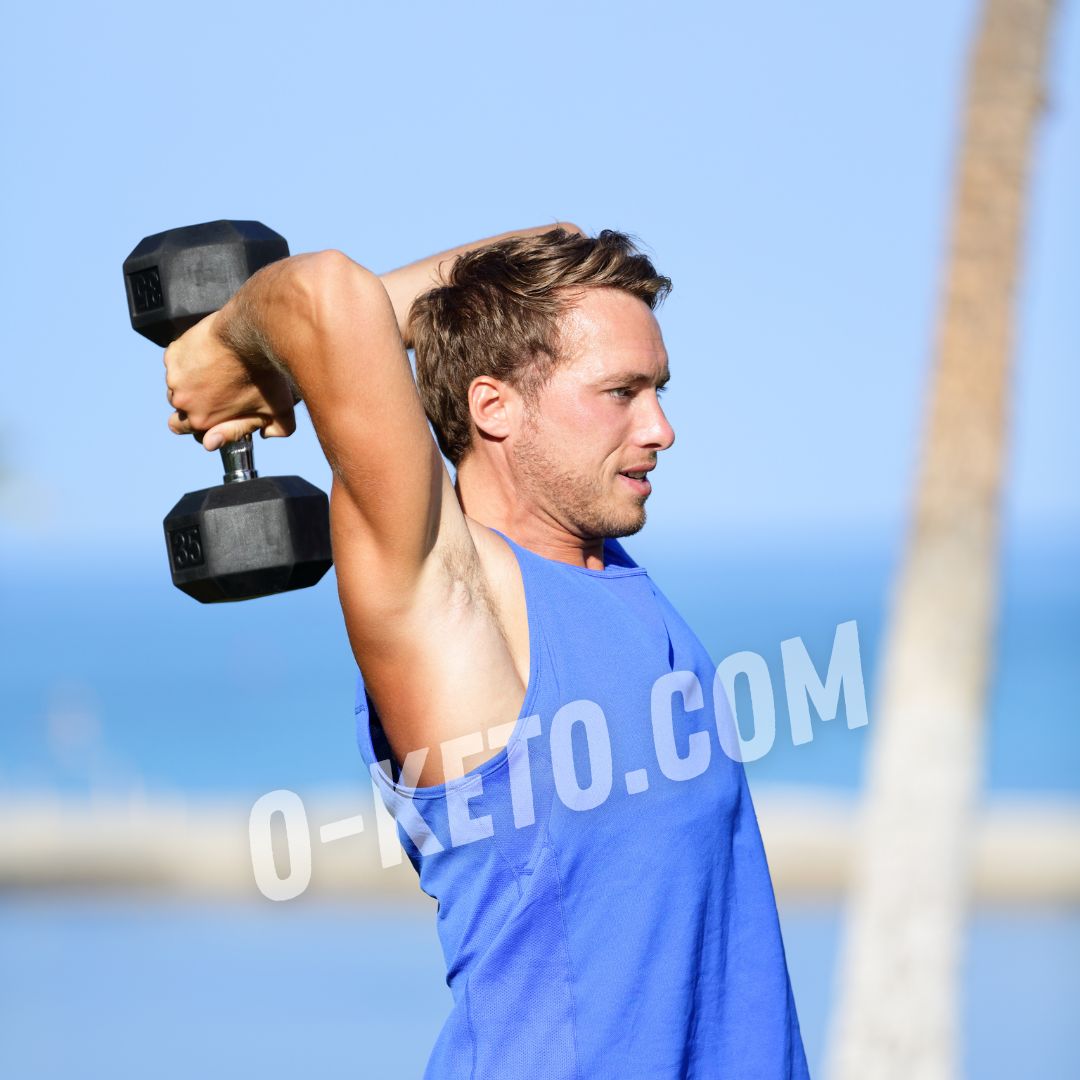

The French press is an isolation exercise focused on developing the triceps. It allows for the engagement of all three heads of the triceps, with a particular emphasis on the long head, contributing to increased size and strength in the back of the arms.
The French press can be performed in various positions: lying down, sitting, or standing. In this exercise, the barbell, dumbbells, or cable is lowered behind the head, and the movement occurs exclusively at the elbow joints, allowing for a focus on the triceps’ work.
The French press is an excellent exercise for those looking to develop strong and defined triceps. It effectively isolates the back of the arm and helps increase both size and strength.
Muscles Worked During the French Press
Triceps (three-headed muscle of the arm): the primary load is placed on the long head of the triceps, which is responsible for the arm’s volume.
Stabilizer Muscles:
- abs and lower back (when performed standing).
- Forearms (engaged in holding the weight).
Technique

Starting Position:
- Lie on a flat bench and take the barbell with a straight or EZ grip (it is recommended to use an EZ bar to reduce wrist strain).
- Lift the barbell above your chest, straightening your arms, but do not lock your elbows.
Lowering:
- Slowly bend your elbows, lowering the barbell behind your head or to forehead level (depending on the range of motion).
- Your elbows should remain still and not flare out to the sides.
Raising:
- Engage your triceps and straighten your arms, returning the barbell to the starting position.
- Do not fully extend your elbows to maintain tension in the muscles.
Variations
With a Barbell (EZ Bar):
A classic option where the EZ bar helps reduce wrist strain.
With Dumbbells:
Each arm works independently, which helps eliminate muscle imbalances.
Using a Machine or Cable:
Using a cable or machine provides constant tension.
With One Dumbbell:
The dumbbell is held with both hands, making the movement smoother and safer for the elbows.
Standing or Sitting:
When performed standing, stabilizer muscles are more actively engaged; sitting makes the movement more isolated.
Benefits
Triceps Development: the exercise isolates the triceps, ensuring effective training.
Increased Arm Volume: the triceps comprises a large portion of the arm’s mass, so its development makes the arms visually larger.
Improved Strength: strong triceps are necessary for progressing in bench presses and other exercises.
Variability: the exercise can be performed with various equipment and in different positions.
Common Mistakes and How to Avoid Them
Flaring Elbows Outward: This reduces the load on the triceps and increases the risk of shoulder injury.
Keep your elbows stationary and pointed upward.
Using Too Much Weight: This increases strain on the elbows and wrists, worsening technique.
Start with a moderate weight and gradually increase it.
Excessive Elbow Extension: This can overload the joints.
Do not fully straighten your elbows.
Jerky Movements: Can lead to injuries.
Perform the exercise slowly and in a controlled manner.
Improper Breathing: Holding your breath reduces effectiveness.
Inhale while lowering, exhale while lifting.
Comparison with Other Triceps Exercises
Narrow Grip Press: focuses on strength and mass, involving the chest muscles.
French Press: isolates the triceps, focusing on the long head.
Tricep Extensions on the Cable: easy on the joints, suitable for finishing a workout.
Sources
- Effect of shoulder position on triceps brachii heads activity in dumbbell elbow extension exercises
- The different role of each head of the triceps brachii muscle in elbow extension
- Triceps brachii hypertrophy is substantially greater after elbow extension training performed in the overhead versus neutral arm position
- Influence of exercise order on electromyographic activity during upper body resistance training