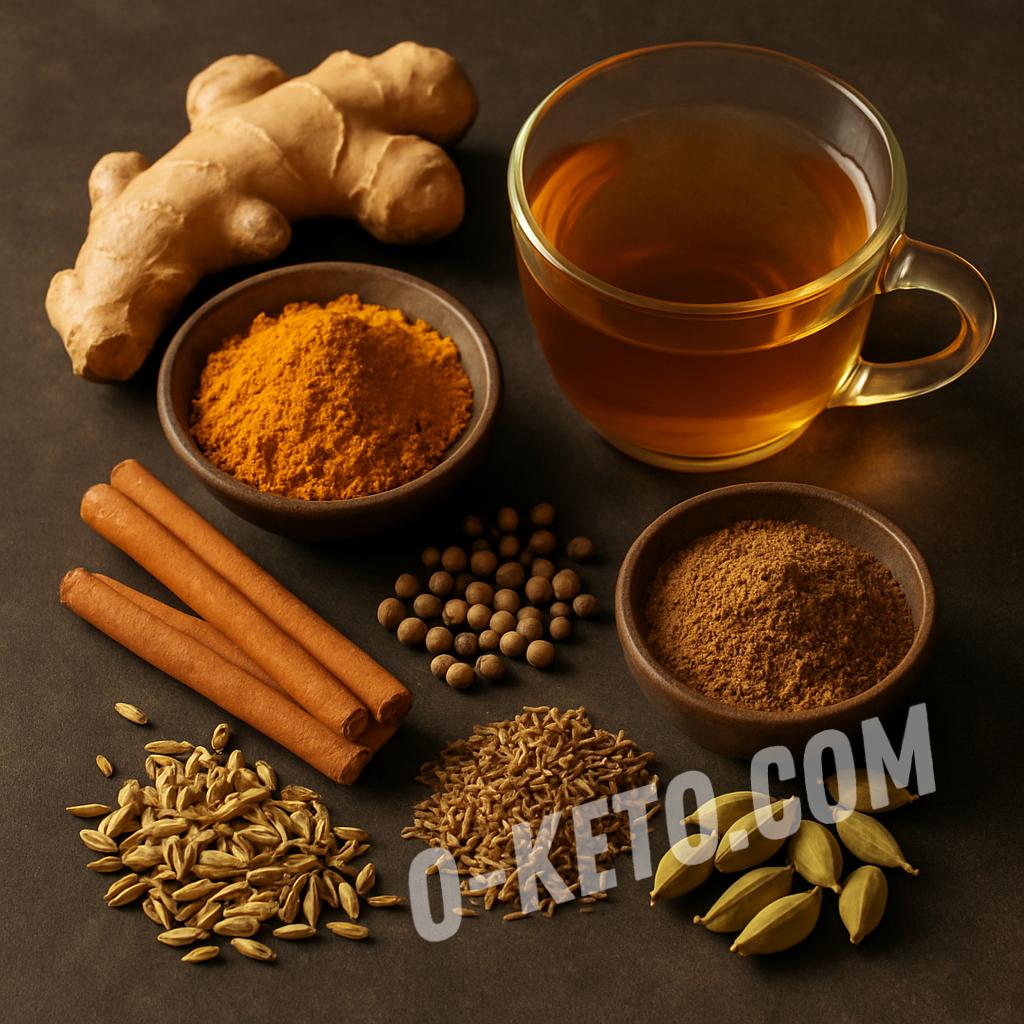

Spices can genuinely support digestion, but not because they “treat the stomach” instead of a doctor. Their strength is different: they improve flavor, stimulate saliva, help trigger digestive juices, support motility and bile flow, and make food feel less heavy and flat.
In low-carb cooking this is especially useful. Without sugar, flour, starch, and sweet sauces, spices provide depth, warmth, freshness, heat, and a finished flavor. But the more active a spice is, the more dosage and context matter: a pinch of cinnamon in dessert is one thing, therapeutic doses of turmeric or ginger with digestive disease or medication are another.
How spices support digestion
Digestion begins before food reaches the stomach. The aroma of ginger, coriander, fennel, cumin, cardamom, pepper, or cinnamon increases anticipation of food, supports saliva production, and makes taste clearer. This already helps the first stage of digestion.
Spices can then act as a gentle culinary stimulus for the stomach, bile, enzymes, and intestinal motility. The key word is gentle: in normal food amounts they can make a dish easier to perceive, but they do not replace diagnosis or treatment for gastritis, pancreatitis, gallstones, or irritable bowel syndrome.
The most useful effects
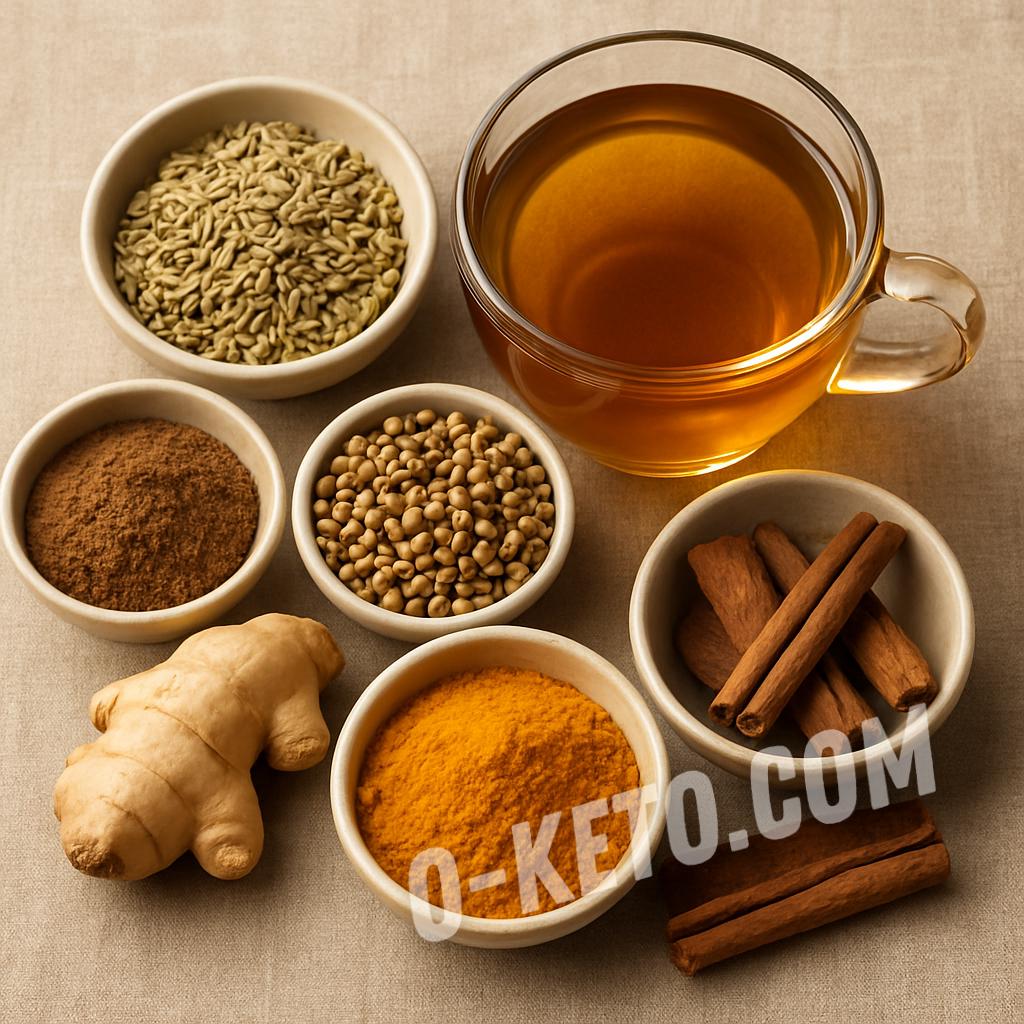
Different spices have different strengths. For digestion, careful combinations are often more useful than one miracle spice: coriander, fennel, and cumin for gas; ginger and cardamom for warmth; cinnamon for sweetness without sugar.
- Appetite and saliva support. A little ginger, lemon, salt, or aromatic spice before a meal can make food more recognizable to taste receptors.
- Bile-flow support. Turmeric, ginger, bitter spices, and warm spices can stimulate bile response, but gallstones require caution.
- Less heaviness. Coriander, fennel, cumin, anise, and cardamom are often used with foods that may cause gas or bloating.
- Better balance for fatty food. Pepper, ginger, mustard, acidity, and herbs help rich dishes feel brighter and less flat.
- Less dependence on sugar. Cinnamon, cardamom, vanilla, anise, and ginger create a sweet impression without added sugar.
Why spices should not be used as medicine carelessly
A culinary dose and a therapeutic dose are different things. A pinch of turmeric in eggs, a little cinnamon in cottage cheese, or ginger in a marinade belongs to food. Teaspoons of powder, concentrated infusions, daily “courses,” and attempts to treat abdominal pain with spices require another level of caution.
The main danger is mistaking a symptom for weak digestion when medical care is needed. Severe abdominal pain, vomiting, blood, sudden worsening, high fever, jaundice, pronounced weakness, or pain after fatty food when the gallbladder is suspect are not situations for spice experiments.
When extra caution is needed
Spices are not harmful by default. Risk appears when an active spice is used in the wrong context, too often, in large doses, or with a condition where stimulation of the stomach, bile, circulation, or mucosa is undesirable.
- flare-ups of gastritis, ulcers, esophagitis, GERD, or ulcerative colitis;
- acute or aggravated pancreatitis, cholecystitis, or hepatitis;
- gallstone disease, especially with large stones or pain attacks;
- pregnancy and breastfeeding, when spice choice and dosage should be reduced;
- anticoagulants, antiplatelet drugs, and other medication affecting blood clotting;
- bleeding tendency, surgery, active ulcers, severe anemia;
- individual intolerance, burning, rash, itching, or worsening after a specific spice.
Ginger: warming, but not suitable for everyone
Ginger stimulates digestion, makes fatty and protein-rich foods brighter, and pairs well with lemon, cardamom, cinnamon, garlic, turmeric, and pepper. In cooking, it works in marinades, sauces, tea, desserts, fish, poultry, and vegetables.
Fresh ginger is sharper than dried ginger. With sensitive mucosa, hyperacid gastritis, ulcerative processes, GERD, burning sensations, bleeding, or blood-thinning medication, it is better to be careful. In food this usually means small doses, watching your reaction, and avoiding concentrated ginger drinks if symptoms worsen.
Turmeric: bile, liver, and anti-inflammatory potential
Turmeric is valued for curcumin, warm bitter-spicy flavor, bright color, and its ability to fit eggs, poultry, fish, vegetables, soups, sauces, and curry blends. In culinary doses it is usually safe, but too much can make food bitter.
Caution is needed with gallstones, large stones, liver or gallbladder flare-ups, pregnancy, and large doses. Black pepper and fat increase curcumin absorption, but they also make the blend more active, so “more is better” is a poor rule here.
Cinnamon and cassia: similar flavor, different risk profile
Cinnamon helps create sweetness without sugar and works well with cottage cheese, cream, cocoa, coffee, nuts, low-carb baking, and spiced drinks. It is useful when you want dessert flavor without syrups and flour.
Cassia, however, is not the same as Ceylon cinnamon. Cassia tastes stronger and usually contains much more coumarin. In large amounts, coumarin may be a concern for the liver and blood clotting, so Ceylon cinnamon is better for frequent use, while cassia should be used moderately. Caution is also needed with blood-thinning medication and bleeding tendency.
How to use spices more safely
The safest approach is to treat spices as a powerful culinary tool. Do not start with therapeutic doses, complex infusions, or ten active components at once. Add a small amount to food and see whether the dish becomes easier and more pleasant for you.
- start with a pinch or 1/4 teaspoon per dish, especially with ginger, chili, clove, nutmeg, asafoetida, and cassia;
- do not combine many hot spices at once if you have GERD, burning, or a sensitive stomach;
- for bloating, choose gentler seeds more often: fennel, coriander, cumin, anise;
- for fatty food, add not only heat but also acidity, herbs, bitterness, and salt to taste;
- do not use spices to suppress pain, nausea, vomiting, or other warning symptoms;
- if you take medication or are pregnant, do not move from culinary doses to therapeutic doses without a doctor.
The main takeaway
Spices support digestion when they work as part of food: they improve aroma, help fatty and protein-rich dishes feel better, and support saliva, bile response, and motility. But they should not become homemade treatment. Healthy cooking needs small doses, clear combinations, and attention to contraindications.
Sources
- Effects of Ginger on Gastric Emptying and Motility in Healthy Humans — European Journal of Gastroenterology & Hepatology
- Ginger on Human Health: A Comprehensive Systematic Review of 109 Randomized Controlled Trials — Nutrients
- Ginger in Gastrointestinal Disorders: A Systematic Review of Clinical Trials — Food Science & Nutrition
- Orally Consumed Ginger and Human Health: An Umbrella Review — Nutrition Reviews
- Turmeric: Usefulness and Safety — National Center for Complementary and Integrative Health
- Dietary Supplements: What You Need to Know — National Institutes of Health Office of Dietary Supplements