
Clear soups only seem simple from a distance. In practice they expose every mistake very quickly: a cloudy stock, clumsy cuts, heavy garnish, excess fat, harsh seasoning, or a filling that looks careless in the spoon. A thick soup can hide a lot behind texture, but consomme and other clear soups show everything openly. That is why flavor alone is not enough here. Clarity, restraint, and intelligent garnish matter just as much as richness.
A good clear soup begins with a clean stock, but even a flavorful stock that came out slightly cloudy can often be refined through clarification. That is where consomme begins: a broth that stays full in taste yet becomes almost glass-like in appearance. In a home kitchen this is not only a restaurant flourish. It is a practical technique for moments when you want something more elegant and more disciplined than an ordinary pot of soup.
What consomme is and how it differs from ordinary clear broth
Not every clear broth is automatically a consomme. A well-made broth can already be clear enough for many everyday tasks if it was simmered gently and strained carefully. Consomme is a further step. It is clarified so that fine suspended particles leave the liquid while the flavor stays concentrated and coherent. The result is a soup through which you can literally see the bottom of the cup.
That clarity is not only cosmetic. Clarification removes a muddy heaviness, makes the broth feel lighter, and opens the door to more delicate garnish choices. At the same time consomme should never become empty water. If the flavor disappears together with the cloudiness, the starting broth was too weak or the technique was mishandled.
When clarification is actually worth doing
Clarification is not needed for every soup. If you are making a comforting family chicken soup and natural slight cloudiness does not bother you, there is no reason to force it into consomme. But when you want a broth cup, an elegant portioned soup, a holiday first course, or a very clean base for a refined garnish, clarification becomes extremely useful.
It is especially helpful when the stock tastes good but became a little cloudy because of overly active boiling or fine protein particles. Instead of discarding it, you can often repair it gently. The key is not to rush and not to attack the problem with high heat.
How the classic raft works
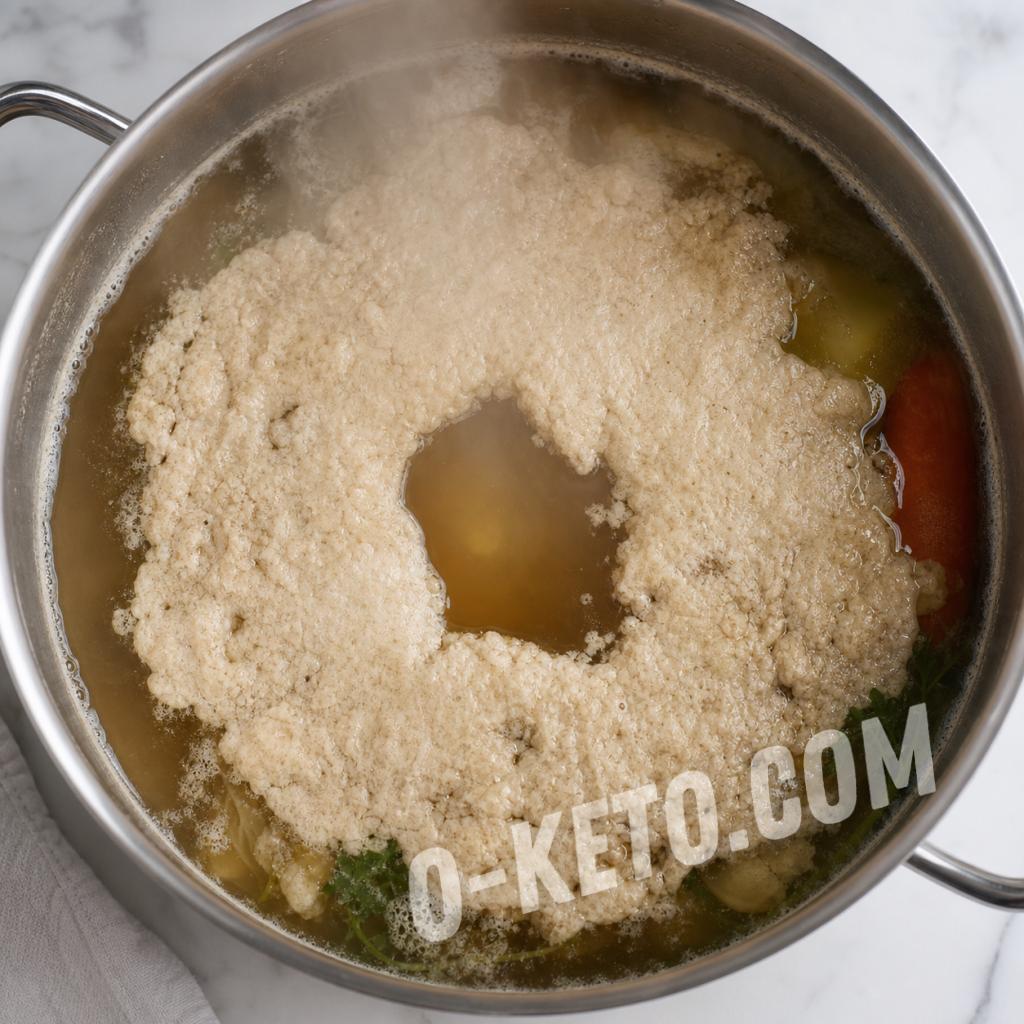
The classic home method uses egg whites and lean minced meat from the same kind of animal as the broth itself. Chicken consomme is clarified with chicken, beef with beef, and so on. This is important because the clarification mixture should support the flavor of the broth rather than distort it. Using the wrong meat can shift the aroma in a strange direction.
Egg whites, minced meat, a little salt, onion, and cold water form a mixture that slowly gathers into a protein raft as the pot heats. That raft acts like a filter and traps the fine particles that make the broth look dirty. If the liquid heats too quickly, the proteins coagulate into large rough clumps and the cloudiness does not bind properly. That is why both the broth and the added water should start cold.
Why cold start and low heat matter so much
Gradual heating is one of the central rules of consomme. The raft mixture is added to cold broth and the pot is heated slowly. While the liquid is still cool, the mixture can be spread evenly. Once the raft begins to form, it should no longer be disturbed. At most, in the beginning you may run a spatula gently along the bottom once or twice to keep the mixture from sticking or scorching.
After that the rule is simple: no vigorous boil and no active stirring. A small opening may be made in the raft so you can watch the liquid move gently underneath, but the filter itself should stay intact. Clarification usually takes roughly 25 to 40 minutes depending on volume and heat intensity.
What to do if the broth stays cloudy
Sometimes the first pass does not produce perfect clarity. The usual reasons are too much heat, too much bubbling, or a raft that was not distributed properly at the start. In that case the broth can be clarified again with a fresh portion of whites and cold water. It is not ideal, but it is workable. What does not help is aggressive reduction in the hope that cloudiness will somehow disappear. That only concentrates the problem.
There is also a gentler freeze-thaw method in which the broth is frozen and then thawed through cloth or a dense filter. This can produce a clearer liquid, but it does not strengthen the flavor the way a classic meat-and-white raft can. For true consomme the raft method remains the stronger technique.
Which garnishes work best in clear soups
The main rule for garnish is that it should not fight the clarity. The spoon should be able to pick up broth and garnish together without awkwardness. That is why huge rough pieces, heavy smoked meats, bright acidic pickles, or a chaotic mixture of too many elements usually fail. Consomme likes clean shapes and two or three understandable components, not a crowded bowl.
Small neat pieces of chicken or beef, tiny vegetable dice, strips of omelet, little dumplings, a touch of herbs, miniature ravioli, or a modest portion of a neutral starch-free filler all work much better. Fish-based clear soups should logically use fish or seafood garnish, chicken soups should lean toward chicken, and beef soups toward beef or root vegetables. The garnish should support the broth rather than drag it toward another cuisine.
Why garnish should be cooked separately
Another frequent mistake is cooking garnish directly in the finished consomme. That is an easy way to lose clarity because the garnish can release starch, fat, or fine particles into the liquid. It is much safer to cook each component separately, place the garnish in the bowl first, and only then pour the hot clear broth over it. That way both appearance and texture stay under control.
This matters especially with vegetables. Carrot, turnip, celery, leek, and other elements all behave differently and need different times. If everything is cooked inside the consomme itself, you often end up either with overcooked garnish or with a broth that loses its brightness. Separate preparation gives precision.
How to match garnish to the broth
Chicken consomme works well with thin slices of chicken, omelet cubes, gentle carrot, a little fresh herb, small dumplings, or fine strips of egg crepe. Beef consomme pairs well with tiny meat pieces, root vegetables, compact vegetable pearls, very small ravioli, or restrained savory vegetable dice. Fish clear soups prefer pieces of fish or seafood, a little dill or leek, and discreet vegetable notes rather than creamy or smoky accents.
If you want a more refined service, keep the garnish minimal. If you want a more homestyle and filling bowl, increase the garnish slightly but not to the point where the broth nearly disappears. Once a clear soup turns into a crowded bowl where the broth is visually secondary, consomme loses its point.
Serving and the final details
Clear soups look best in pale or transparent dishes that let the color of the liquid show. Before serving it often helps to remove excess surface fat if the goal is lightness and transparency. Herbs should be used with restraint, and salt should be finalized only after the very last tasting because visual elegance cannot rescue an oversalted broth.
If the clarified raft leaves behind a protein-and-meat mass, it does not have to be thrown away automatically. In a home kitchen it can be reused elsewhere if the flavor is still pleasant. The one thing you should not do is return it to the clear soup you worked so hard to purify.
The main principle
Clear soups and consomme become beautiful not because of complicated restaurant tricks, but because of discipline in small things: a clean base stock, a cold start for the raft, gentle heat, no violent boiling, careful straining, and garnish prepared separately. When those details are respected, even a very simple soup can look elegant and taste far more precise than an ordinary home pot.