

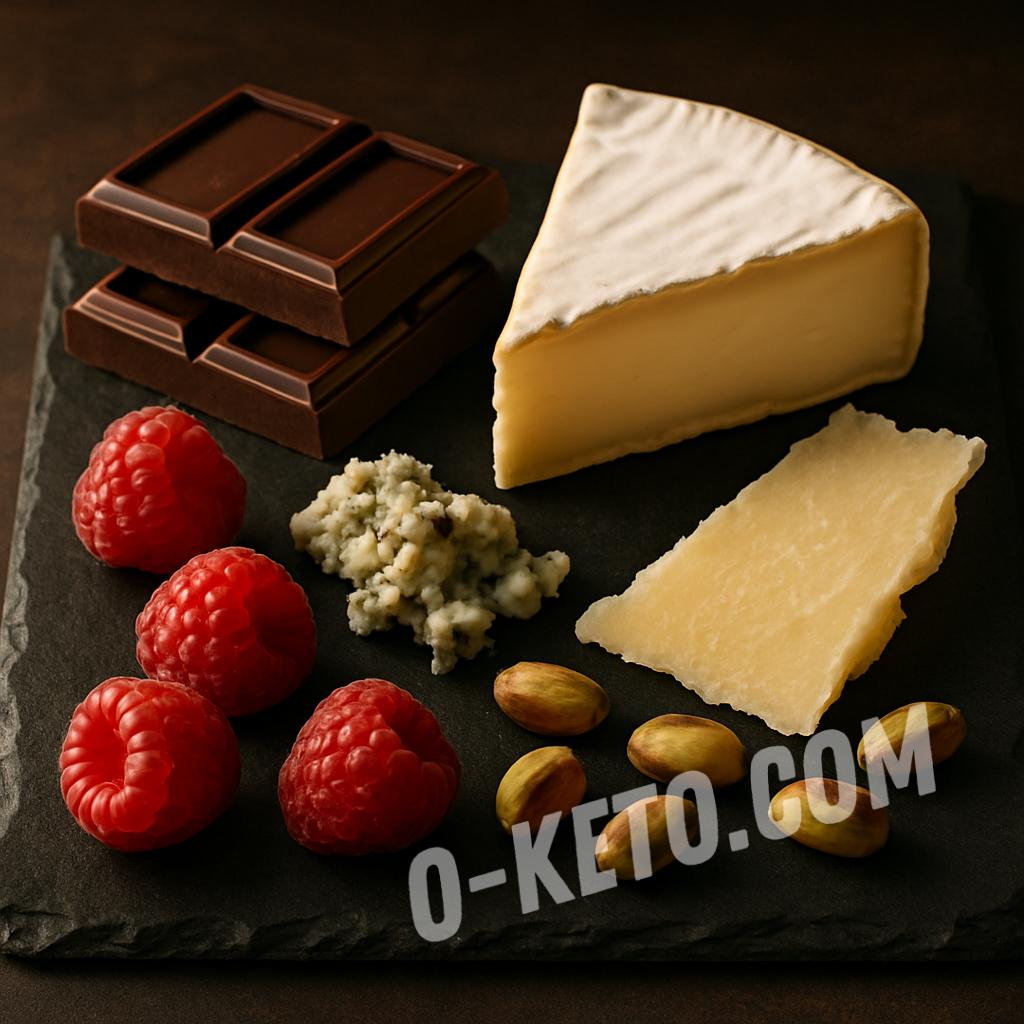

Cheese and chocolate may seem like a difficult pairing because both are rich, fatty, and expressive. That is exactly why they can work together: chocolate brings bitterness, sweetness, and cocoa aroma, while cheese adds creaminess, salt, acidity, umami, or a sharp blue-cheese note.
In desserts, the goal is not simply to put cheese into chocolate. Each ingredient needs a role. Camembert adds soft creamy depth, blue cheese gives a salty accent, parmesan brings nutty umami, and cream cheese creates a neutral base for mousse and filling.
Why the pairing works
Chocolate and cheese are connected by fat. Fat carries aroma, softens sharpness, and makes texture fuller. Add a little acidity, salt, or berry freshness, and the flavor becomes layered rather than heavy.
The salt in cheese strengthens chocolate flavor much like a pinch of salt strengthens cocoa in desserts. Blue cheeses add spice and intensity, but they should be used as an accent rather than the main volume of a filling.
Camembert and white chocolate
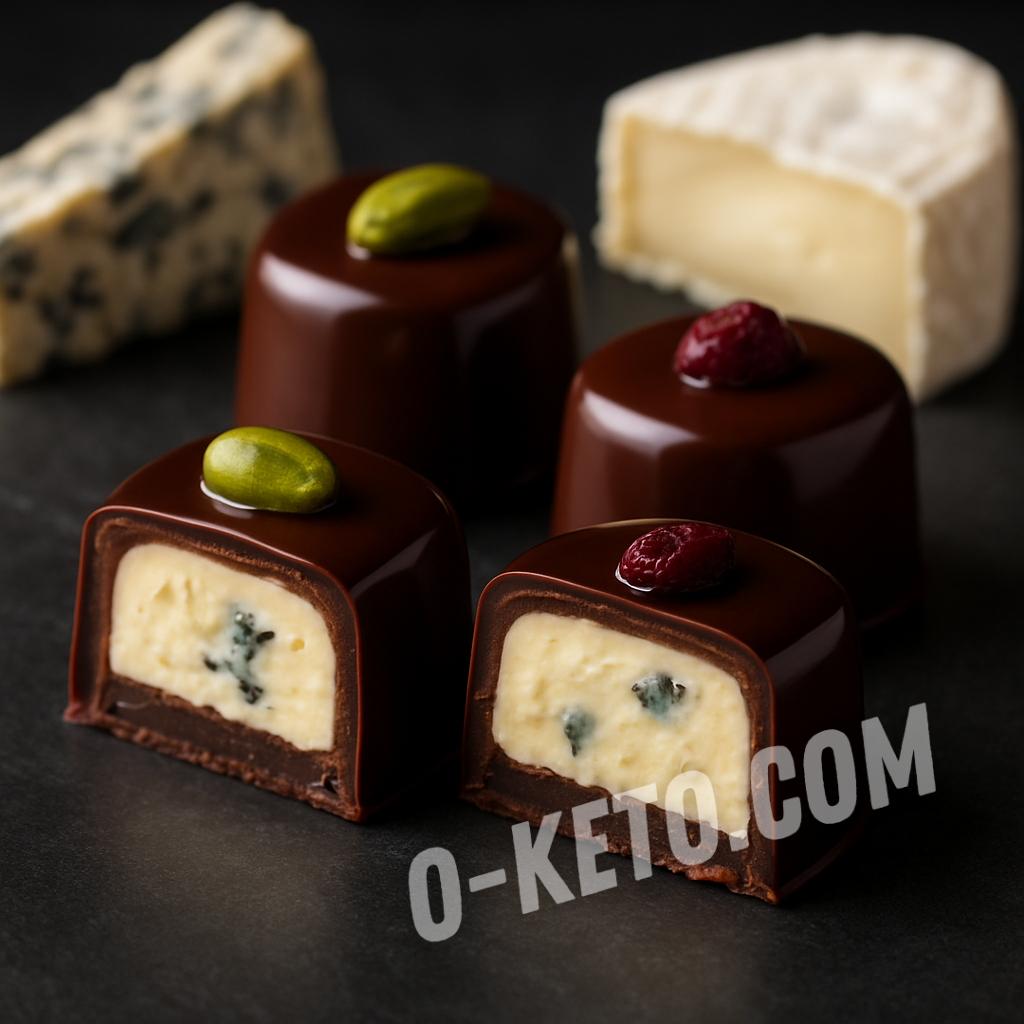
Camembert pairs well with white chocolate because both are soft and creamy. White chocolate brings sweetness and cocoa butter, while camembert adds cheesy depth and a slight mushroom note.
To keep the flavor from becoming flat, add acidity: cranberry, raspberry, lemon zest, unsweetened berry puree, or a small fermented tang. In a low-carb version, sweetness should stay moderate or the cheese will disappear.
Blue cheese and dark chocolate
Blue cheese gives a strong salty and piquant note. With dark chocolate it can be especially interesting: cocoa bitterness keeps the cheese from becoming too aggressive, while the cheese makes the chocolate taste deeper.
Good partners include pistachio, walnut, raspberry, cranberry, pear in very small amounts, or spices. Do not overload the filling: too much blue cheese makes the dessert fight itself.
Parmesan and chocolate
Parmesan does not bring creamy softness, but it adds umami, salt, and a nutty tone. It can be used in ganache, mousse, or topping in small amounts to deepen flavor rather than make the dessert overtly cheesy.
Parmesan opens best with dark or milk chocolate, nuts, coffee, cacao nibs, and a little acidic berry. In white chocolate it can feel too unexpected unless there is contrast.
Cream cheese and chocolate
Cream cheese is the safest option for beginners. It brings creamy texture, mild acidity, and does not compete with chocolate. It works well in mousses, creams, candy fillings, and desserts in glasses.
To avoid a watery filling, the cheese should be thick and the chocolate should be melted or tempered correctly for the task. Excess moisture damages texture and can soften a chocolate shell.
How to balance flavor
A successful cheese-chocolate filling is usually built on contrast. If the cheese is salty and sharp, use darker chocolate or nuts. If the chocolate is sweet and creamy, add acidity or berry freshness.
- Cream cheese + dark chocolate + raspberry.
- Camembert + white chocolate + cranberry or lemon zest.
- Blue cheese + dark chocolate + pistachio.
- Parmesan + chocolate + coffee or cacao nibs.
- Cream cheese + chocolate + unsweetened berries.
Technical mistakes
The main problem in these desserts is water. Cheese, berry purees, and curds can contain a lot of moisture, while chocolate shells do not tolerate wet fillings well. If the filling is too loose, candies leak, shells soften, and shelf life drops.
The second mistake is using too much strong cheese. Blue cheese or aged parmesan should be added in small amounts and tasted. Their job is to add complexity, not overpower the chocolate.
Low-carb context
Cheese itself fits low-carb cooking well, but chocolate desserts need attention. White and milk chocolate often contain a lot of sugar, and fruit fillings can raise carbohydrates quickly.
For a lower-carb version, choose dark chocolate with high cocoa content, moderate berries, unsweetened nuts, and minimal sweetener. The point is concentrated flavor in a small portion, not a large sweet mass.
Practical takeaway
Cheese and chocolate work together when each has a clear role. Chocolate gives structure, bitterness, and cocoa aroma; cheese adds creaminess, salt, acidity, or umami; berries, nuts, and spices connect the flavor.
Start with softer options: cream cheese or camembert with chocolate and a tart berry. Keep blue cheese and parmesan for accents where you want depth and character rather than sheer cheese intensity.