
Octopuses are cephalopod mollusks with a dense, rich flavor and a characteristic texture. Unlike squid, they are most often boiled, even if grilling, baking, or carpaccio is planned later. Pre-boiling softens the fibers, but it should be noted that the weight of the octopus significantly decreases due to juice loss.
Why octopus is almost always boiled. Even when served grilled or as thinly sliced tentacles, pre-boiling helps achieve a tender texture. Without this step, the meat often remains tough.
Alternatives include poaching and sous-vide, which provide a more controlled texture.
Fresh or frozen: which is better
Interesting fact: octopus is a rare exception among seafood that benefits from freezing. Freezing breaks down some muscle fibers and makes the meat softer.
If the octopus is fresh:
- the smell is clean, marine;
- the skin is shiny, without slime;
- the tentacles are firm;
- the color is natural, without a gray coating.
Fresh octopus needs to be softened beforehand—either mechanically or by freezing before cooking.
Frozen octopuses:
- a thin glaze without large ice chunks;
- no snow crumbs in the packaging;
- thaw slowly in the refrigerator.
After thawing, the octopus is boiled until tender, focusing not on time but on texture: a fork should go in without resistance.
Cooked-frozen octopuses. They are sold for time-saving. They just need to be thawed carefully and used in cold dishes or lightly sautéed.
Cooking methods for octopus
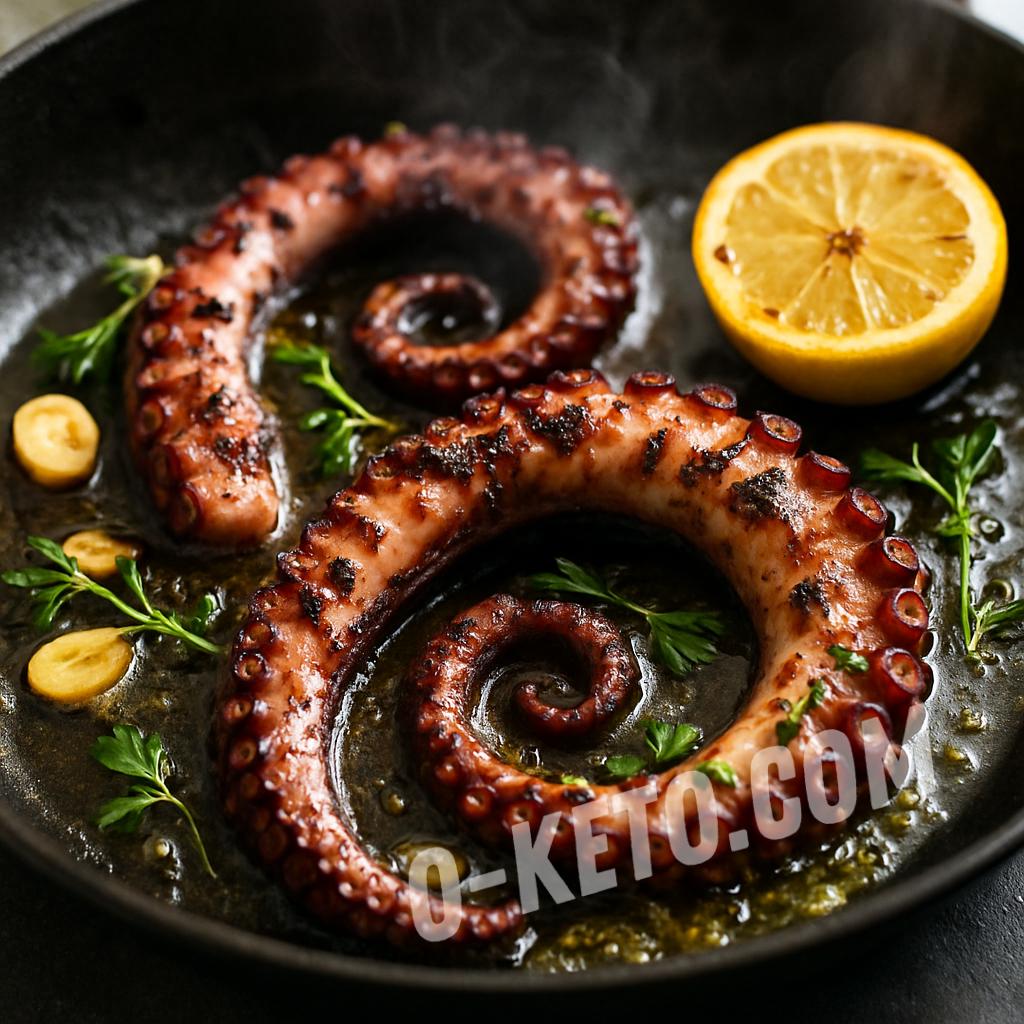
How to properly boil octopus:
- immerse the thawed octopus in unsalted water;
- add herbs and roots for aroma;
- cook at a gentle simmer until tender;
- let it cool in its own broth to retain juiciness.
It’s better to salt at the end or just before serving—salt can tighten the fibers.
How to boil octopus more precisely
Octopus is best thawed slowly in the refrigerator, then rinsed and checked to make sure the beak and innards have been removed if you bought a whole untrimmed one. Use a pot that fits it fairly snugly: too much water dilutes the flavor. It is better not to salt the water at the start. For aroma you can add bay leaf, peppercorns, parsley stems, celery, or a piece of onion, but avoid an aggressive mix of spices.
Once the liquid comes to a boil, immediately reduce it to the gentlest simmer. Small octopuses often become tender in 40-60 minutes, while large ones may need 1.5-2 hours, but the real guide is not the clock. Check the thickest part of a tentacle: a knife or fork should slide in easily. If the flesh is already nearly tender, test it more often and avoid overcooking, or the texture can turn loose and watery.
When the octopus is ready, it helps to leave it in the hot broth for another 15-30 minutes. That relaxes the fibers and keeps the surface from drying out. After that the tentacles can be dried and quickly seared, baked, or grilled. If you need the octopus for salad or carpaccio, cool it completely before slicing: cold flesh cuts much more neatly and holds its shape better.
Other cooking methods:
- poaching;
- sous-vide;
- baking;
- stewing;
- frying;
- grilling.
When frying, the octopus actively releases juice and can be cooked in its own broth—especially successful in clay pots.
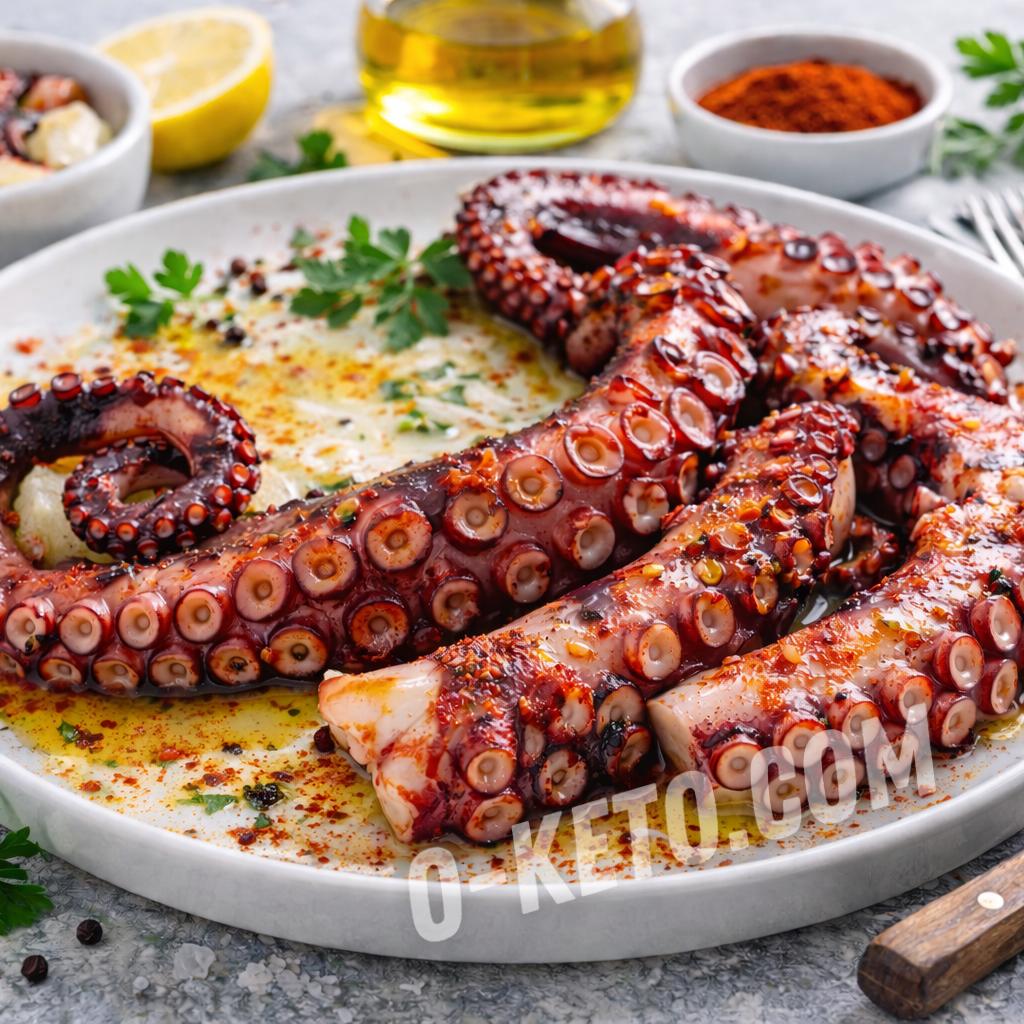
Classic serving options. In Croatia, octopus is cooked “under the bell”—with potatoes and vegetables under a metal lid with coals, creating even heat.
In Spain, it is served with boiled potatoes, olive oil, and smoked paprika—a simple yet very expressive combination.
Best pairings:
- garlic;
- parsley;
- black pepper;
- smoked paprika;
- thyme;
- rosemary;
- lemon juice;
- potatoes;
- olive oil.
How to Cook Octopus Until Tender, Not Rubbery
Once the octopus is properly cooked, the next stage should not ruin that tenderness. If the tentacles are going onto a grill or into a pan, it is better to dry them well and brown them quickly over high heat rather than keep them there for a long time. A prolonged second cooking step often spoils even well-cooked octopus.
For salads, carpaccio, and other cold presentations, it helps to cool the octopus completely before slicing. Cold meat cuts more neatly, the slices hold their shape better, and the surface tears less. When it is sliced while still hot, the structure is more likely to loosen and lose that clean dense look.
If the octopus still feels a bit firm at the first check, do not respond by sharply increasing the heat. It is usually better to continue gentle cooking and test again. Octopus rewards patience, not aggression, and the attempt to “force” doneness with hard boiling is exactly what often turns a promising texture rubbery.
Practical recommendations
- do not strictly rely on minutes—check tenderness with a fork;
- after boiling, let the meat “rest” in the broth;
- for grilling, use already boiled tentacles;
- avoid overloading with spices;
- cut across the fibers for a more tender texture.
Octopus requires patience, but with the right preparation, it offers a deep, rich flavor and a dense yet tender texture.
The main principle is to first soften, then carefully bring to the desired doneness.
Sources
- Selecting and Serving Fresh and Frozen Seafood Safely: U.S. Food and Drug Administration
- Effect of Freezing and Cooking on the Texture and Electrophoretic Pattern of the Proteins of Octopus Arms (Octopus vulgaris)
- The Effects of Four Different Thawing Methods on Quality Indicators of Amphioctopus neglectus
- The Impact of Cooking Methods on the Physical, Sensory, and Nutritional Quality of Fish