


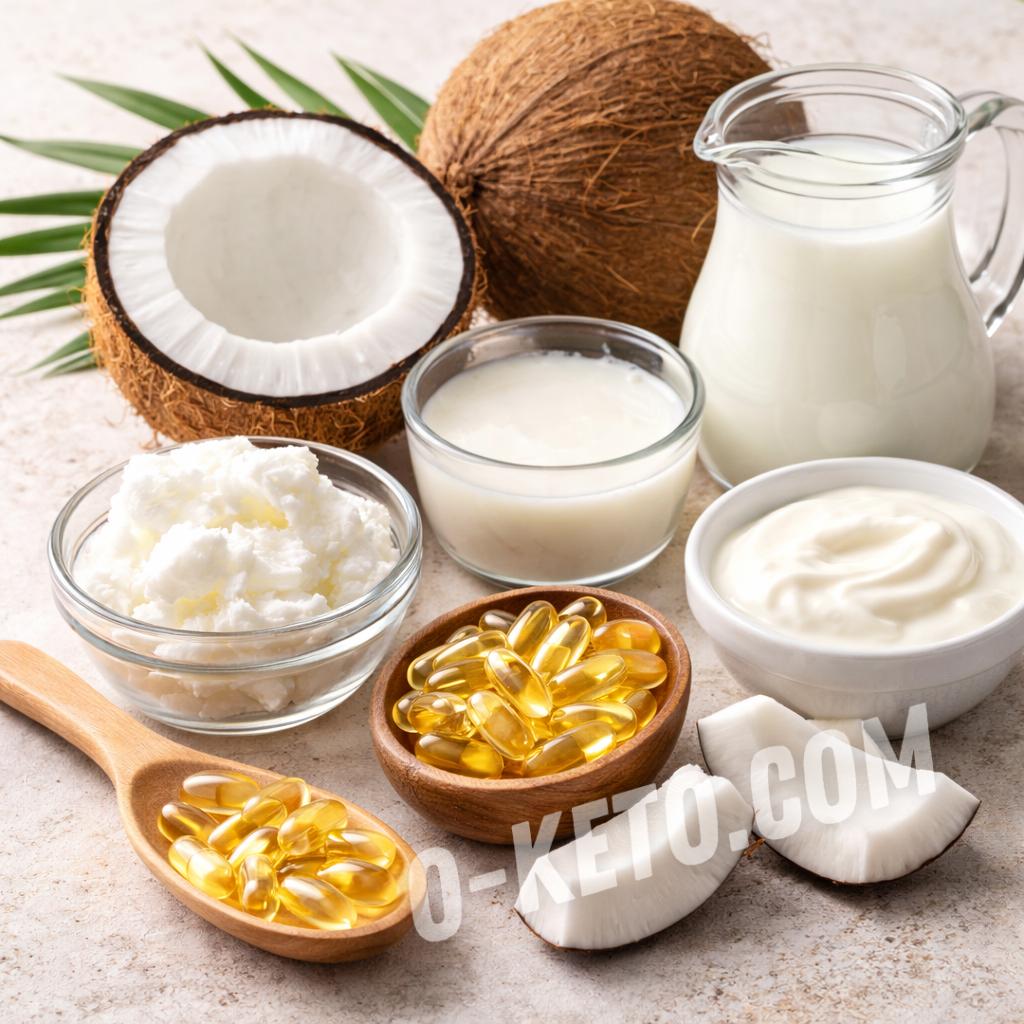

Lauric acid is a saturated fatty acid with 12 carbon atoms, written as C12:0. It is often grouped with medium-chain fatty acids, although metabolically it sits between classic MCT fats and longer-chain saturated fats.
The main food sources are coconut oil, coconut milk, palm kernel oil and smaller amounts in dairy fat. In the body, some lauric acid can be converted to monolaurin, a compound studied for antimicrobial activity.
How it differs from other fats
Lauric acid is handled differently from long-chain fatty acids, but not as rapidly as caprylic C8 and capric C10 acids from MCT oil. Coconut oil should therefore not be treated as identical to purified MCT oil.
In practical nutrition it is best seen as part of natural fats, not as a required supplement. Its effects depend on dose, total diet, carbohydrate intake, body weight and lipid response.
Potential properties
Lauric acid is discussed in several contexts:
- conversion to monolaurin and laboratory effects on some bacteria, viruses and fungi;
- use in energy metabolism as a medium-length saturated fatty acid;
- effects on blood lipids, potentially raising both HDL and LDL cholesterol;
- presence in human milk and tropical fats.
These properties do not make lauric acid a medicine. Laboratory antimicrobial findings should not be translated into self-treatment of infections.
Sources and intake
No separate recommended intake exists for lauric acid. It is not an essential fatty acid, so the practical question is how much coconut and palm kernel fat the diet contains.
Main sources include:
- coconut oil and coconut butter;
- unsweetened coconut milk and cream;
- palm kernel oil;
- butter, cheese and full-fat dairy in smaller amounts.
Keto, LCHF and lipids
On keto, lauric acid often comes from coconut oil and coconut milk. These foods can be useful in recipes, but they should not automatically become the main daily fat source, especially when LDL, ApoB or non-HDL cholesterol rise.
A more balanced approach is to rotate coconut fats with olive oil, fatty fish, eggs, avocado, nuts and fats from whole foods. This keeps the diet low-carb without relying on one saturated fat source.
When caution matters
Caution is reasonable in marked hypercholesterolemia, familial hypercholesterolemia, high ApoB, liver disease or poor tolerance of fatty meals. In these cases ketosis should be considered together with objective risk markers.