


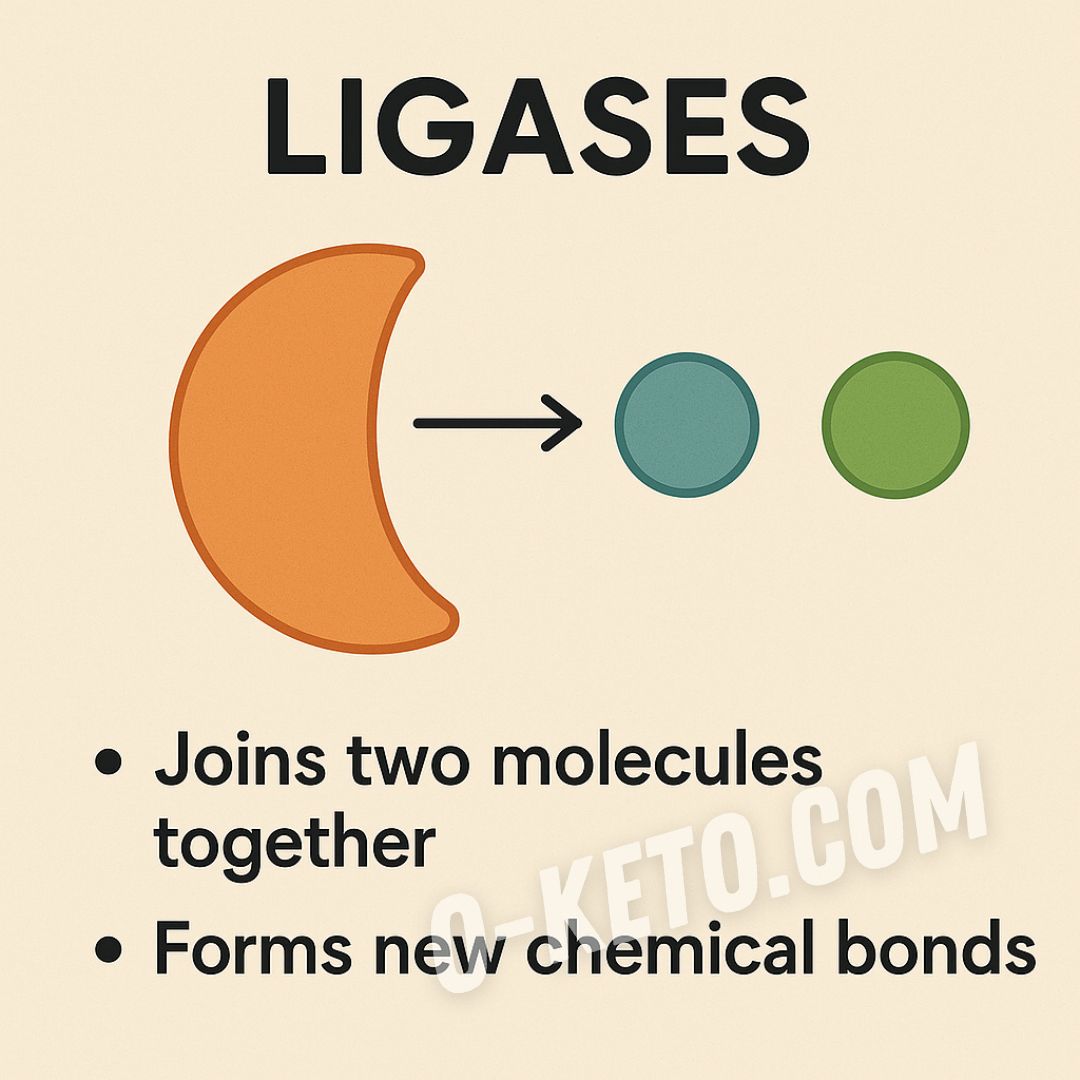

Ligases — are enzymes that catalyze the formation of chemical bonds between molecules using the energy from ATP hydrolysis.
They facilitate the synthesis and repair of DNA and RNA, participate in metabolism, and the formation of complex biomolecules.
Because of this, ligases are indispensable for the normal functioning of cells, and disruptions in their activity are associated with the development of a number of diseases.
Definition and Functions
The main task of ligases — is to connect two substrates to form a new chemical bond.
These enzymes are involved in:
- synthesis and repair of DNA and RNA;
- formation of peptide bonds during protein synthesis;
- regulation of metabolic and cellular processes.
Classification and Mechanisms of Action
Ligases are classified based on the substrates they work with:
- DNA ligases — connect DNA fragments during replication and repair;
- RNA ligases — facilitate the synthesis and modification of RNA molecules;
- amino acid ligases — catalyze the formation of peptide bonds.
The mechanism of action involves binding to substrates, transferring a phosphate group from ATP, and catalyzing the formation of a new bond.
Role in Metabolism and Biosynthesis
Ligases play a central role in anabolic processes:
- they ensure the connection of nucleotides in DNA and RNA chains;
- participate in the synthesis of proteins and lipids;
- maintain the stability and integrity of genetic material.
Without ligases, normal processes of replication and restoration of cellular structures are impossible.
Significance in Medicine and Biotechnology
The ability of ligases to connect molecules makes them indispensable tools in laboratory and clinical practice:
- creation of recombinant DNA for genetic research;
- development of gene therapies and diagnosis of hereditary diseases;
- application in the production of biopharmaceuticals and vaccines.
Disruptions in Activity and Their Consequences
Imbalance in ligase activity can lead to severe consequences:
- insufficiency — causes a decrease in DNA and RNA synthesis, metabolic disorders, neurological disorders;
- excessive activity — can lead to hypermetabolism, destruction of cellular structures, and accumulation of toxic products.
Such disruptions are associated with metabolic syndrome, oncological, and neurodegenerative diseases.
Enzymes used in therapy
Below are examples of enzymes from this class that are used in the treatment of various diseases:
Research Perspectives
Current research is focused on the detailed study of the structure and mechanisms of action of ligases. A better understanding of them will allow for the creation of new treatment methods, diagnostic tests, and biotechnological solutions.
In the future, ligases may become key tools for personalized medicine and genetic engineering.
Why ligases matter so much for cellular repair
Ligases are especially important where the cell must build or reconnect rather than break apart: seal DNA strands, attach amino acids to transfer RNA, activate fatty acids, or bind toxic ammonia into a safer form. This ties the class closely to anabolism, tissue recovery, and repair of damage.
From a practical standpoint, that also makes ligases sensitive to low energy availability. When ATP is lacking, the cell loses not only performance capacity but also part of its ability to repair genetic material, synthesize proteins, and stay resilient under stress.
Connection with DNA repair, ubiquitin signaling, and the liver
Several directions are especially relevant clinically. DNA ligases help repair strand breaks. Ubiquitin ligases determine which proteins should be preserved and which should be sent for degradation. Glutamine synthetase helps bind ammonia and contributes to detoxification, particularly in the liver and nervous tissue.
Because of this, disturbances in selected ligases may be linked with slower recovery after damage, neurodegenerative processes, impaired ammonia handling, hyperammonemia, and broader problems of protein metabolism.
What helps support ligase function
Ligases depend on adequate energy reserve, magnesium, sufficient amino acid supply, and competent mitochondrial function. This is not a category where a person should expect a ready-made “ligase supplement” to solve the problem. It matters more that the cell can perform ATP-dependent assembly on its own.
That is why practical nutrition work usually looks at protein status, magnesium, B vitamins, liver function, and the organism’s overall ability to tolerate metabolic load. When these basics are impaired, ligase activity often suffers indirectly but meaningfully.