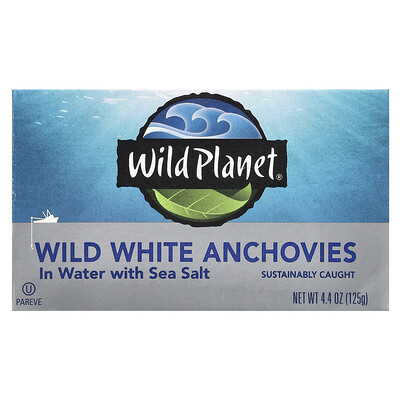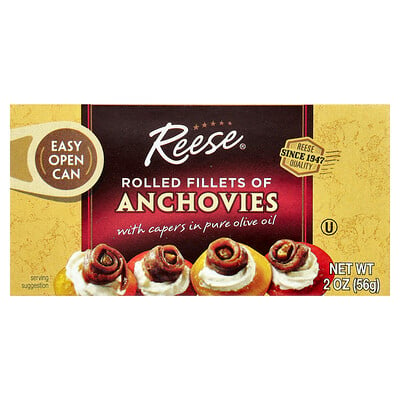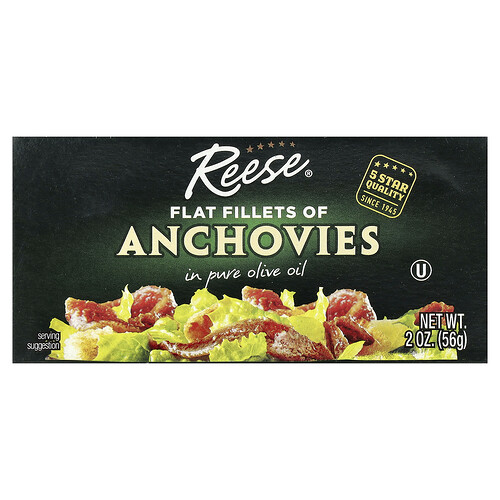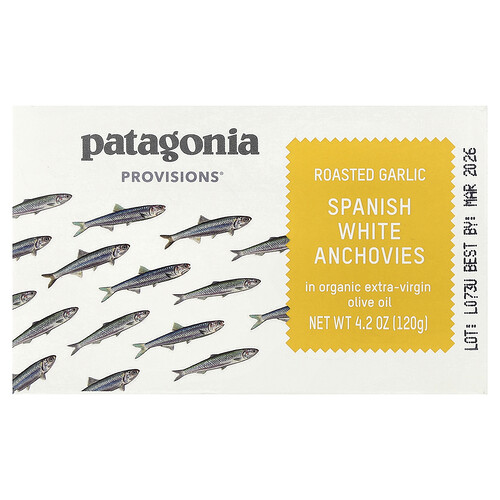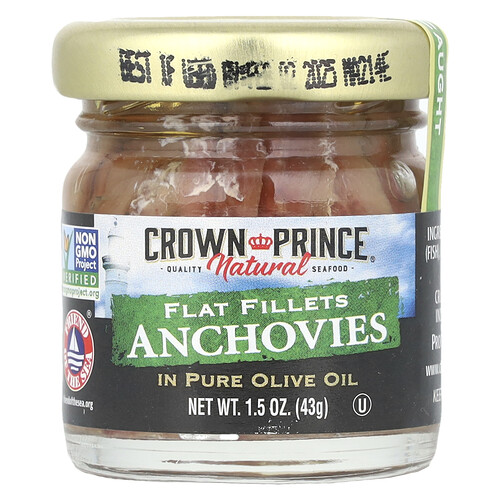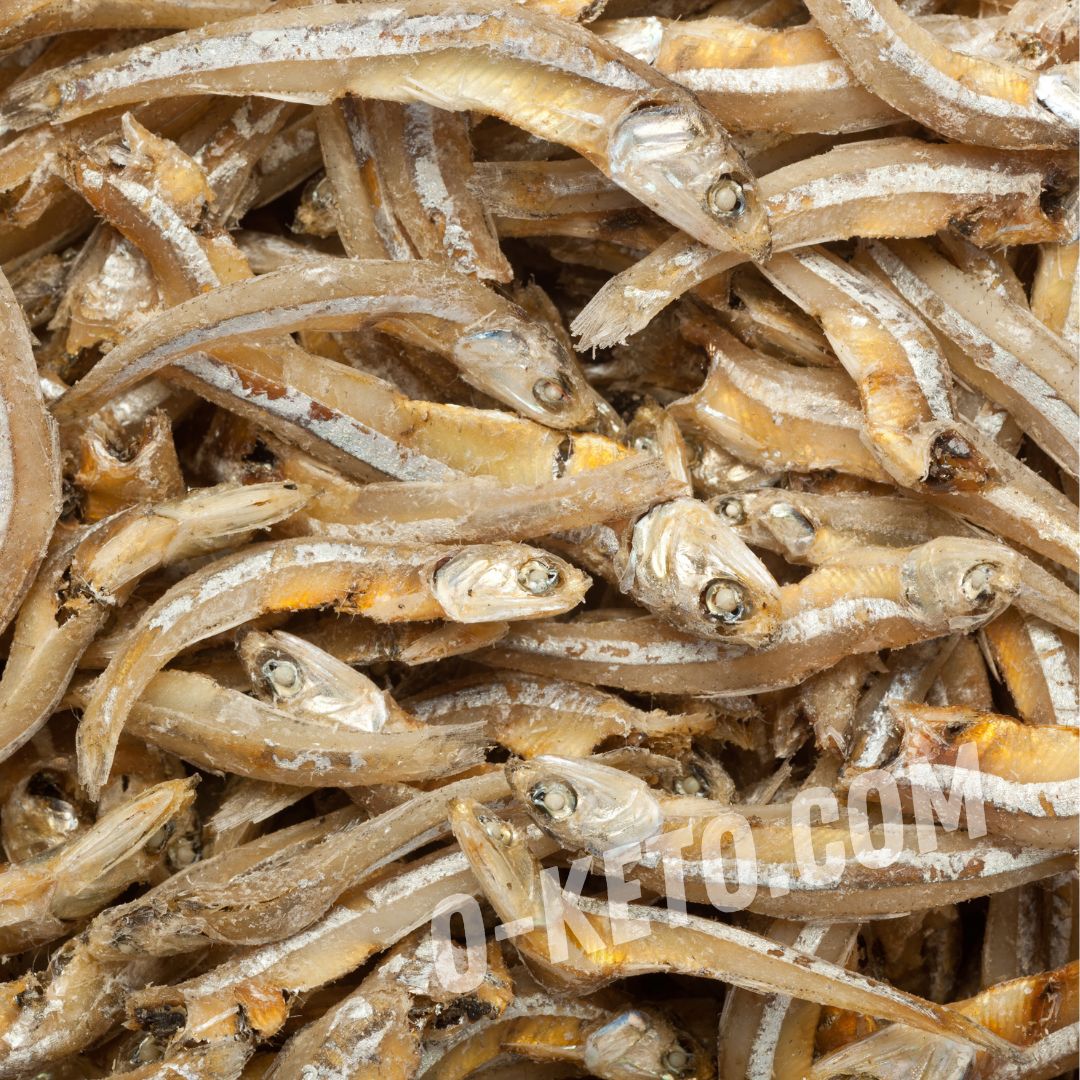

Anchovies are small oily sea fish with a very intense salty flavor. In cooking, people most often use not fresh fish, but salted or canned fillets in oil, anchovy paste, dried anchovies, and fermented sauces. Because of their strong taste, anchovies often work not as a separate piece of fish, but as an umami seasoning.
European anchovy, Engraulis encrasicolus, and other anchovy species are used in Mediterranean, Spanish, Italian, French, Korean, and Southeast Asian cooking. In ancient Rome, small fish were used to make garum, a salty fermented sauce. Today, fish sauce, anchovy paste, and fillets that melt into hot oil play a similar role.
Nutritional value
In 100 g of anchovies there may be about 200–220 kcal, roughly 25–30 g of protein, about 10–12 g of fat, and less than 1 g of carbohydrates. The glycemic index is zero because fish contains almost no carbohydrates. Exact values depend on form: fresh fish, salted fillets, canned fish in oil, and paste differ noticeably in salt and fat.
Anchovies contain complete protein, EPA and DHA fatty acids, varying amounts of vitamin D, calcium if the fish is eaten with small bones, iron, selenium, and iodine. Tables sometimes show that a noticeable part of anchovy fat is monounsaturated and polyunsaturated. In practice, however, portion and salt matter more than percentages.
Are they suitable for keto?
For keto and LCHF, anchovies fit well: they contain almost no carbohydrates, a lot of protein, and concentrated flavor. A small fillet can replace salt and flavor enhancer in a sauce, salad, omelet, vegetables, or meat dish. This is useful when bright flavor is needed without sugar, flour, or starchy breading.
The main limitation is salt. Salted fillets, paste, and canned products can be very intense, so they are used in small portions. If the product is packed in sunflower or another oil, that oil also affects taste and fat content. With a strict approach, check the ingredient list: fish, salt, oil, sometimes vinegar or spices.
Usually one or two fillets are enough for a sauce or a salad serving. If more is added, the dish easily becomes too salty and too fishy. Anchovy paste is better squeezed out little by little: it spreads faster than a whole fillet and is easier to dose.
In keto salads, anchovies are especially useful where a salty note is needed instead of croutons or sweet dressing. They add flavor to leaves and eggs without adding starch, flour, or extra sugar.
How to use them
Anchovies can be finely chopped into salad dressing, melted in olive oil with garlic, added to sauce for broccoli, cauliflower, eggs, fish, chicken, beef, or leafy salads. In classic sauces, they give depth even when the finished dish does not taste clearly “fishy”.
Good pairings include lemon, olive oil, garlic, capers, parsley, pepper, parmesan, eggs, tuna, romaine lettuce, avocado, butter, tomatoes in a small portion, and olives. In hot dishes, fillets are better added at the beginning of the sauce so they dissolve; in salads, they are sliced thinly or mashed into the dressing.
How to choose
Good fillets should smell of sea and salted fish, not rancid oil or metal. A jar should not contain mold, cloudy foam, or a sharp unpleasant odor. Fillets in olive oil are usually softer in taste, salted fillets are denser and drier, and paste is convenient for sauces, but its composition especially needs checking.
Dried anchovies come in different sizes: small ones often go into broths, larger ones into appetizers and fried dishes. If the product is very salty, it can be rinsed or soaked briefly, but part of the flavor will leave with the salt.
Limitations
Anchovies are unsuitable for fish allergy. Because of salt, portions should be controlled when sodium is limited. For people sensitive to histamine, fermented, dried, and long-stored fish may be harder to tolerate than fresh fish. With gout or strict purine restriction, these products also require caution.
How to store them
Closed cans are stored according to the instructions. After opening, fillets should remain covered with oil or brine and stay in the refrigerator. Take the needed portion with a clean fork and close the jar quickly. Anchovy paste is also kept in the refrigerator after opening and not left warm.
What can replace them?
For salty umami, sardines, sprats, sugar-free smoked sprats, fish sauce, sardine paste, capers, olives, sugar-free soy sauce, or aged cheese can work. They do not fully repeat anchovies: anchovies have a special combination of salt, fish, fermented depth, and fat.