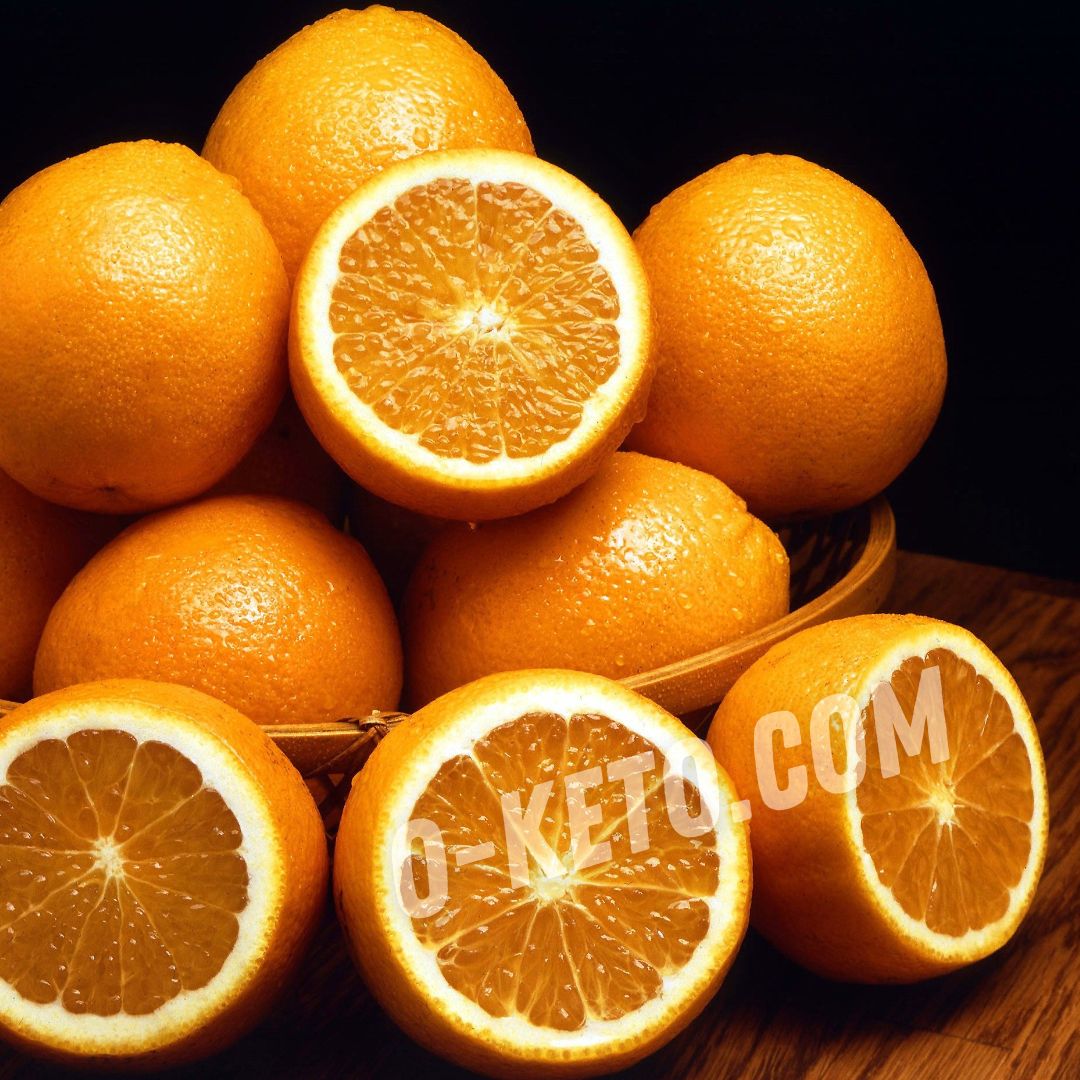

Orange is a sweet-tart citrus fruit with a bright aroma, juicy flesh, and a noticeable amount of natural sugars. It is eaten fresh and used in salads, zest, juice, sauces, marinades, desserts, and drinks. One medium orange has about 130 g of flesh and roughly 70 mg of vitamin C. It also contains potassium, folate, and flavonoids, but those come together with carbohydrates.
For a general diet, orange is a convenient fruit; for strict keto, it is a limited product. It should not be judged only by vitamin C. A fruit portion brings sweetness, water, fiber, and sugar at the same time. The key question is portion size and how the orange fits into the day’s carbohydrate limit.
Nutritional value
Per 100 g, orange contains about 47 kcal, around 0.9 g of protein, 0.1 g of fat, and 11.8 g of carbohydrates. Some carbohydrates come from fiber, but sugars are still present in a meaningful amount. The glycemic load of one usual serving is often estimated around 5, but for keto the total carbohydrate amount matters more than the speed of response alone.
A medium orange may provide about 12–15 g of carbohydrates depending on size and variety. That is a lot for strict keto, where the daily limit is often kept quite low. Juice is even more difficult: several fruits can fit into one glass, while fiber is reduced.
Is it suitable for keto?
For strict keto, orange is usually not suitable as a regular fruit. A small part, such as one quarter of a medium orange, may sometimes fit into the daily limit if the rest of the menu is very low in carbohydrates. A whole fruit or a glass of juice, however, can take a large part of the limit quickly.
In a more flexible LCHF approach, orange can be used as an occasional small portion, especially when it is not eaten alone but used as an aromatic accent: a few segments in a salad, a little zest in sauce, or a small splash of juice in a marinade. This gives citrus flavor without a large fruit serving.
How to use it
The most keto-friendly method is using zest. It gives a lot of aroma with very little mass, so it works in sauces, marinades, sugar-free cream desserts, fish, duck, chicken, and salads. Remove zest only from a well-washed fruit and avoid the white bitter part.
The flesh is best divided into small portions. A few pieces can be added to leafy salad, avocado, fish, shrimp, cheese, or nuts. Use juice as a seasoning rather than a drink: a teaspoon in sauce or marinade gives aroma without turning the dish into a fruit dessert.
How to choose
A good orange feels heavy for its size and has firm skin without mold, soft sunken spots, or sour smell. A very dry and light fruit is often old. Color is not everything: some varieties may be less evenly orange while still ripe.
For zest, the surface matters especially. If possible, choose unwaxed fruit or wash it well with warm water and a brush. For juice, choose juicier varieties; for salads, choose fruit with firm segments that do not fall apart immediately.
Limitations
Orange contains acids and may irritate with reflux, gastritis, sensitive enamel, or sores in the mouth. Some people react to citrus with itching, rash, or discomfort. If that happens, remove the fruit or replace it with another source of aroma.
In a low-carbohydrate menu, orange is easy to underestimate. One fruit looks like a small snack, but in carbohydrates it can be comparable to a whole meal in strict keto. It is better to weigh the portion a few times until the amount becomes familiar.
How to store it
Oranges can be kept at room temperature for several days if the room is not hot. For longer storage, use the refrigerator, a fruit drawer, and no wet bag. Mold on one fruit quickly spreads to nearby ones, so spoiled fruit should be removed immediately.
A cut orange should be kept in the refrigerator in a closed container and used soon. Zest can be removed in advance and frozen in small portions, while juice can be frozen in cubes for sauces and marinades.
What can replace it?
For citrus aroma, lemon, lime, or orange zest in a small amount works best. For acidity, use lemon or lime juice. For a fruit note with fewer carbohydrates, small portions of raspberry, cranberry, currant, or strawberry are often chosen. If orange color and aroma are needed in a dessert, zest with vanilla or cinnamon without sugar can help.