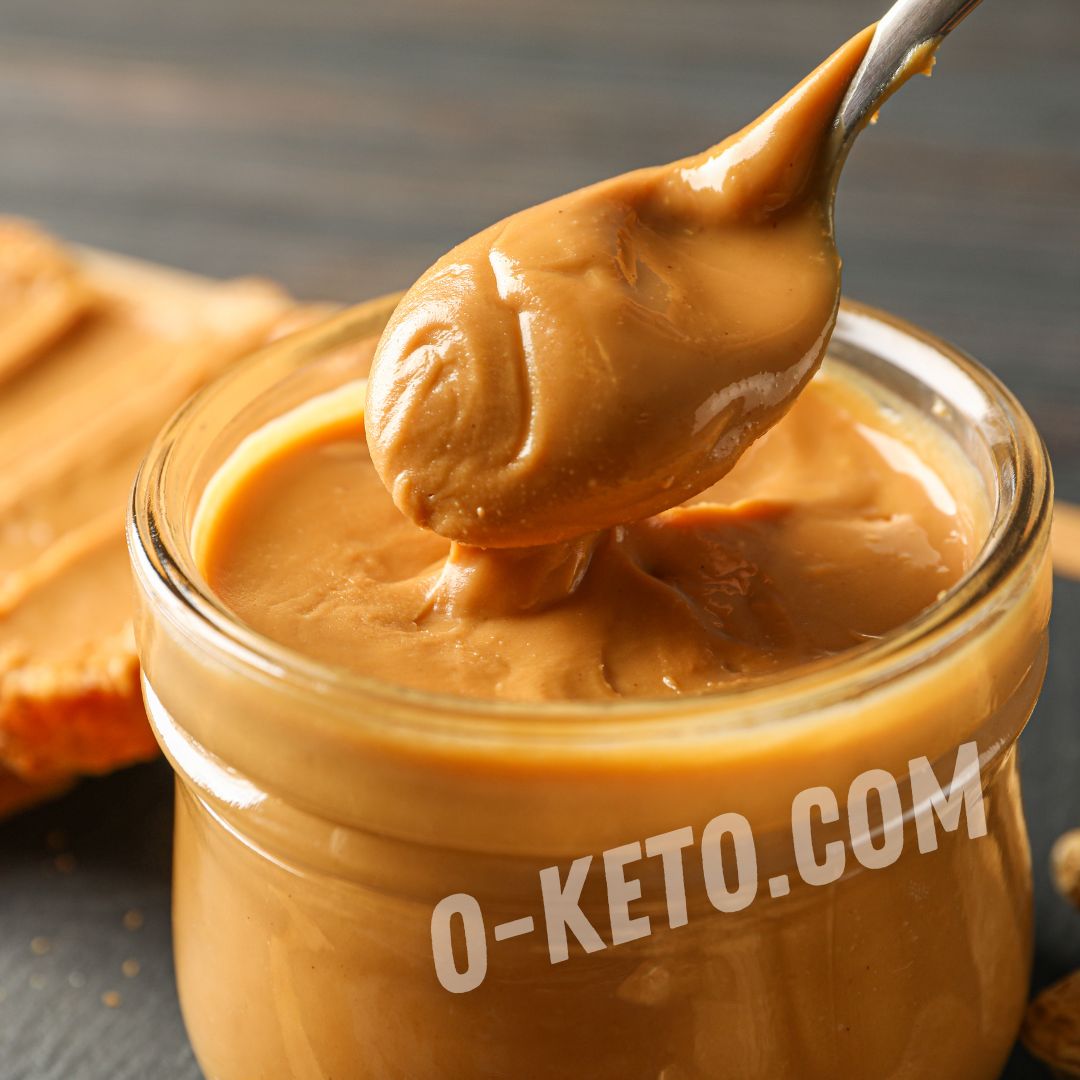

Peanut butter is a paste made from roasted peanuts. Despite the name, it is not a liquid oil, but a thick nut-like paste with fat, protein, fiber, and a noticeable amount of carbohydrates. A good product can contain only peanuts and salt; sweet versions often include sugar, syrups, honey, palm fat, or chocolate additions.
The taste depends on roasting level and grinding. Light paste is softer and sweeter in aroma, while darker paste is richer and may be slightly bitter. Texture can be smooth or crunchy, with peanut pieces. Natural peanut butter may separate: oil rises to the top and the dense part stays below. This is normal if the smell is fresh and there is no mold.
For keto, peanut butter is convenient but requires portion control. It is fatty and filling, but not carbohydrate-free. A spoon in sauce or dessert and half a jar eaten absentmindedly are completely different situations. It is better to treat it as a dense addition, not a free snack.
Nutritional value
In 100 g of peanut butter there are usually about 580–620 kcal, 45–55 g of fat, 22–28 g of protein, and 15–25 g of carbohydrates, part of which is fiber. One tablespoon gives roughly 90–100 kcal. Exact values depend on brand, sugar, salt, added oil, and grinding.
The fat profile is mostly monounsaturated and polyunsaturated, with some saturated fat as well. The paste also contains magnesium, phosphorus, potassium, niacin, vitamin E, and plant polyphenols. Still, high energy density remains the main practical factor: even a clean ingredient list does not make it light.
Is it suitable for keto?
Peanut butter can fit keto and LCHF if a sugar-free paste is chosen and the portion is clear in advance. It is often easier to limit it to 1 tablespoon, especially in desserts, sauces, and snacks. For strict keto, look not only at carbohydrates per 100 g, but also at how much paste is actually eaten.
Sweet spreads with honey, chocolate, caramel, milk powder, syrups, or wafer crumbs usually do not fit keto. Labels such as protein, fitness, or natural do not guarantee low carbohydrates. The most reliable version is peanuts, salt, and nothing extra.
How to use it
Peanut butter is added to sauces for chicken, beef, shrimp, cucumbers, cabbage, zucchini, and salads. It combines well with sugar-free soy sauce, lime, ginger, garlic, sesame oil, chili, unsweetened coconut milk, and a small amount of erythritol.
In sweet keto recipes, it is used in fat bombs, almond-flour cookies, creams, sugar-free cheesecakes, smoothies, and yogurt bowls. Remember that the paste thickens and weighs down texture. If too much is added, a dessert can become sticky, dry, or too energy-dense.
How to choose
The ingredient list should be short: peanuts, sometimes salt. It is fine if the producer specifies roasted peanuts. Sugar, glucose syrup, molasses, honey, dextrose, maltodextrin, and sweet fillings sharply change the profile. Hydrogenated fats and unnecessary stabilizers are better avoided.
The smell should be peanut-like, without rancidity, dampness, or stale oil. If the paste tastes bitter, smells like paint, or resembles old nuts, it should not be eaten. In natural paste, oil may separate; stir it with a clean dry spoon before use.
What to pair it with
The best low-carb pairings are celery, cucumber, sugar-free Greek yogurt, cottage cheese, sugar-free protein powder, cocoa, coconut flour, almond flour, chicken, beef, shrimp, cabbage, lime, and hot spices. With banana, bread, jam, and sweet bars, carbohydrates rise much higher.
Limitations
Peanut is a common allergen. With allergy or suspicion of it, the product is excluded completely. The paste is also very energy-dense, so it can easily interfere with weight loss if eaten straight from the jar. With sensitive digestion, a large portion may feel heavy because of the combination of fat, fiber, and dense texture.
How to store it
Store a closed jar according to the producer’s instructions. After opening, natural paste is often better kept in the refrigerator: it becomes firmer but turns rancid more slowly. Do not get water or crumbs into the jar. If mold, sharp smell, bubbling, or unpleasant bitterness appears, discard the product.
What can replace it?
The closest replacements are almond butter, sugar-free hazelnut paste, tahini, cashew butter in a small portion, or sunflower seed butter. For sauces, tahini or almond butter can work; for desserts, almond, coconut, or hazelnut bases are useful. Taste and carbohydrates will differ, so the replacement should be recalculated from the label.