


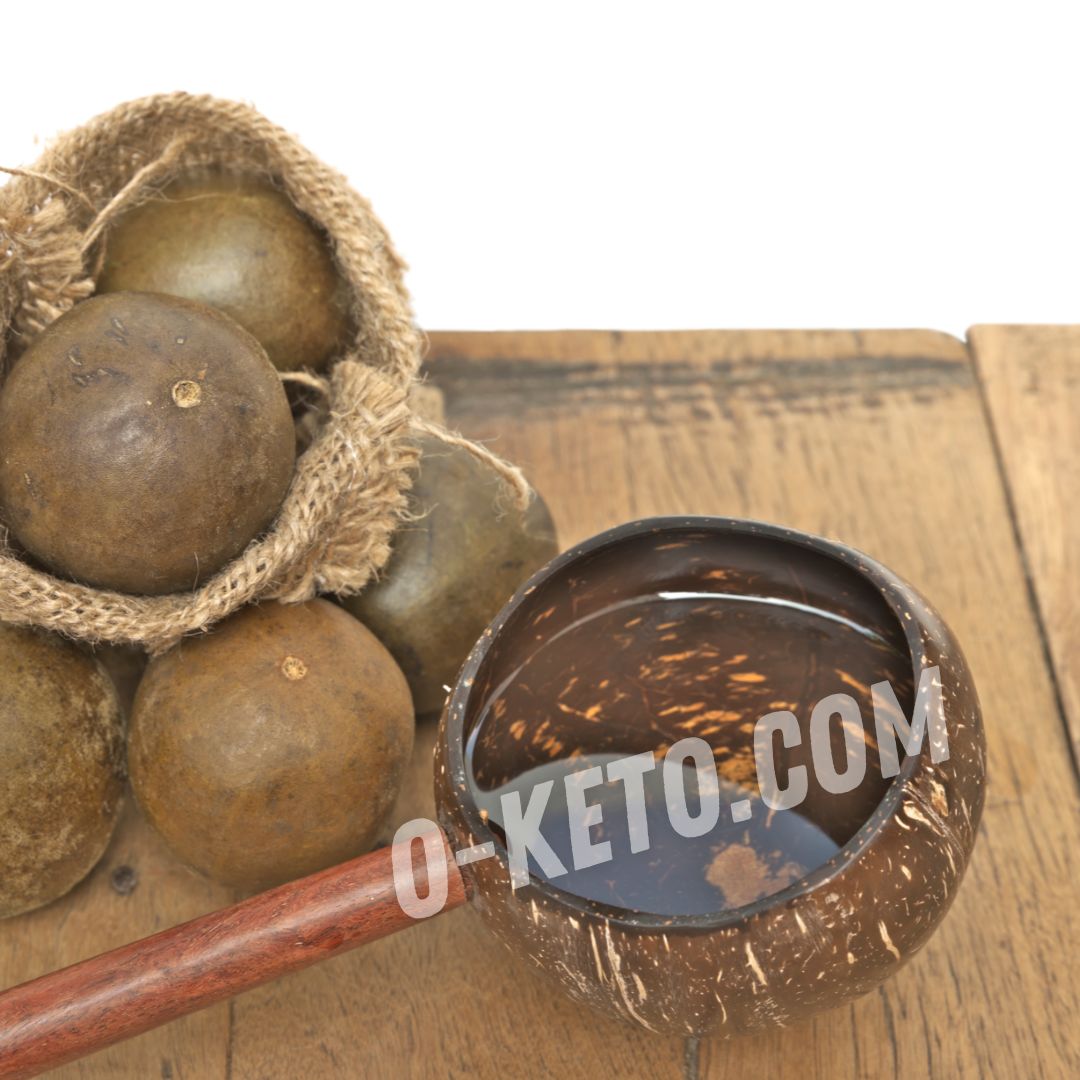

Monk fruit, also called luo han guo or arhat, is a sweetener made from the fruit of Siraitia grosvenorii. Its sweetness does not come from ordinary sugar, but from mogrosides, compounds with a very intense sweet taste. For this reason monk fruit extract is used in tiny amounts and is often blended with erythritol, inulin or other carriers to make it easier to measure.
Products labeled as monk fruit can be quite different: pure extract, powdered blend, granules, sugar-free syrup or drops. For keto, the important point is not only monk fruit itself, but the whole ingredient list. If a blend contains sugar, dextrose, maltodextrin, syrups or starchy fillers, it can no longer be treated as carbohydrate-free.
Nutrition
Pure monk fruit extract is almost never used by the spoonful, so its contribution to calories and carbohydrates is usually minimal. Mogrosides can be hundreds of times sweeter than sugar, which is why producers dilute the extract with a neutral base. That base often determines the actual nutrition of the product.
If monk fruit is mixed with erythritol, the label may list carbohydrates and sugar alcohols. In most cases this type of blend remains convenient for low-carb baking, drinks and desserts, but people with sensitive digestion should start with small servings.
The glycemic response to pure monk fruit is usually low because it is not sugar or starch. Ready-made blends still need label checking: the words “monk fruit” on the front of the package do not guarantee that there are no fast carbohydrates inside.
Is It Keto-Friendly?
Monk fruit can fit keto well if it is a pure extract or a blend without sugar and starchy additives. It can make drinks, creams, sauces or desserts sweet without ordinary sugar. This does not mean sweet taste should be used without limits: for some people, frequent desserts keep the habit of constantly looking for sweetness.
For strict keto, it is better to choose products with clear carbohydrates per serving. If the ingredients are only erythritol and monk fruit extract, dosing is easier. If there are “natural flavors,” fibers, syrups or complex blends, the nutrition table and the real serving size matter.
How to Use It
Monk fruit works well in coffee, tea, unsweetened cocoa, creams, cheesecakes, keto baking and berry sauces. Pure extract is very sweet, so it should be added little by little. “One-to-one” sugar replacement blends are easier in recipes, but their composition is especially important.
Practical rules:
- start with a smaller amount because it is easy to make a dish too sweet;
- for baking, choose a blend that provides bulk, not only sweetness;
- check for maltodextrin, sugar, dextrose and syrups in the ingredients;
- in drinks, dissolve it fully so there is no sharp sweet spot;
- do not replace sugar blindly when the recipe depends on caramelization or structure.
Flavor and Pairings
Monk fruit can have a light fruity or caramel-like aftertaste. In creamy desserts, coffee, chocolate and coconut milk it usually feels softer. In plain water or very acidic drinks the aftertaste is more noticeable, so monk fruit is sometimes blended with stevia or erythritol.
In baking, monk fruit does not behave like sugar: it does not create the same caramel crust, does not hold moisture in the same way and does not always provide bulk. Cookies, muffins and creams work better with recipes already designed for low-carb sweeteners.
Limits and Substitutes
The main limits are related less to monk fruit itself and more to additives and tolerance of sweet taste. Blends with sugar alcohols may cause bloating or discomfort in large servings. Very frequent use of sweeteners can also make it harder to adapt to less sweet food.
Monk fruit can be replaced with erythritol, stevia, allulose, an erythritol-stevia blend or a small amount of another sweetener suited to the recipe. For baking, bulk and texture matter; for drinks, clean taste matters; for caramel, the sweetener’s behavior under heat matters.
How to Read the Label
The most common mistake is looking only at the sweetener name and not checking the base. Pure extract is measured in pinches, while a tablespoon of a blend may be almost entirely carrier. Compare not the advertised sweetness, but grams of carbohydrates in a real serving and the ingredient order.
For daily coffee, clean taste and tolerance matter most. For cream or dough, bulk, solubility and absence of extra moisture matter. Fine powders work better in cold desserts, while hot drinks need blends that dissolve quickly and leave no sediment.


