


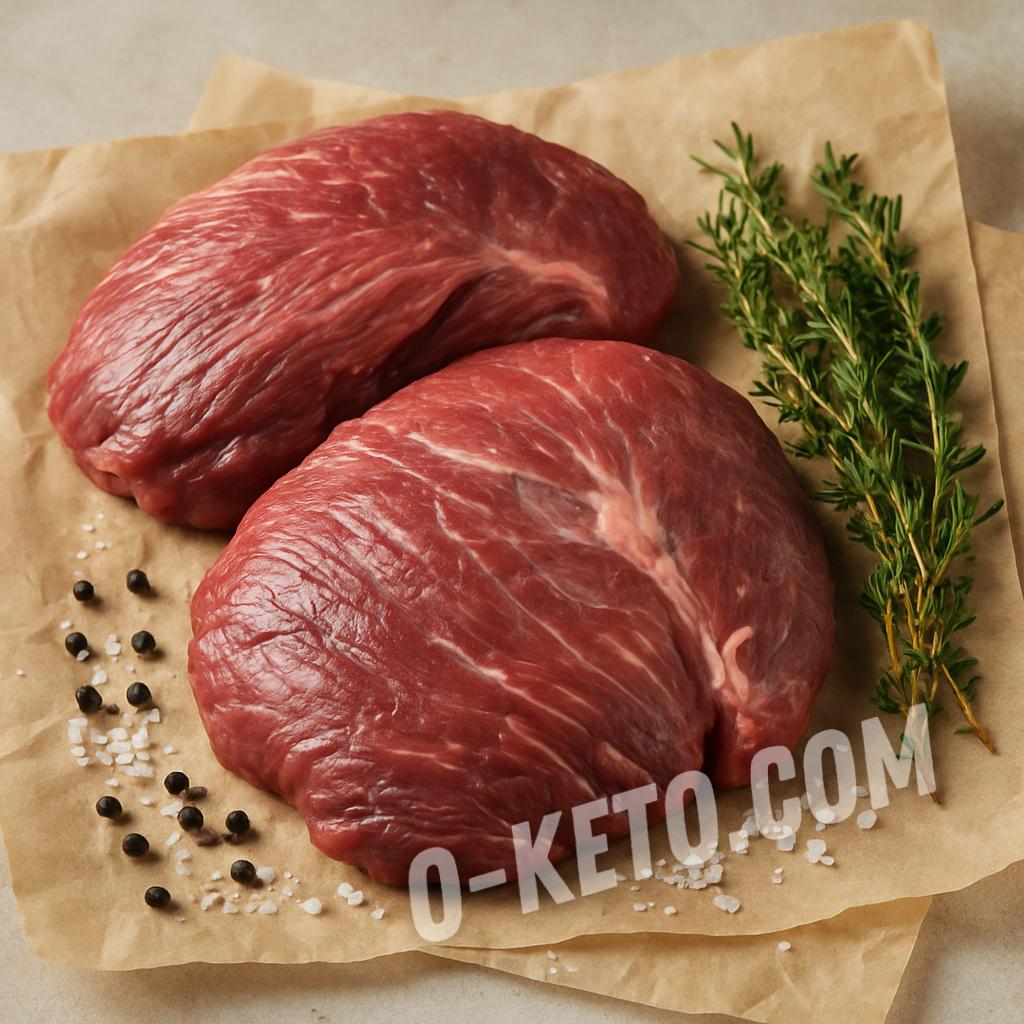

Beef cheeks are dense working muscles from the facial part of the carcass, valued for deep beef flavor and their ability to become very tender after long cooking. Raw cheeks look tough and sinewy, but during slow cooking collagen turns into gelatin and the meat becomes succulent and spoon-soft.
This is not a quick steak cut. Beef cheeks need time, moderate heat, and moisture: broth, sugar-free wine, tomato, cream sauce, or their own juices under a lid. That makes them especially useful in keto cooking for braises, stews, baking, and slow-cooker meals.
Nutrition
Beef cheeks provide complete animal protein, no carbohydrate, and a moderate amount of fat. They fit keto and LCHF well, especially when served with butter, stock, rich sauce, or oil-based vegetables.
The keto profile changes because of breading, flour-thickened gravy, sweet sauces, or starchy sides, not because of the meat itself. Prepared simply, the dish stays low in glycemic load.
How to Cook
Best methods are long braising, sous-vide, and slow roasting. Many cooks sear the cheeks first, then finish them in liquid with onion, celery, garlic, herbs, and spices.
They pair well with mushrooms, cauliflower, celeriac, low-carb creamy mash, rosemary, thyme, bay leaf, and black pepper. When done, the fibers should separate easily without drying out.
Choosing and Storage
Choose cheeks with a clean meaty smell, no sourness, no sticky surface, and no excess cloudy liquid. Connective tissue is expected, but grey color and dried edges are less desirable.
Store like other fresh meat: briefly chilled or airtight frozen. Before long cooking, thick outer membranes can be trimmed if excessive.


