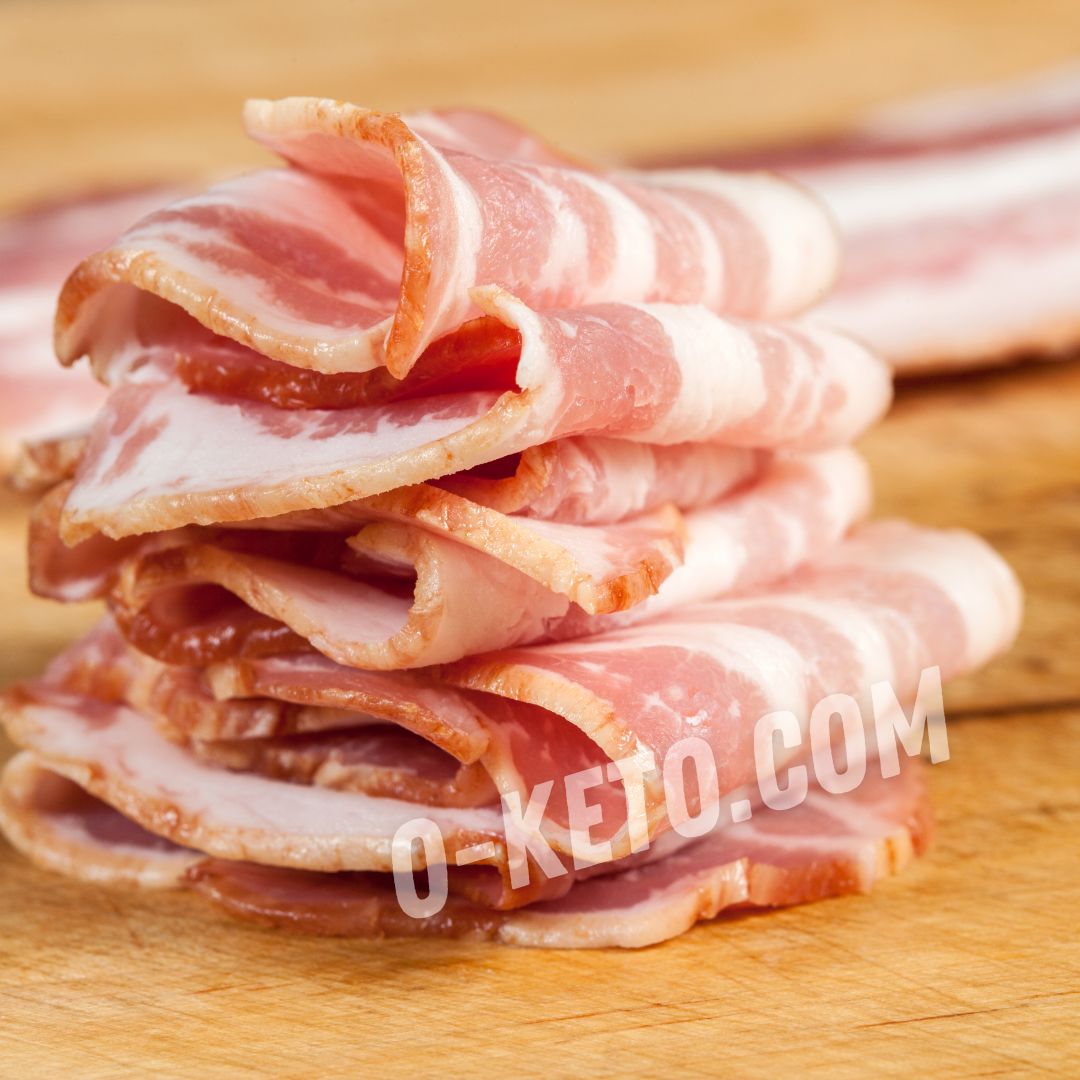

Bacon is salted or smoked pork belly cut into thin slices. In keto cooking it is popular for fat, salty flavor and crunch, but it should not carry the whole diet by itself. It is processed meat and is better used as a strong ingredient rather than the base of every meal.
Bacon can be part of a low-carb diet because it usually contains almost no carbohydrates. But ingredients, salt, smoking method, sugar in curing and amount all matter. A good keto approach is to choose a simple product and keep the portion reasonable.
Nutrition
One slice of bacon often provides about 40-45 kcal, around 3 g of protein and 3 g of fat. Per 100 g, it may contain about 500-550 kcal, 35-40 g of fat, 30-40 g of protein and less than 1 g of carbohydrates if no sugar is added. Plain bacon has a glycemic index close to zero.
Bacon contains protein, fat, sodium, vitamin B12, selenium, zinc and other meat nutrients in varying amounts. But because of salt and processing, it should not be presented as a food for unlimited daily use. In a dish, its value is flavor, fat and texture.
Is Bacon Keto-Friendly?
Yes, bacon can fit keto if it contains no sugar, syrups, starch or sweet glaze. It pairs well with eggs, salads, avocado, mushrooms, cauliflower, chicken and bunless burgers.
But “the fattier, the better” is too simplistic. The whole diet, salt, calories and product quality matter. Sometimes two slices as a flavor accent are better than building the whole plate around bacon.
How to Use It
Bacon can be fried until crisp, baked on a rack or added in small pieces to dishes. If a lot of fat renders out, it can be used for eggs or vegetables, but it is already salty and aromatic, so added salt should be reduced.
Practical options include:
- eggs with bacon and green salad;
- bacon crumble on cauliflower or broccoli;
- a wrap for chicken or asparagus;
- an addition to salad with avocado and egg;
- a bunless keto burger with a small amount of bacon.
How to Choose
Choose bacon with a short ingredient list: pork, salt, spices and sometimes curing salt in permitted amounts. Sugar, maple syrup, honey, dextrose, starch and sweet glazes are undesirable for strict keto. “Organic” does not always mean low-carb, so the label still matters.
Raw smoked, cooked smoked and raw bacon need different handling. Raw bacon must be cooked through. Ready bacon only needs heating, but it may still contain sugar and a lot of salt.
Limits and Mistakes
Bacon is very salty and calorie-dense. With hypertension, kidney-related medical restrictions, edema or medical salt restriction, portion size should be controlled. Processed meat should not be the only protein source in the diet.
Common mistakes are frying bacon until the edges are burnt, eating it with bread or sweet sauce and ignoring the fat rendered into the pan. Substitutes include sugar-free pork belly, pancetta, roasted pork, fatty beef, turkey bacon with a clean ingredient list or simply butter and spices when the goal is fatty flavor without processed meat.
Portion and Plate Balance
On keto, bacon works best as an accent that adds salty flavor and crunch. Two or three thin strips can make eggs, salad or vegetables much more expressive. But when the bacon portion is large, the plate often lacks freshness, fiber and volume.
A good bacon plate usually includes something neutral and juicy: green salad, cucumber, avocado, cauliflower, broccoli, mushrooms or eggs. Then the saltiness does not dominate, and the fat spreads through the dish. If the bacon is very salty, avoid salting the other ingredients in advance.
When cooking, it is convenient to render bacon over moderate heat, move the strips to a paper towel and then use part of the fat for vegetables or eggs. This makes both crispness and fat amount easier to control. Very burnt pieces are not worth keeping for flavor.
Storage and Reheating
After opening, bacon should be wrapped tightly and kept in the refrigerator away from foods that absorb smell easily. If the package is large, part of it can be frozen in portions with parchment between slices, so the whole amount does not need to be thawed at once. After thawing, cook it without freezing it again.
Cooked bacon quickly loses crunch when it sits in a closed container with steam. For serving again, it is better warmed in a dry pan or oven rather than in a microwave, where slices often soften. If bacon goes into a salad, add it at the end: the crunch lasts longer and the saltiness spreads more evenly.