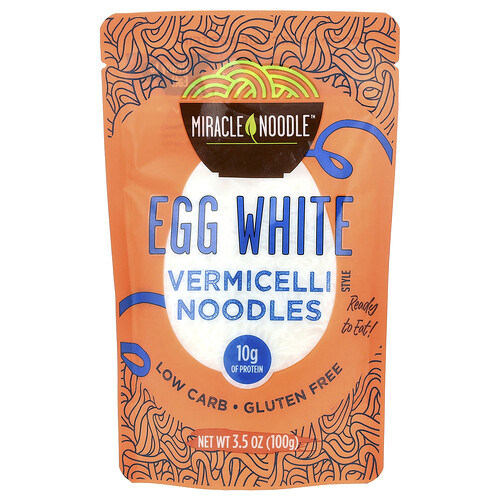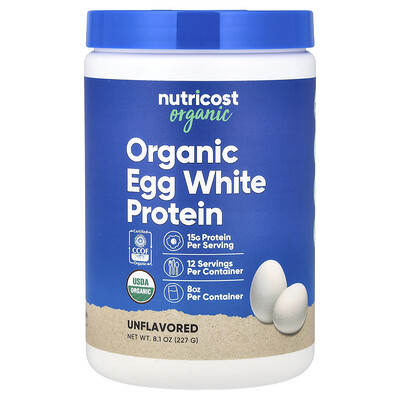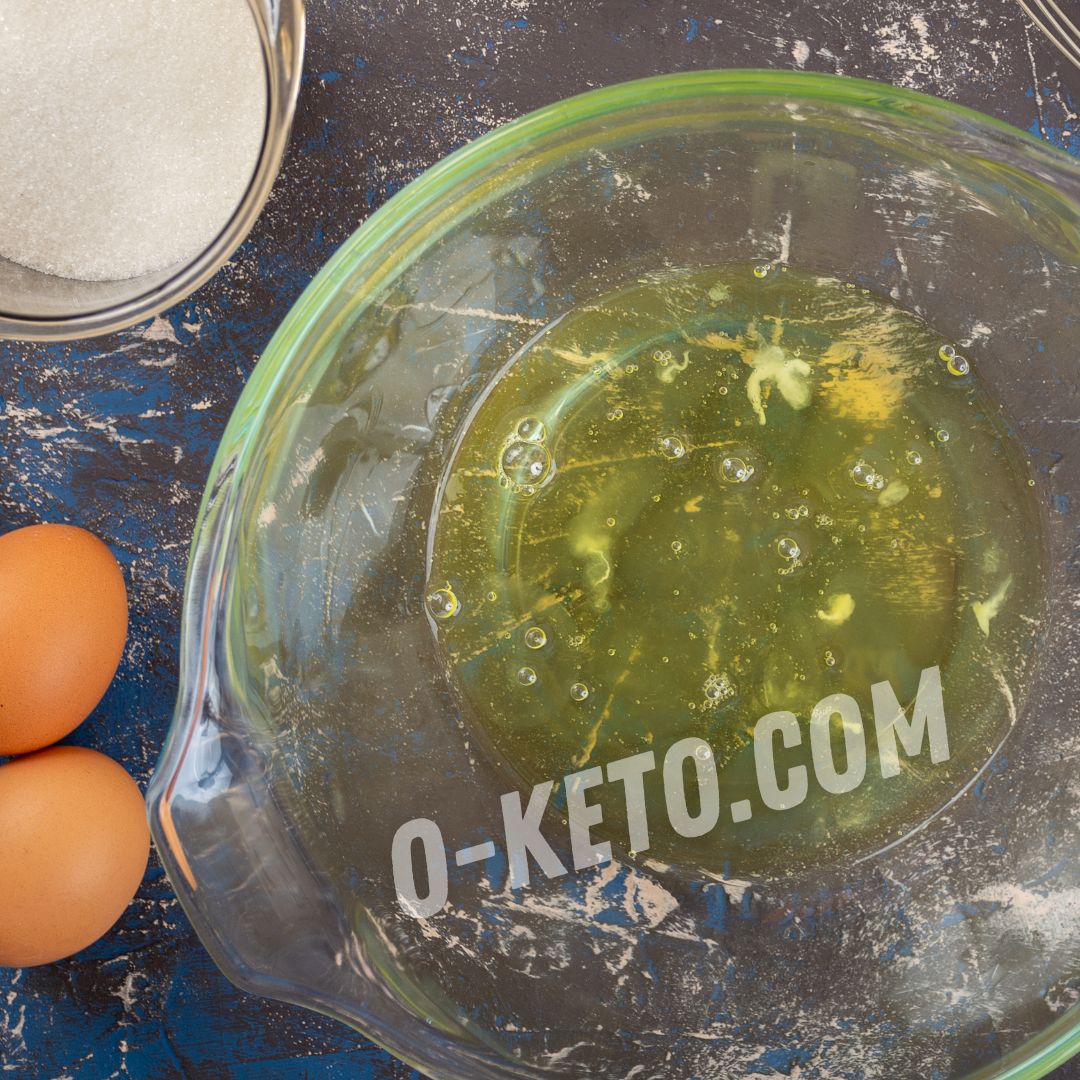

Egg white is the clear part of the egg that turns white and firm when heated. It is used separately from the yolk in omelets, souffles, sugar-free meringues, casseroles, bread-free patties, protein creams and sports-style dishes. In composition it is very different from a whole egg: it contains almost no fat, has a neutral taste and its texture depends on temperature and whipping.
For keto, egg white is convenient by carbohydrates, but it does not fully replace a whole egg. A low-carb diet is usually built not only on protein but also on enough fat. Egg white is best viewed as an addition for structure and extra protein, not as the only base of breakfast or dinner.
Nutrition
The white of one large chicken egg contains about 3.6 g of protein, with almost no fat or carbohydrates. Its glycemic index is zero, and calories are usually around 15-20 kcal per egg white depending on egg size. If pasteurized liquid egg white is used, the label matters because the portion is measured in grams or milliliters rather than pieces.
Egg white provides amino acids, riboflavin and small amounts of minerals including selenium and phosphorus. Vitamins A, D, E, K, much of the choline and the fat are in the yolk. Constantly removing yolks therefore makes the dish less rich in flavor and lower in fat-soluble nutrients.
Is It Keto-Friendly?
By carbohydrates, egg white fits keto well. But a large portion of pure protein without fat may be less filling and less aligned with LCHF. For a keto breakfast, whites are often combined with yolks, butter, cheese, avocado, fish, meat or a sauce made with sour cream and herbs.
Concern about gluconeogenesis should not become fear of a normal protein portion. It is more practical to watch total daily protein, satiety and whether whites are replacing fats at every meal. If hunger returns quickly after a dish made only from whites, it often lacks fat, salt or total volume.
How to Use It
Egg white binds ingredients and gives structure. It works in omelets, souffles, bread-free patties, flourless cheese pancakes, casseroles and protein foam. When overheated, it becomes dry and rubbery, so gentle cooking is better: moderate heat, a lid, a little fat and short timing.
Practical options include:
- egg white omelet with cheese, yolk and butter;
- an addition to whole eggs when more protein is needed;
- a binder for patties, fish cakes and casseroles without flour;
- protein foam for dessert with a suitable sweetener;
- a base for souffle with cottage cheese, cream cheese or herbs;
- a thin layer for coating in almond flour or grated cheese.
Portion
One egg white is a small portion, so recipes usually use several. For an omelet, 2-4 whites are often enough, but a dish made only from whites becomes dry and does not always keep hunger away for long. A more balanced option is some whites with at least one yolk, plus cheese, butter, cream or another fat source.
If egg white is added to minced meat, start with one. It binds the mixture, but too much can make patties dense. For desserts, whites should be whipped in a clean dry bowl with no traces of yolk or fat, otherwise the foam will be weak.
Safety and Storage
Raw egg white carries a foodborne infection risk, so higher-risk groups should use cooked eggs or pasteurized egg white. This matters especially for dishes where the white is not fully heated, such as mousses, creams and soft foams.
Separated whites should be stored in the refrigerator in a closed container and used quickly. Pasteurized liquid egg white is convenient for regular cooking, but the ingredients should be checked: it should not contain sugar, starch or flavored additives. Frozen egg white works in many recipes after thawing, but it is better thawed in the refrigerator rather than on the counter.
Limits and Substitutes
Egg white can cause allergy, and egg white proteins are often the problematic part of the egg. If eggs cause a reaction, egg white should not be considered safer than yolk without individual assessment.
Substitutes include whole egg, pasteurized egg white, whey protein in selected recipes, cottage cheese, fish, chicken or tofu when the goal is adding protein. For keto, it is usually easier to pair egg white with the fatty part of the dish rather than eat it alone.
Common Mistakes
The first mistake is automatically throwing yolks away. Sometimes a recipe requires it, but in ordinary meals the yolk provides fat, flavor, choline and fat-soluble vitamins. The second mistake is cooking whites over high heat without butter: they set quickly, become tough and stick.
The third mistake is treating a protein dish as complete only because it is low in calories. For keto, absence of sugar and carbohydrates is not enough; satiety matters too. A spoon of cream, a little cream cheese, a yolk or butter often makes the same omelet much better without adding flour or starch.