


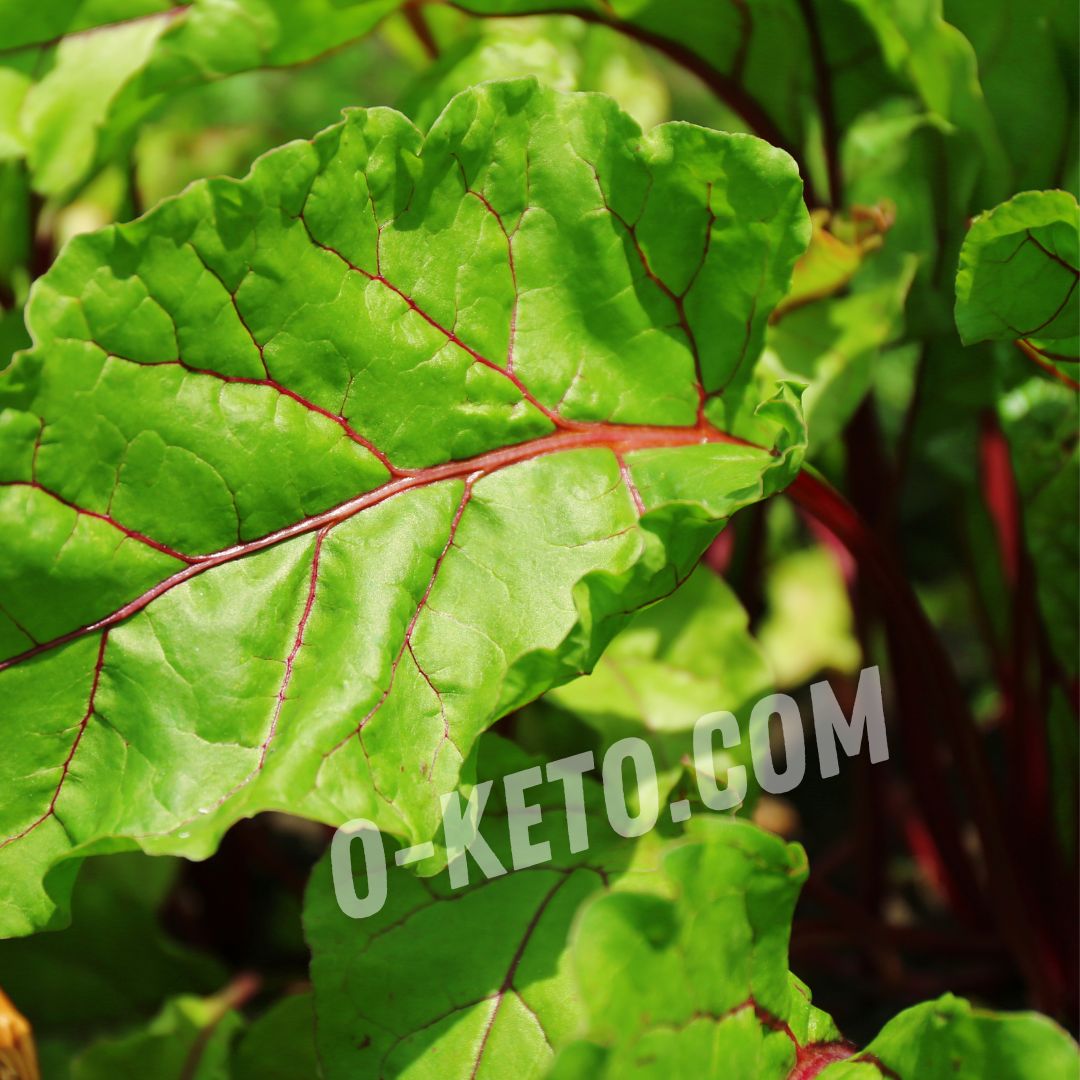

Beet greens are the edible leaves and stems of beetroot. Their flavor is closer to chard and spinach than to the root: the leaves are soft and slightly earthy, while the stems are juicy and sometimes lightly sweet. They are used in salads, sautéed, quickly fried, added to soups, omelets, fillings, side dishes and green sauces.
Per 100 g, beet greens often contain about 22 kcal, around 2 g of protein, 0.2 g of fat, 4 g of carbohydrates and about 2 g of fiber. The glycemic index is often listed around 15, and glycemic load around 1. They contain vitamin K, vitamin A, vitamin C, potassium, magnesium and other minerals. These facts make beet greens a useful leafy vegetable, but not a reason for medical promises.
Nutrition
Beet greens are low in calories and moderately low in carbohydrates, especially when fiber is considered. For keto, they are more convenient than the sweet beetroot itself. The stems may be a little sweeter than the leaves, so in strict keto the portion is still worth counting.
Vitamin K matters for people whose intake is medically monitored. Beet greens, like spinach and chard, may also contain a noticeable amount of oxalates. This does not make them bad, but people prone to oxalate stones or individual reactions should avoid making them a large daily portion.
Is It Keto-Friendly?
Beet greens fit keto and LCHF well as a green side dish, omelet addition or part of a salad. They provide volume, flavor, fiber and minerals without a large carbohydrate load. They work especially well with fat: butter, olive oil, eggs, cheese, bacon, sour cream or cream.
The main point is not to cook them with sugar, flour, sweet sauce or a lot of root vegetables. If the greens are used in borscht or stew together with beetroot, potatoes and carrots, the dish profile depends on the whole mixture, not on the greens alone.
How to Use Them
Young leaves can be eaten raw, but mature greens are often better quickly wilted or sautéed: the flavor softens, volume decreases and stems become more tender. Leaves cook faster than stems, so thick stems are best sliced and added to the pan first.
Practical options include:
- sautéing with garlic, butter and lemon;
- omelet with beet greens, cheese and herbs;
- a side dish for fish, poultry or eggs;
- warm salad with olive oil and sugar-free vinegar;
- an addition to soup without potatoes or grains.
How to Choose and Store
Choose fresh firm leaves without slime, yellow spots or wilting. Stems should be dense, without wet dark areas. If greens are sold with the root, separate them at home: the leaves draw moisture from the beetroot and wilt faster.
Store beet greens in the refrigerator, dry and loosely wrapped in a paper towel or bag with some airflow. Wash them before cooking, not in advance. They can be frozen after brief blanching, but the texture becomes softer.
Beet greens contain oxalate. After calcium-oxalate stones, consider them together with the rest of the diet rather than following a generic prohibition list or replacing individualized dietary advice.
Limits and Substitutes
Beet greens can be a little rough when raw and may not suit everyone in large portions because of fiber and oxalates. Start with a small portion, especially if leafy greens are not common in the diet. With medical limits on vitamin K or oxalates, regular large portions should be discussed with a professional.
They can be replaced with chard, spinach, turnip greens, kale, mustard greens or young cabbage leaves. For mild flavor, spinach and chard are closer. For a sharper mustard note, mustard greens or turnip greens work better.
Portion and Common Mistakes
A usual cooked serving is 80-150 g because the leaves shrink strongly with heat. A mistake is adding leaves and thick stems at the same time: the leaves are ready while stems are still firm. Cook sliced stems first, then add leaves for a couple of minutes. Another mistake is leaving the greens without fat and acid. Butter, lemon, sugar-free vinegar or sour cream makes the flavor softer and more complete.
Leaves and Stems Cook Differently
Beet greens have two parts with different roles. Tender leaves soften quickly and work in omelets, warm salads, fillings and side dishes. The stems are denser, juicier and need more time, so it is better to slice them separately and add them to the pan first. This keeps the leaves brighter while giving the stems enough time to become pleasant.
If the flavor seems too earthy, combine fat, acid and salt: butter with lemon, olive oil with sugar-free vinegar, or sour cream with garlic. For a softer result, mature greens can be briefly blanched, squeezed and then warmed in a pan. Young leaves, on the other hand, should not be cooked for long: they lose volume quickly and become flat in flavor.


