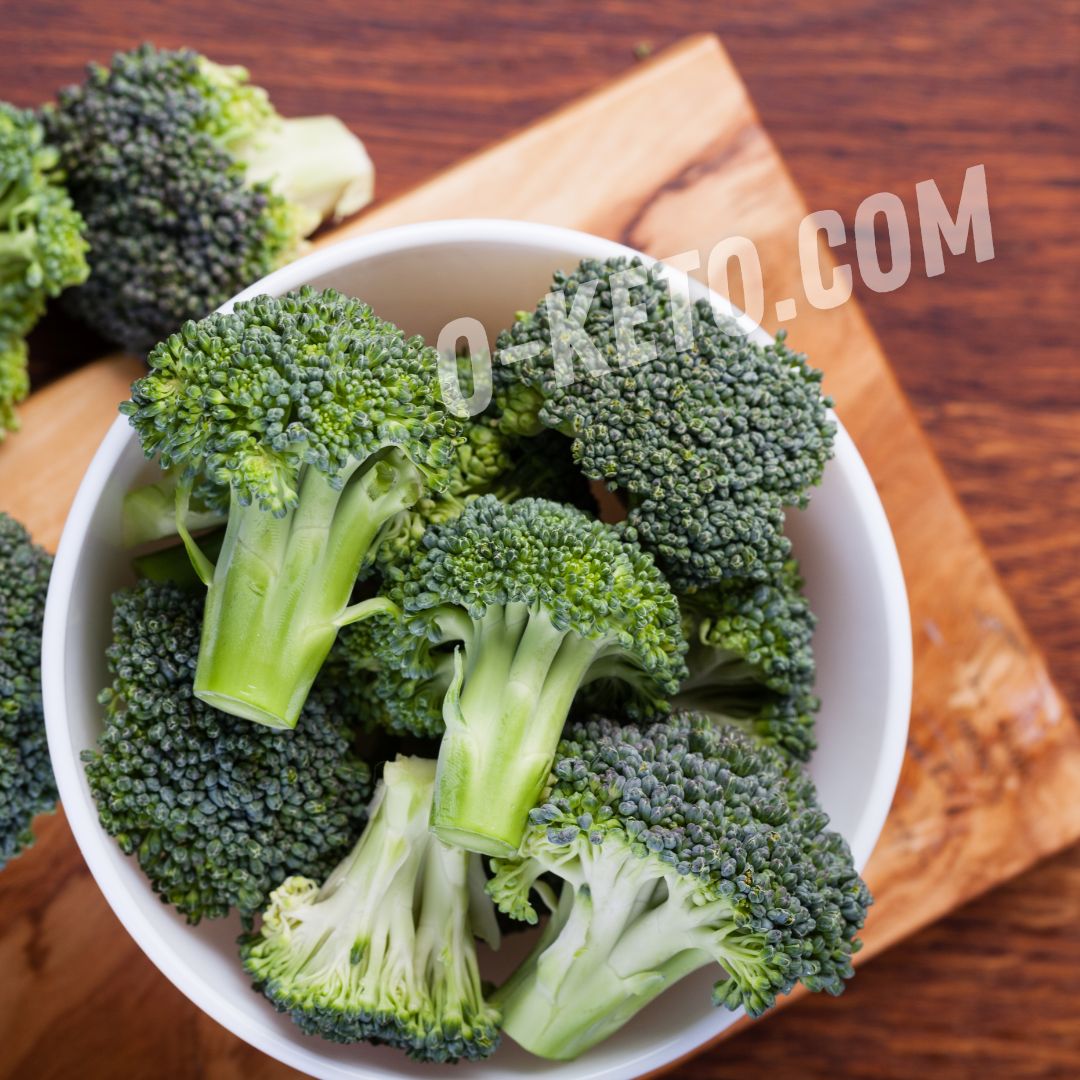

Broccoli is a green vegetable from the cabbage family with firm florets and a juicy stem. In cooking, not only the tops are useful; the peeled stem is tender, slightly sweet, and works well in soups, sides, and salads. Broccoli can be steamed, quickly sautéed, simmered in cream, added to omelets, soups, casseroles, and warm keto salads.
For keto and LCHF, broccoli is convenient because it provides volume, fiber, and a green flavor without a high carbohydrate load. It can replace part of a starchy side, but it does not need to imitate potatoes; it has its own taste and texture. Broccoli works best with fat, protein, and sauce.
Nutritional value
Per 100 g, broccoli usually contains about 30-35 kcal and roughly 4 g of net carbohydrates, depending on the data source and fiber calculation. The glycemic load of a moderate portion is low. It contains fiber, vitamin C, vitamin K, folates, potassium, calcium, iron, and sulfur-containing plant compounds that give the characteristic cabbage aroma.
In practice, broccoli can be used as a basic low-carb vegetable rather than a rare garnish. A 150-250 g portion often fits a keto plate well when the rest of the dish comes from meat, fish, eggs, cheese, butter, or a cream sauce.
Place in keto and LCHF
Broccoli usually fits keto as long as it is not paired with flour, sweet sauces, breading, or large amounts of starchy ingredients. The vegetable itself is low in carbohydrates, but the recipe changes the result: broccoli with cream, cheese, and garlic can remain keto, while broccoli in a sweet sauce or flour-thickened gravy needs separate counting.
If you count carbohydrates strictly, weigh the vegetable before cooking or use a stable portion. After heating, broccoli loses some water, so the cooked portion may look smaller than the raw volume. This matters when judging dishes by eye.
How to cook
The main rule is not to overcook it. Broccoli is best cooked until bright green and slightly firm. Steaming usually takes only a few minutes; in a pan, a short cook with butter, garlic, and salt is enough. Long boiling turns it grey, watery, and strongly cabbage-like.
For keto, creamy versions are especially good: broccoli with cheese, butter, cream, bacon, egg, chicken, salmon, or mushrooms. In blended soup, broccoli pairs with cream, broth, and aged cheese. In casseroles, it is best lightly cooked and dried first so the dish does not become watery.
How to choose
Fresh broccoli should have dense green florets without yellow areas, slime, mold, or sour smell. The stem should be firm, not hollow and not overly woody. Tight small buds suggest freshness, while open yellow flowers mean the vegetable is overmature.
Frozen broccoli is convenient for soups, stews, and casseroles. Good frozen broccoli should not be one icy lump with a lot of snow in the bag. For sautéing and salads, fresh broccoli is usually better because thawed broccoli becomes softer.
Raw florets can be used in salads, but the taste is sharper and the texture denser. For crunch without roughness, briefly blanch broccoli, cool it, and mix with sugar-free mayonnaise, egg, bacon, seeds, or cheese. The vegetable stays bright and does not fall apart.
When broccoli is served as a side dish on its own, it usually needs a clear flavor layer: salt, pepper, garlic, lemon juice, parmesan, sesame, butter, or olive oil. In Asian-style dishes, check the sauce; soy sauce usually fits, while sweet chili sauces and ready-made glazes often add a lot of sugar.
Frozen broccoli is best added straight to hot broth or a pan for soups and stews instead of thawing first. For casseroles, the extra water should be cooked off or drained; otherwise the cheese or cream layer can become thin and watery.
Limits and storage
Some people get gas from cabbage-family vegetables, especially in large portions or raw. If that happens, start with a smaller amount and cook broccoli until softer. Butter, cream, or cheese makes the dish more filling, but personal fiber tolerance still matters.
Store fresh broccoli in the refrigerator, in the vegetable drawer, without sealing it in a wet bag. Wash it right before cooking. Keep cooked broccoli in a closed container and use it within the next few days. If it develops sour smell or slime, discard it.
Substitutes
The closest substitutes are cauliflower, romanesco, Brussels sprouts, green beans, summer squash, zucchini, spinach, mushrooms, or asparagus. For blended soup, cauliflower is the closest; for a crisp side, green beans or asparagus; for casseroles, cauliflower and mushrooms.
If you need a cabbage-family flavor, choose cauliflower, romanesco, or Brussels sprouts. If the goal is simply green volume with few carbohydrates, spinach, chard, bok choy, or green beans work well. For a milder taste, broccoli is often mixed with cauliflower and cheese rather than replaced completely.
Broccoli is a green vegetable from the cabbage family with firm florets and a juicy stem. In cooking, not only the tops are useful; the peeled stem is tender, slightly sweet, and works well in soups, sides, and salads. Broccoli can be steamed, quickly sautéed, simmered in cream, added to omelets, soups, casseroles, and warm keto salads.
For keto and LCHF, broccoli is convenient because it provides volume, fiber, and a green flavor without a high carbohydrate load. It can replace part of a starchy side, but it does not need to imitate potatoes; it has its own taste and texture. Broccoli works best with fat, protein, and sauce.
Nutritional value
Per 100 g, broccoli usually contains about 30-35 kcal and roughly 4 g of net carbohydrates, depending on the data source and fiber calculation. The glycemic load of a moderate portion is low. It contains fiber, vitamin C, vitamin K, folates, potassium, calcium, iron, and sulfur-containing plant compounds that give the characteristic cabbage aroma.
In practice, broccoli can be used as a basic low-carb vegetable rather than a rare garnish. A 150-250 g portion often fits a keto plate well when the rest of the dish comes from meat, fish, eggs, cheese, butter, or a cream sauce.
Place in keto and LCHF
Broccoli usually fits keto as long as it is not paired with flour, sweet sauces, breading, or large amounts of starchy ingredients. The vegetable itself is low in carbohydrates, but the recipe changes the result: broccoli with cream, cheese, and garlic can remain keto, while broccoli in a sweet sauce or flour-thickened gravy needs separate counting.
If you count carbohydrates strictly, weigh the vegetable before cooking or use a stable portion. After heating, broccoli loses some water, so the cooked portion may look smaller than the raw volume. This matters when judging dishes by eye.
How to cook
The main rule is not to overcook it. Broccoli is best cooked until bright green and slightly firm. Steaming usually takes only a few minutes; in a pan, a short cook with butter, garlic, and salt is enough. Long boiling turns it grey, watery, and strongly cabbage-like.
For keto, creamy versions are especially good: broccoli with cheese, butter, cream, bacon, egg, chicken, salmon, or mushrooms. In blended soup, broccoli pairs with cream, broth, and aged cheese. In casseroles, it is best lightly cooked and dried first so the dish does not become watery.
How to choose
Fresh broccoli should have dense green florets without yellow areas, slime, mold, or sour smell. The stem should be firm, not hollow and not overly woody. Tight small buds suggest freshness, while open yellow flowers mean the vegetable is overmature.
Frozen broccoli is convenient for soups, stews, and casseroles. Good frozen broccoli should not be one icy lump with a lot of snow in the bag. For sautéing and salads, fresh broccoli is usually better because thawed broccoli becomes softer.
Raw florets can be used in salads, but the taste is sharper and the texture denser. For crunch without roughness, briefly blanch broccoli, cool it, and mix with sugar-free mayonnaise, egg, bacon, seeds, or cheese. The vegetable stays bright and does not fall apart.
When broccoli is served as a side dish on its own, it usually needs a clear flavor layer: salt, pepper, garlic, lemon juice, parmesan, sesame, butter, or olive oil. In Asian-style dishes, check the sauce; soy sauce usually fits, while sweet chili sauces and ready-made glazes often add a lot of sugar.
Frozen broccoli is best added straight to hot broth or a pan for soups and stews instead of thawing first. For casseroles, the extra water should be cooked off or drained; otherwise the cheese or cream layer can become thin and watery.
Limits and storage
Some people get gas from cabbage-family vegetables, especially in large portions or raw. If that happens, start with a smaller amount and cook broccoli until softer. Butter, cream, or cheese makes the dish more filling, but personal fiber tolerance still matters.
Store fresh broccoli in the refrigerator, in the vegetable drawer, without sealing it in a wet bag. Wash it right before cooking. Keep cooked broccoli in a closed container and use it within the next few days. If it develops sour smell or slime, discard it.
Substitutes
The closest substitutes are cauliflower, romanesco, Brussels sprouts, green beans, summer squash, zucchini, spinach, mushrooms, or asparagus. For blended soup, cauliflower is the closest; for a crisp side, green beans or asparagus; for casseroles, cauliflower and mushrooms.
If you need a cabbage-family flavor, choose cauliflower, romanesco, or Brussels sprouts. If the goal is simply green volume with few carbohydrates, spinach, chard, bok choy, or green beans work well. For a milder taste, broccoli is often mixed with cauliflower and cheese rather than replaced completely.