


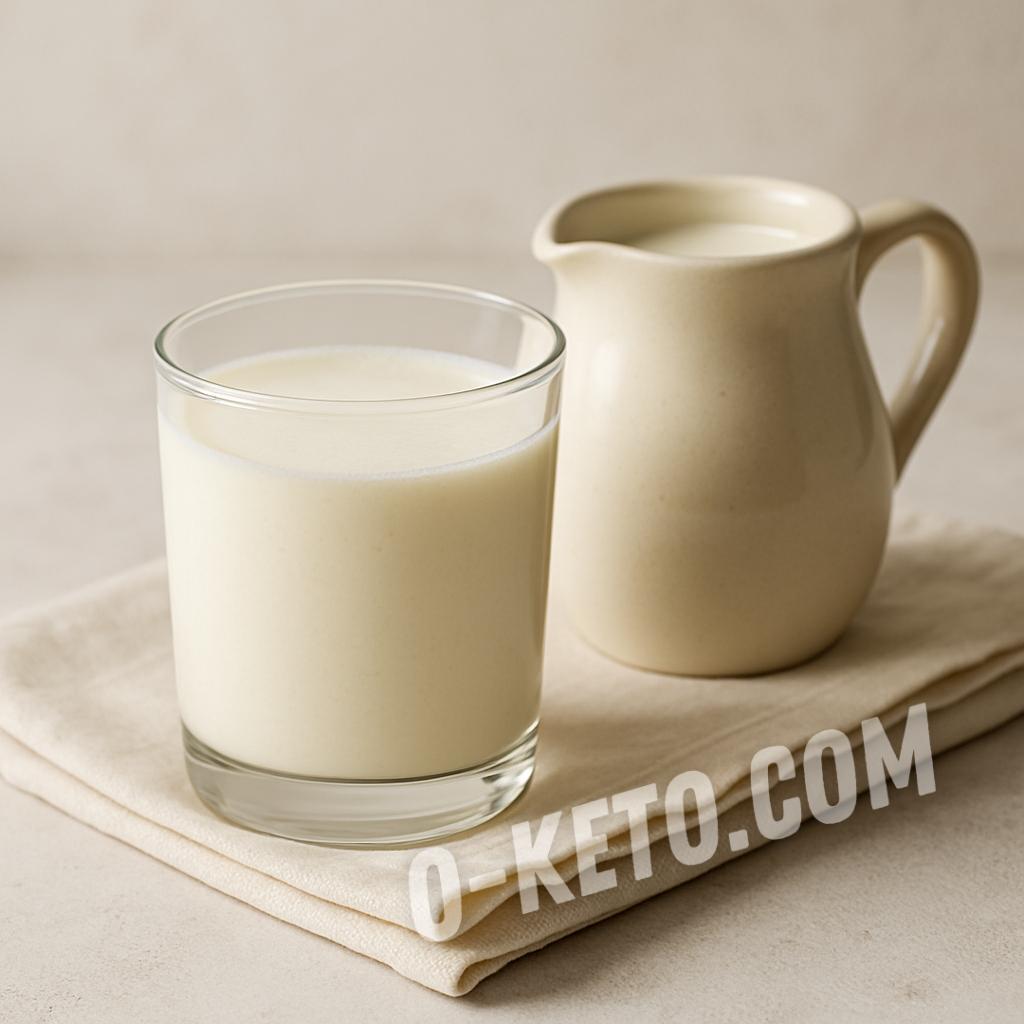

Buttermilk is a light cultured dairy product with a gentle tangy-creamy taste and relatively low fat content. Historically, the name referred to the liquid left after churning butter from cream. In modern retail, however, buttermilk usually means cultured buttermilk: a milk base fermented with starter cultures until it develops mild acidity and a slightly thicker texture. For keto, that distinction matters because the label may sound traditional, while the practical questions are still the same: how many carbs, how much lactose, and what exactly was added to the product.
What kind of product it is
Buttermilk is usually thinner than kefir or ryazhenka, but fuller than plain milk. When unsweetened, it is pleasantly sour rather than dessert-like. In cooking it is valued not only as a drink, but as a working ingredient. Its acidity helps marinades, dressings, sauces, and low-carb baking, giving a dairy note without the richness of cream.
It is useful to distinguish buttermilk from whey and kefir. Whey is usually lighter in protein and minerals after curd separation. Kefir tends to taste more fermented and often feels denser. Buttermilk sits somewhere in between: still a true dairy product with complete protein, calcium, and lactose, yet generally lower in fat and calories than cream and many yogurts.
Nutrition and keto context
Per 100 g, buttermilk is typically around 40 kcal, about 3.3 g protein, 1.1 g fat, and 4.8 g carbohydrates. That makes it light in calories, but not carb-free. Most of those carbohydrates come from lactose, so buttermilk is not one of those dairy foods that fits strict keto in unlimited drink-sized portions. A few tablespoons in a dressing or baking recipe are one thing; a full glass is much more noticeable in daily carb budgeting.
For keto, buttermilk usually works better as an ingredient than as a free-pour beverage. It can be useful in marinades, herb dressings, chilled sauces, or low-carb pancakes and breads. But if the goal is a tighter carbohydrate ceiling, buttermilk often loses to heavy cream, unsweetened sour cream, or full-fat Greek yogurt with a more favorable fat-to-carb ratio.
Nutrients and practical value
Buttermilk provides calcium, phosphorus, potassium, riboflavin, vitamin B12, and some vitamin A. Its protein is complete, meaning it contains all essential amino acids, although the total amount of protein in a normal serving is not especially high. In practice, it is better seen as a light dairy source of minerals and B vitamins than as a major protein or fat food.
Cultured buttermilk may contain live lactic cultures, but that depends on manufacturing and storage. It is better not to assume a guaranteed probiotic effect from the name alone. Some products are handled in ways that change culture viability, so the ingredient list and manufacturer positioning matter more than romantic assumptions about fermentation.
How to use it
Buttermilk is most useful when a recipe needs gentle acidity without the heaviness of cream. It works well for chicken, turkey, and lean pork marinades, for herb sauces, chilled dressings, and low-carb batters based on almond or coconut flour. In moderate amounts, it can soften texture and improve flavor without turning everything into a heavy dairy dish.
If it is used on keto, portion awareness matters. A few spoonfuls in a marinade are very different from 250 mL in a batter or a large glass as a drink. Buttermilk is most practical for people who intentionally leave room for dairy carbs and tolerate lactose reasonably well.
How to choose
The best version usually has a short, transparent ingredient list: milk or a reduced-fat dairy base plus starter cultures, without added sugar, starch, syrup, flavors, or fruit fillers. The carbohydrate line per 100 g is especially important because it shows how keto-friendly the real product is. Sodium and carb values can vary noticeably between brands.
Texture also matters. A thinner version is convenient for marinades and dressings, while a slightly thicker one may work better in sauces and baking. The smell should be clean, sour-dairy, and not yeasty, harsh, or bitter. After opening, buttermilk should stay refrigerated and be used promptly.
Limitations
Buttermilk is usually not the best choice for strict ketosis when consumed in large drink-sized servings. It may also be poorly tolerated in significant lactose intolerance, milk-protein sensitivity, or diet patterns that restrict fermented dairy more strongly. It is not a fasting-compatible drink for intermittent fasting: it contains calories, protein, and lactose, so it should be treated as food, not as water, tea, or black coffee.
In practical terms, buttermilk is best viewed as a functional dairy ingredient with moderate carbohydrates. It can fit a diet in small amounts when it is well tolerated and intentionally budgeted, but it does not become automatically keto-friendly simply because it is a fermented milk product.


