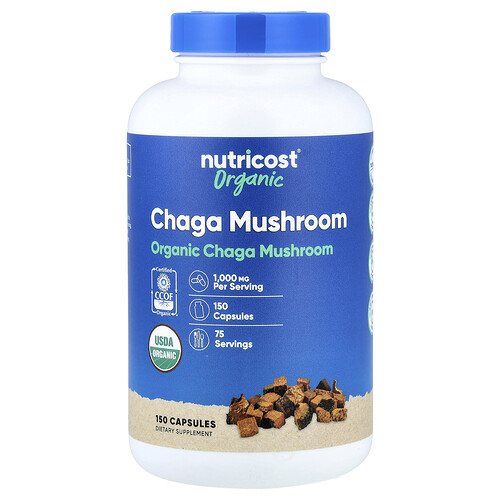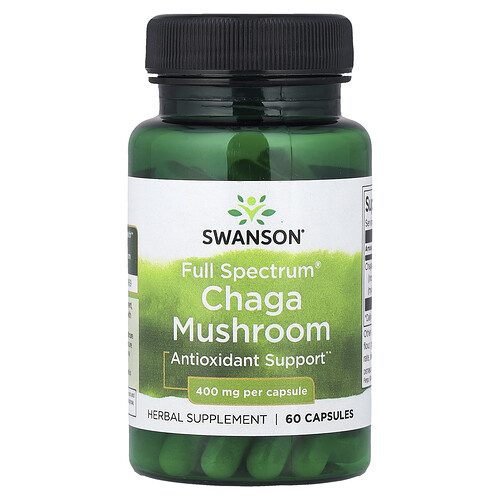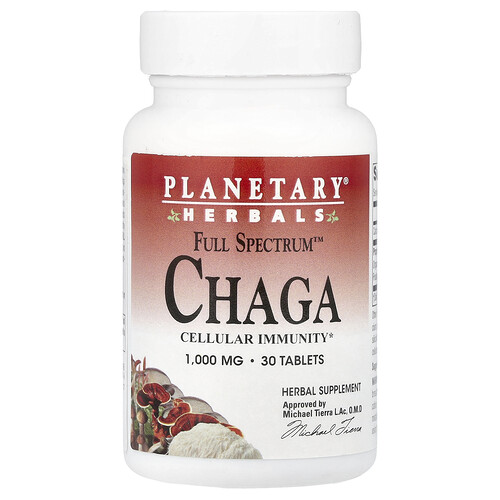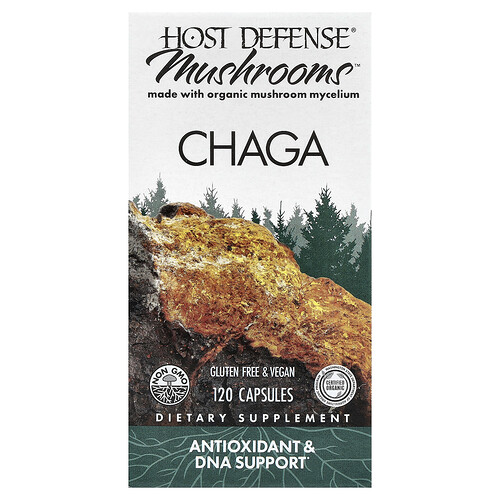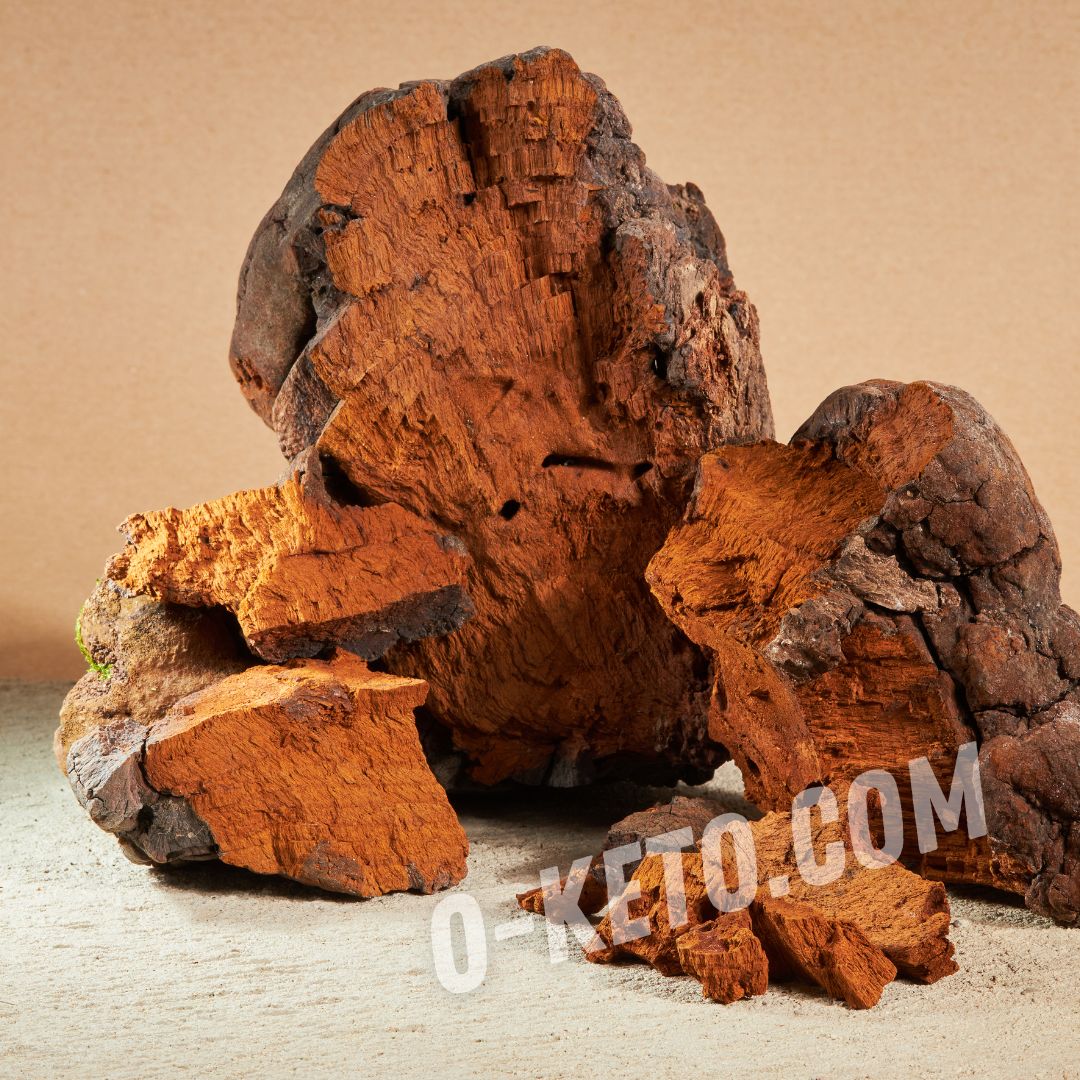

Chaga is the dark woody fungus Inonotus obliquus, most often found on birch trees in cold forest regions. From the outside it looks like a hard black growth with a cracked surface, while the inside is brown and rusty in color. In everyday use, chaga is usually not treated as an edible mushroom for cooking, but as material for infusion, decoction, powder, or extract with a bitter woody taste.
Chaga has a strong cultural image: it is often associated with northern forests and used as a taiga-style tea. For everyday food use, the practical side matters more. It is a bitter, woody ingredient for drinks, almost without calories, without sugar, and very different from ordinary tea leaves. It should be treated as a flavor ingredient and a hot-drink ritual, not as a replacement for food or medical care.
Composition and food role
A serving of chaga infusion is usually made from a small amount of dried material, so the drink provides minimal calories. The dry fungus contains dietary fiber, polyphenol compounds, melanins, organic acids, minerals, and oxalates. During brewing, only part of these compounds moves into the water, and the final composition depends on the raw material, grind size, temperature, and steeping time.
Chaga is not a meaningful source of protein, fat, or carbohydrates in a normal serving. In the diet, it acts as an unsweetened drink with a pronounced taste. If powder is consumed together with the drink or added to a smoothie, it will bring more fiber, but the portion still remains small.
Fits keto and LCHF
Unsweetened chaga infusion fits keto and LCHF because it contains almost no digestible carbohydrates. It can replace sweet tea, compote, or dessert drinks if you enjoy the woody and earthy flavor. Additions matter: honey, syrups, sugar, sweet plant milk, and instant mixes quickly change the profile of the drink.
For a softer taste, chaga can be combined with cream, unsweetened coconut milk, cinnamon, vanilla, cocoa, mint, or black tea. Sweetener can be added if desired, in a small amount. If you follow a strict plan, it is easier to prepare the drink yourself from dried chaga or powder with a clear ingredient list.
How to brew
Dried chaga is usually broken into pieces or bought as ready-made chips. Boiling water is not always required: many people pour hot water over the material and steep it for a long time so that the flavor becomes deeper and softer. For a home drink, use 1–2 teaspoons of crushed chaga per cup, or more for a thermos, add hot water, and leave it for several hours.
A decoction is stronger: chaga is kept over gentle heat without a hard boil, then strained. Powder is convenient for a quick drink, but it colors the liquid more strongly and can leave sediment. Extracts and capsules should be used according to the producer’s instructions, without increasing the dose just because the product is plant-based.
Flavor and pairings
Chaga tastes dry, woody, slightly bitter, with notes of bark, earth, strong tea, and sometimes cocoa. Not everyone likes it from the first cup, so it is better to start with a weak infusion. Hot chaga pairs with cinnamon, cloves, cardamom, ginger, lemon zest, mint, cream, and unsweetened cocoa. Cold chaga can be used as a base for an unsweetened iced drink.
In cooking, the powder is sometimes added to creams, low-carb baking, sauces, or marinades, but carefully: too much brings rough bitterness and a very dark color. It is better to think of chaga as a tea-like spice note, not as a universal seasoning.
How to choose
Good chaga should be well dried, without mold, musty odor, or foreign material. Pieces are usually dark outside and brown-rusty inside. Material that is too moist stores poorly, and powder of unclear origin is harder to judge. When buying powder or extract, check the ingredient list: it should not contain sugar, flavorings, or unnecessary fillers.
Wild harvesting requires care. Chaga is taken from living mature birch trees, not from dead trunks or rotten wood. If you do not have experience, it is safer to buy from a supplier that indicates the harvest region and drying method.
Limitations
Chaga contains oxalates, so people prone to kidney stones, people with serious kidney problems, pregnant or breastfeeding women, those taking anticoagulants, or anyone preparing for surgery should discuss regular use with a clinician. Caution is also reasonable when taking medicines that affect blood clotting or glucose levels. Even a good product should not be consumed by the liter every day.
How to store
Keep dried chaga in a tightly closed jar or bag, in a dark dry place, away from spices and coffee. Moisture spoils the material quickly, so the spoon and container should be dry. Prepared infusion should be stored in the refrigerator and used within 1–2 days; if it develops a sour smell or a film on the surface, it is better not to drink it.