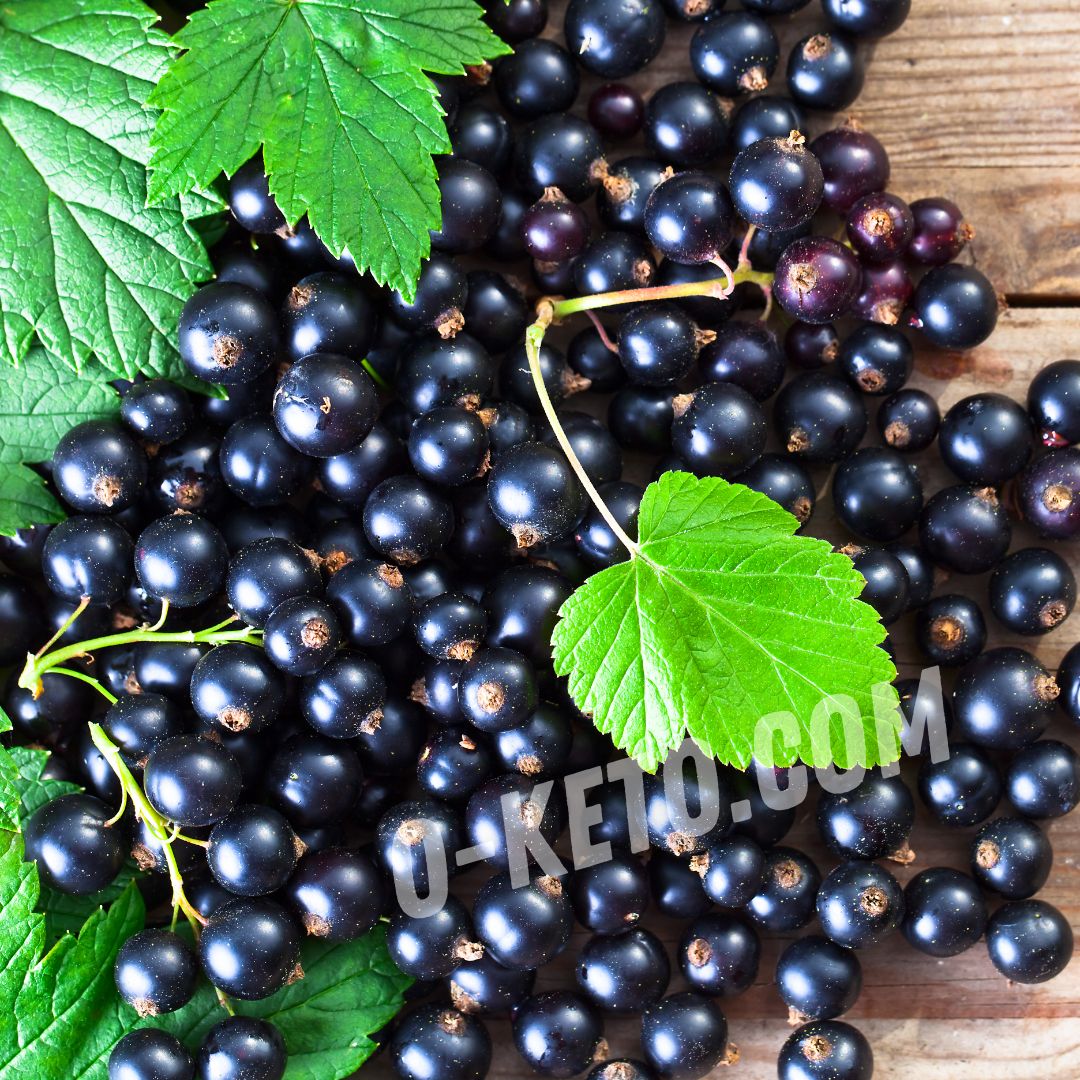

Black currant is a dark sweet-tart berry with a strong aroma, slightly astringent skin, and vivid juice. It is eaten fresh, frozen, added to sauces, sugar-free desserts, cottage-cheese creams, yogurt, tea, and meat dishes. Unlike many sweet fruits, black currant gives a lot of flavor in a small portion, which makes it useful as an accent in low-carb cooking.
The berry contains vitamin C, anthocyanins, flavonoids, pectin, vitamin A, vitamin E, B vitamins, potassium, calcium, magnesium, and iron. For keto, however, the practical point is not the list of compounds by itself, but the relationship between flavor, portion, and carbohydrates. Black currant is bright, tart, and aromatic, so it is easier to dose than sweeter berries.
Therapeutic properties of black currant
Black currant anthocyanins are studied in laboratory and clinical research. The proposed effects include:
- support for endothelial function and other measures of vascular response;
- a possible reduction in the short-term deterioration of vascular function after a high-fat meal;
- a modest effect on post-meal glucose and insulin levels in some studies.
However, clinical studies used drinks or extracts with concentrated anthocyanin doses rather than an ordinary serving of fresh berries. These results therefore do not establish treatment for cardiovascular disease or diabetes and cannot be transferred directly to black currant as a regular food.
Nutritional value
Per 100 g, black currant is often listed with about 11 g of carbohydrates, of which roughly 7 g are dietary fiber. That gives about 4 g of net carbohydrates per 100 g, though values may vary by variety, ripeness, and data source. Calories are usually modest, and the glycemic load of a small portion remains moderate.
For strict tracking, weigh the berries, especially when they are used in sauce, puree, or dessert. Whole berries are easy to see on a plate, while 100-150 g of berries can turn into only a few spoonfuls of intense sauce. For that reason, homemade sugar-free preparations should still be counted by berry weight.
Place in keto and LCHF
Black currant can fit keto and LCHF in small portions. A convenient range is often 30-70 g as an addition to cottage cheese, unsweetened yogurt, cream, nuts, or a cheese-based dessert. Larger bowls of berries need separate tracking, especially if the menu already contains other carbohydrate sources.
Fresh and frozen currants without sugar are one thing; jam, syrup, sweet drinks, fruit leather, and sweet sauces are another. Even when a product is made from berries, added sugar quickly changes its place in the diet. For keto, use whole berries, unsweetened puree, or a sauce with a sugar-free sweetener if it suits you.
How to use
Black currant works in both savory and sweet dishes. Add a few berries to a salad with cheese, nuts, and greens; blend with lemon and oil for a sauce for duck or pork; mix with cream, cottage cheese, or Greek yogurt; or add to a low-carb cheesecake or sugar-free jelly.
If the berry is very tart, it does not always need to be made sweet. A rich base can soften it: cream, mascarpone, coconut cream, nut butter, or soft cheese. The acidity cuts through fat well, so black currant is especially good with duck, pork, pâtés, aged cheeses, and rich fish.
How to choose
Fresh berries should be dark and aromatic, without mold, fermentation smell, slime, or a large amount of leaked juice. Small stems and leaves are not a problem, but a wet sticky mass at the bottom of the package suggests poor storage. Very soft berries are best used immediately for sauce or puree.
Frozen currants should be loose, without a thick layer of ice or snowy crumbs. In purees and ready berry mixes, check the ingredients: there should be no sugar, syrup, apple puree, or starch if you follow a low-carb diet.
Limits and storage
Black currant is tart, so it may irritate the mouth or stomach in sensitive people. Start with a small portion if you have not eaten it for a long time. If you take medication that affects blood clotting, foods with vitamin K are best discussed with a clinician in the context of your whole diet, without sudden portion changes.
Store fresh currants in the refrigerator and wash them right before use rather than in advance. For longer storage, freeze the berries in a thin layer, then transfer them to a bag. Thawed currants are best used in sauces, creams, and desserts because the texture becomes softer.
Substitutes
Red currant, cranberry, lingonberry, raspberry, blackberry, or a little lemon with berries can play a similar tart role. For meat sauce, sugar-free cranberry and red currant are the closest options. For yogurt and cottage cheese, raspberry or strawberry will be softer, but the taste will be less astringent.
Sources
- Acute Effects of an Anthocyanin-Rich Blackcurrant Beverage on Markers of Cardiovascular Disease Risk in Healthy Adults: A Randomized, Double-Blind, Placebo-Controlled, Crossover Trial — Journal of Nutrition
- Drinks containing anthocyanin-rich blackcurrant extract decrease postprandial blood glucose, insulin and incretin concentrations — Journal of Nutritional Science
- Effects of blackcurrant extract on arterial functions in older adults: A randomized, double-blind, placebo-controlled, crossover trial — Current Therapeutic Research