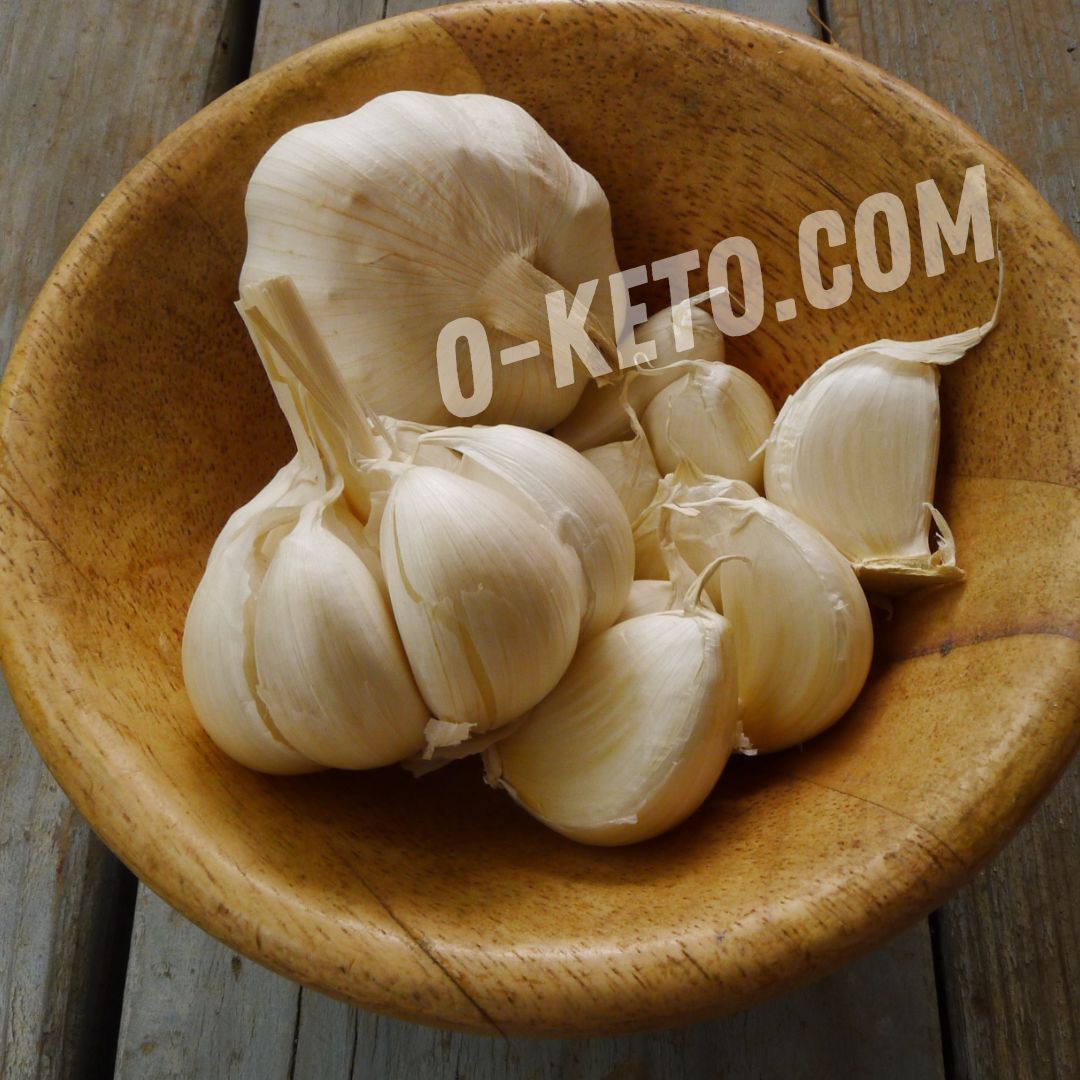

Garlic is a bulb plant, Allium sativum, with a sharp aroma, pungent taste, and many culinary roles. It is used raw, fried, stewed, roasted, pickled, dried, granulated, and as paste. One clove can change a dish more than a whole spoonful of mild herbs, so garlic matters not by volume but by precision.
Historically, garlic appears in Mediterranean, Caucasian, Eastern European, Middle Eastern, Indian, Chinese, and Latin American cooking. It is valued for aroma, for connecting fat, acid, and salt, and for making simple foods more expressive. In keto and LCHF this is especially convenient: a small amount gives a lot of flavor with moderate carbohydrate impact.
Nutrition profile
One medium garlic clove usually weighs about 4–5 g and contains roughly 1 g carbohydrates. Per 100 g the numbers look larger, but garlic is rarely eaten in such amounts in real dishes. It has little protein and fat, while providing fiber, sulfur compounds, potassium, manganese, vitamin C, and B vitamins in small amounts.
The characteristic smell appears when a clove is cut, crushed, or grated: compounds inside the cells react, and the aroma quickly becomes stronger. With long heating, sharpness fades and the taste becomes sweeter and softer. Raw garlic, fried garlic, and a roasted head behave almost like different ingredients.
Is it suitable for keto?
Garlic fits keto well when used as a seasoning. One or two cloves in a pan, sauce, or marinade usually add little net carbohydrate per serving. The issue is not garlic itself but ready-made garlic sauces, pastes, marinades, and seasoning blends that may contain sugar, starch, syrups, flour, and cheap oils.
In low-carb cooking, garlic is especially useful in oil and cream sauces, with meat, fish, seafood, eggs, mushrooms, cauliflower, zucchini, eggplant, greens, and cheeses. It helps build flavor without bread, potatoes, or sweet sauces. Still, the portion should be counted when garlic is used heavily, as in aioli, garlic paste, or marinade.
How to use it
Raw garlic is the sharpest. Crush or mince it and add it to sauces, dressings, butter, sour cream, unsweetened yogurt, mayonnaise, or salsa. If it rests for 5–10 minutes after chopping, the aroma becomes fuller. For a softer taste, warm cloves gently in oil without letting them turn dark.
Burnt garlic turns bitter quickly, so it is often added after onion or near the end of frying. For roasting, cut the top off the head, add oil and salt, wrap it, and cook until soft. This paste fits meat, fish, vegetables, and sugar-free sauces.
Dried garlic is useful in rubs, flour-free coatings, marinades, and spice blends. Granules give a more even taste, powder disperses faster in sauce, and a fresh clove gives the liveliest aroma. These forms are not always interchangeable one to one.
How to choose
A good garlic head is firm, dry, heavy for its size, with intact skin and no soft spots. Cloves should not be wet, gray, hollow, or moldy. A green sprout inside is not dangerous, but it can add sharper bitterness, especially in a raw sauce.
Young garlic is juicier and milder, while older garlic is drier and more concentrated. Purple or white skin is not better by itself; freshness, density, and smell matter more. For peeled garlic and ready paste, check ingredients, date, oil, salt, acid, and sugar.
Limits
Garlic can irritate the stomach, leave a strong breath odor, and be difficult for people sensitive to FODMAPs. Raw garlic is often harder to tolerate than gently cooked garlic. With individual reactions, reflux, irritated mucosa, upcoming procedures, or medication that affects blood clotting, large amounts are better discussed with a qualified professional.
Homemade garlic in oil needs care. Raw cloves covered with oil and left at room temperature are unsafe. Keep such mixtures refrigerated, make small portions, and do not store them for long. Long storage requires tested recipes with acid and proper processing.
Storage
Whole heads should be kept in a dry ventilated place, not in a sealed wet bag and not next to the stove. The refrigerator is not the best place for long storage of whole heads, because humidity can speed sprouting and spoilage. Peeled cloves keep only briefly in the refrigerator, and chopped garlic should be used quickly.
What can replace it?
For a related aroma, use shallot, scallion, chives, garlic scapes, asafoetida, granulated garlic, or garlic oil with a clear composition. When pieces are poorly tolerated, strained garlic-infused oil may work for some people, depending on tolerance. For a soft background, use leek or roasted garlic; for a sharp note, a fresh clove is closest.
Research Notes
Garlic is one of the most studied culinary spices. The interest comes from its sulfur-containing compounds, strong aroma, and ability to change flavor even in very small amounts. Scientific reviews often discuss garlic in relation to cardiovascular markers, oxidative stress, immune response, microbial growth, and metabolic health. For everyday food, the key point is simpler: garlic makes a diet more expressive and can reduce the need for sweet sauces and starchy flavor boosters.
In practice, garlic can be used raw, roasted, stewed, fried, dried, or powdered. Raw garlic is sharper and more intense; roasted garlic becomes soft and slightly sweet; dried garlic is convenient for spice blends, sausages, marinades, and sauces. To soften the smell after a garlic dish, parsley, fennel, anise, lemon water for hands, and careful dosing in the recipe can help.
Limits
Culinary amounts of garlic are usually safe, but high doses, extracts, and supplements may irritate the stomach and affect blood clotting. Caution is reasonable with reflux, gastritis, preparation for surgery, anticoagulant use, pregnancy, and individual intolerance. If garlic causes burning or heaviness, roasted or dried garlic in smaller amounts may be better tolerated.
Garlic is a bulb plant, Allium sativum, with a sharp aroma, pungent taste, and many culinary roles. It is used raw, fried, stewed, roasted, pickled, dried, granulated, and as paste. One clove can change a dish more than a whole spoonful of mild herbs, so garlic matters not by volume but by precision.
Historically, garlic appears in Mediterranean, Caucasian, Eastern European, Middle Eastern, Indian, Chinese, and Latin American cooking. It is valued for aroma, for connecting fat, acid, and salt, and for making simple foods more expressive. In keto and LCHF this is especially convenient: a small amount gives a lot of flavor with moderate carbohydrate impact.
Nutrition profile
One medium garlic clove usually weighs about 4–5 g and contains roughly 1 g carbohydrates. Per 100 g the numbers look larger, but garlic is rarely eaten in such amounts in real dishes. It has little protein and fat, while providing fiber, sulfur compounds, potassium, manganese, vitamin C, and B vitamins in small amounts.
The characteristic smell appears when a clove is cut, crushed, or grated: compounds inside the cells react, and the aroma quickly becomes stronger. With long heating, sharpness fades and the taste becomes sweeter and softer. Raw garlic, fried garlic, and a roasted head behave almost like different ingredients.
Is it suitable for keto?
Garlic fits keto well when used as a seasoning. One or two cloves in a pan, sauce, or marinade usually add little net carbohydrate per serving. The issue is not garlic itself but ready-made garlic sauces, pastes, marinades, and seasoning blends that may contain sugar, starch, syrups, flour, and cheap oils.
In low-carb cooking, garlic is especially useful in oil and cream sauces, with meat, fish, seafood, eggs, mushrooms, cauliflower, zucchini, eggplant, greens, and cheeses. It helps build flavor without bread, potatoes, or sweet sauces. Still, the portion should be counted when garlic is used heavily, as in aioli, garlic paste, or marinade.
How to use it
Raw garlic is the sharpest. Crush or mince it and add it to sauces, dressings, butter, sour cream, unsweetened yogurt, mayonnaise, or salsa. If it rests for 5–10 minutes after chopping, the aroma becomes fuller. For a softer taste, warm cloves gently in oil without letting them turn dark.
Burnt garlic turns bitter quickly, so it is often added after onion or near the end of frying. For roasting, cut the top off the head, add oil and salt, wrap it, and cook until soft. This paste fits meat, fish, vegetables, and sugar-free sauces.
Dried garlic is useful in rubs, flour-free coatings, marinades, and spice blends. Granules give a more even taste, powder disperses faster in sauce, and a fresh clove gives the liveliest aroma. These forms are not always interchangeable one to one.
How to choose
A good garlic head is firm, dry, heavy for its size, with intact skin and no soft spots. Cloves should not be wet, gray, hollow, or moldy. A green sprout inside is not dangerous, but it can add sharper bitterness, especially in a raw sauce.
Young garlic is juicier and milder, while older garlic is drier and more concentrated. Purple or white skin is not better by itself; freshness, density, and smell matter more. For peeled garlic and ready paste, check ingredients, date, oil, salt, acid, and sugar.
Limits
Garlic can irritate the stomach, leave a strong breath odor, and be difficult for people sensitive to FODMAPs. Raw garlic is often harder to tolerate than gently cooked garlic. With individual reactions, reflux, irritated mucosa, upcoming procedures, or medication that affects blood clotting, large amounts are better discussed with a qualified professional.
Homemade garlic in oil needs care. Raw cloves covered with oil and left at room temperature are unsafe. Keep such mixtures refrigerated, make small portions, and do not store them for long. Long storage requires tested recipes with acid and proper processing.
Storage
Whole heads should be kept in a dry ventilated place, not in a sealed wet bag and not next to the stove. The refrigerator is not the best place for long storage of whole heads, because humidity can speed sprouting and spoilage. Peeled cloves keep only briefly in the refrigerator, and chopped garlic should be used quickly.
What can replace it?
For a related aroma, use shallot, scallion, chives, garlic scapes, asafoetida, granulated garlic, or garlic oil with a clear composition. When pieces are poorly tolerated, strained garlic-infused oil may work for some people, depending on tolerance. For a soft background, use leek or roasted garlic; for a sharp note, a fresh clove is closest.
Research Notes
Garlic is one of the most studied culinary spices. The interest comes from its sulfur-containing compounds, strong aroma, and ability to change flavor even in very small amounts. Scientific reviews often discuss garlic in relation to cardiovascular markers, oxidative stress, immune response, microbial growth, and metabolic health. For everyday food, the key point is simpler: garlic makes a diet more expressive and can reduce the need for sweet sauces and starchy flavor boosters.
In practice, garlic can be used raw, roasted, stewed, fried, dried, or powdered. Raw garlic is sharper and more intense; roasted garlic becomes soft and slightly sweet; dried garlic is convenient for spice blends, sausages, marinades, and sauces. To soften the smell after a garlic dish, parsley, fennel, anise, lemon water for hands, and careful dosing in the recipe can help.
Limits
Culinary amounts of garlic are usually safe, but high doses, extracts, and supplements may irritate the stomach and affect blood clotting. Caution is reasonable with reflux, gastritis, preparation for surgery, anticoagulant use, pregnancy, and individual intolerance. If garlic causes burning or heaviness, roasted or dried garlic in smaller amounts may be better tolerated.