


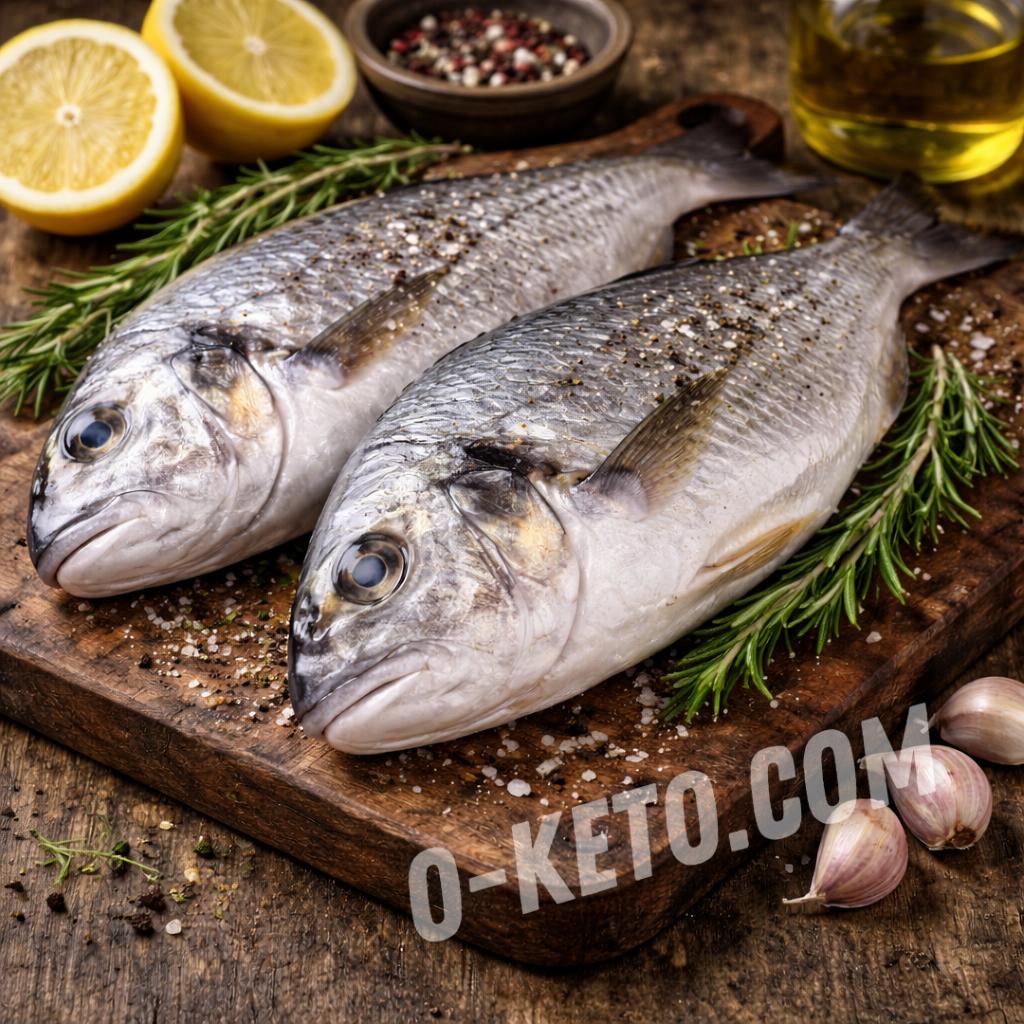

Gilthead seabream, often sold as dorado or dorade, is a marine fish with firm white flesh and a mild taste. It is common in the Mediterranean Sea and the eastern Atlantic, and in shops it is often sold chilled or frozen as a whole fish. The golden stripe between the eyes is one of its recognizable features.
Dorado is valued for a clean flavor without a harsh fishy note. It is convenient to cook whole: the skin protects the flesh from drying out, and the bones help the fish keep its shape. It works on the grill, in a pan, in the oven, steamed, or gently stewed with lemon, herbs, and olive oil.
Nutrition
A 100 g portion of raw dorado usually has about 110-140 kcal, roughly 19-21 g of protein, 4-7 g of fat, and 0 g of carbohydrates. Exact numbers depend on fish size, season, feed, and whether the fish is wild or farmed. In any case, it is a protein-rich marine fish with moderate fat, not as lean as cod and not as oily as mackerel.
The lack of carbohydrates makes dorado a convenient base for a low-carb meal. But the final nutrition of the dish depends on additions: flour, sweet sauce, potato, or thick breading change the profile more than the fish itself. Butter, creamy sauce, or avocado increase fat and calories, which may be useful for keto.
Is it suitable for keto?
Dorado fits keto and LCHF in simple forms: whole fish, fillet, grill, pan, oven, or steam without flour and sweet marinades. It provides protein without starch, while its moderate fat makes the taste softer than very lean white fish. If more fat is needed, add olive oil, butter, ghee, yolk-based sauce, or avocado.
For strict keto, avoid restaurant versions with potatoes, sweet glaze, flour crust, teriyaki-style sauce, or spice blends with sugar. A safer choice is a simple plate: fish, herbs, lemon, low-starch vegetables, and a clear unsweetened sauce.
How to cook
Before cooking a whole dorado, remove scales and innards, rinse it, and dry it well. Shallow cuts in the skin help salt, oil, and spices spread more evenly. Lemon, thyme, rosemary, parsley, garlic, or bay leaf are often placed inside the fish.
On the grill, brush the fish with oil and cook over moderate heat, without turning it too often. In a pan, dry the skin first so it browns better. In the oven, dorado is easy to cook with lemon, herbs, and vegetables; a small fish cooks quickly, so it should not be left too long. Fillets cook even faster, and thin parts dry out easily.
How to choose
Fresh dorado should smell like the sea, not like old fish. The eyes should be clear and convex, the gills reddish, the skin shiny, and the scales tight. When pressed, the flesh should spring back. Cloudy eyes, sticky surface, gray gills, and a strong smell are poor signs.
Frozen fish should not have a thick snow layer, yellow stains, or a large amount of ice inside the package. After thawing, fillets should remain firm, not loose and watery. If the fish is already marinated, read the ingredient list carefully: sugar, starch, and cheap oils can hide in the marinade.
What to pair it with
Dorado pairs well with lemon, olive oil, butter, garlic, parsley, dill, thyme, rosemary, capers, and white pepper. Good vegetables include asparagus, zucchini, broccoli, cauliflower, salad leaves, cucumber, spinach, and mushrooms. For a more filling dish, add a sauce based on cream, yolks, or cream cheese.
For a Mediterranean-style plate without extra carbohydrates, serve it with olives, herbs, lemon dressing, and salad. Classic sides such as potato, rice, and bread are better replaced with vegetables or cauliflower mash.
Limits and storage
Dorado is not suitable for people with fish allergy. A whole fish contains bones, so serve it carefully to children and to anyone who finds fish with bones difficult to eat. During pregnancy, fully cooked fish is preferable, while raw or questionably chilled servings are best avoided.
Chilled fish is best cooked on the day of purchase or the next day, stored in the coldest part of the refrigerator. Cooked dorado should be kept in a closed container and eaten within 1-2 days. Reheat it gently with a little oil or sauce so the flesh does not become dry.
Substitutes
The closest substitutes are sea bass, red seabream, trout, another size of dorado, or another firm white marine fish. For a leaner option, cod or hake can work, but the dish will be drier. For a fattier fish, mackerel or sardines can be used, though the flavor will be much stronger.


