


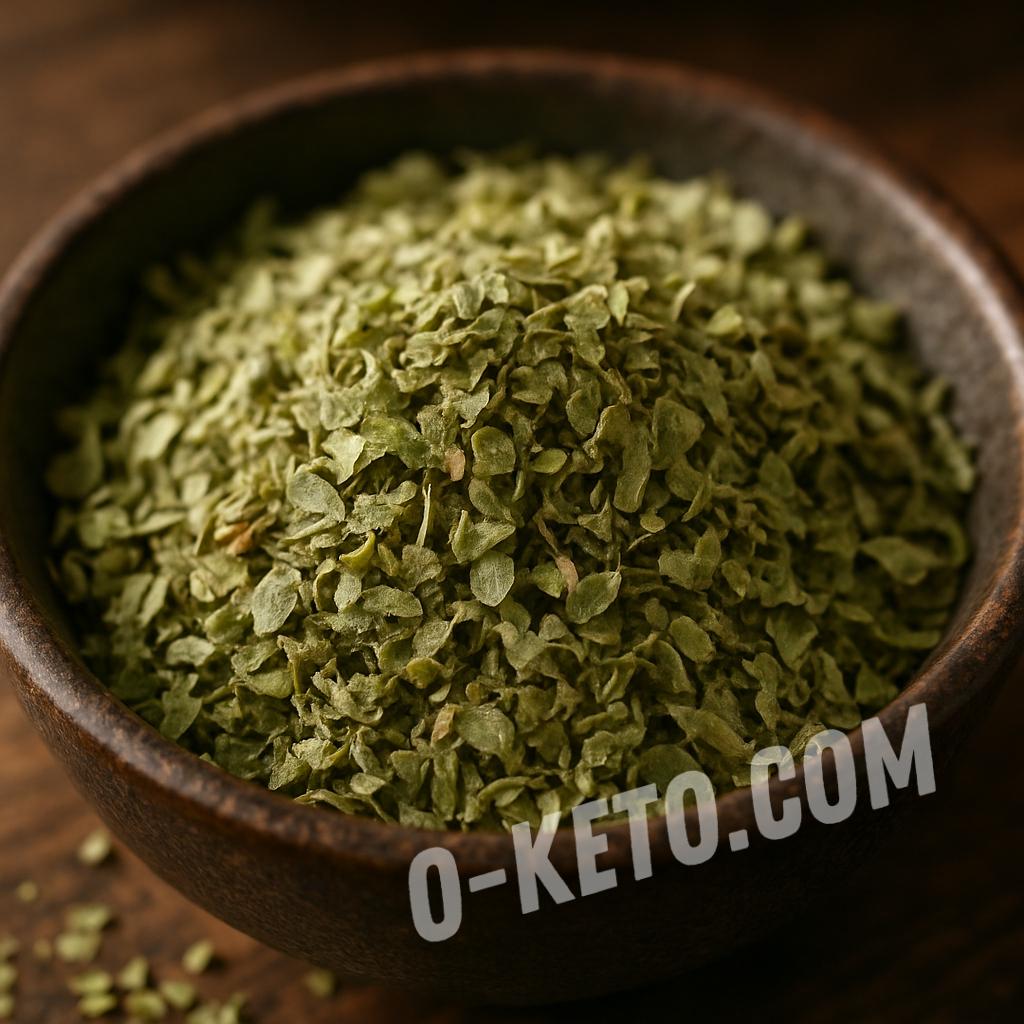

Dried marjoram is a concentrated culinary ingredient rather than a food eaten in large portions. It matters because small amounts can change aroma, bitterness, acidity, smoke notes or floral character without adding much volume to the dish.
In everyday cooking this product is used carefully: too little is barely noticeable, while too much can dominate the whole recipe. For keto and LCHF it is best treated as a flavor tool, not as a source of calories.
Origin and Use
Dried marjoram is an herb from the mint family, related to oregano but softer, warmer and slightly sweet in aroma. The ingredient is usually added to marinades, sauces, pickles, meat, fish, vegetables, fermented foods or spice blends, depending on the recipe. Traditional cuisines value it for aroma and balance, not for portion size.
Nutrition
Reference data show dried marjoram as rich in fiber, calcium, iron, vitamin K and carotenoids, but culinary portions are small. In real recipes the serving is usually a few grams or less, so the nutritional contribution is modest even when the dry product has a dense nutrient profile per 100 g.
Keto and Glycemic Context
Most spices and dry seasonings are compatible with keto when used in culinary amounts. The important point is the label: ready mixes may contain sugar, starch, maltodextrin, flour, breadcrumbs or sweet dried fruit.
For strict keto, evaluate the whole recipe rather than the spice alone. A teaspoon of seasoning is very different from a sweet sauce, glaze or commercial marinade built around the same flavor.
How to Choose and Store
Choose a product with a clear name, fresh aroma and no unnecessary additives. A dull smell, damp clumps, dustiness, rancid notes or an unclear ingredient list are reasons to avoid it.
Store it tightly closed, away from light, heat and steam. Dry herbs and spices lose aroma faster after grinding, so small packages are often better than a large jar kept for years.
Practical Use
It suits meat, poultry, sausages, mushrooms, cabbage, eggs, creamy sauces and vegetable sides. Add near the end of cooking or bloom briefly in warm fat.
Useful combinations usually include fat, salt and acidity: olive oil, butter, vinegar, lemon juice, fermented vegetables, fish, poultry, meat, eggs or low-carb vegetables can make the aroma cleaner and more balanced.
Limitations
It is usually safe as a spice, but caution is reasonable with mint-family allergy or concentrated extracts. If the ingredient is used medicinally, in extracts, or in unusually large amounts, the safety profile is no longer the same as ordinary culinary use.


