


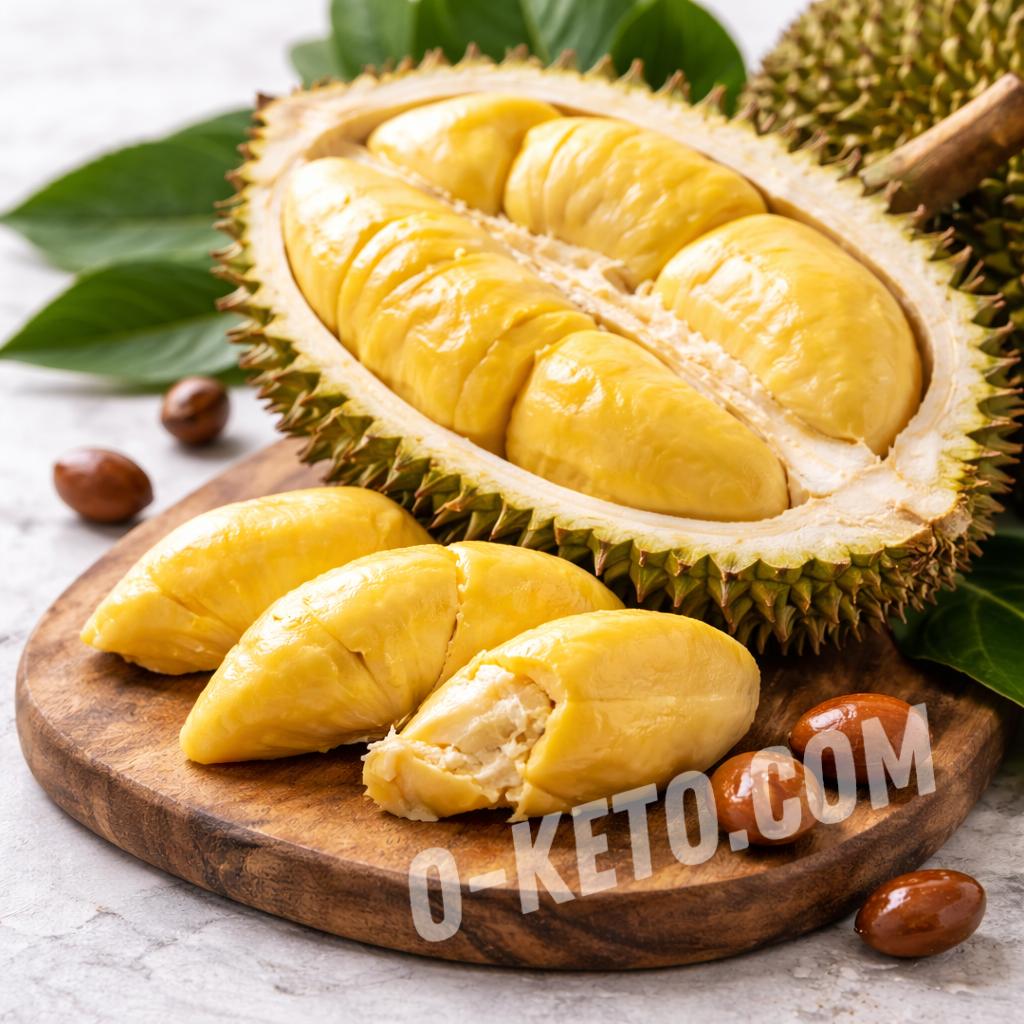

Durian is a large tropical fruit with a spiky shell, creamy flesh, and a very strong aroma. In Southeast Asia it is called the “king of fruits” and is used in desserts, drinks, ice cream, sweet pastes, and some traditional dishes. The flavor of ripe durian is complex: sweet, creamy, fruity, sometimes with onion-cheese or nutty notes.
The main feature of durian is not only the smell but also the dense, almost custard-like texture. Some varieties are soft and sweet, others drier, slightly bitter, or strongly aromatic. The impression depends greatly on variety, ripeness, and freshness of the flesh.
Nutritional value
Durian is noticeably more calorie-dense than many fruits. In 100 g of flesh there are usually about 140–150 kcal, 1.5–2 g of protein, about 5 g of fat, and roughly 26–28 g of carbohydrates. Most carbohydrates come from natural sugars and some plant fibers. For keto this number matters: even a small bowl can provide many carbohydrates.
The flesh contains vitamin C, B vitamins, potassium, magnesium, copper, plant fibers, and polyphenolic compounds. But durian’s practical role in the diet is primarily that of a sweet, energy-dense fruit, not a low-carb base for a meal.
Is it suitable for keto?
For strict keto, durian is usually unsuitable. It contains too many carbohydrates to be eaten in a normal fruit portion. If the goal is only to taste it, it is more reasonable to limit the amount sharply and count it in the daily carbohydrate limit in advance. For regular low-carb eating, berries or sugar-free desserts are easier choices.
In low-carb cooking, durian can only be treated as an occasional accent: a small piece in cream, next to mascarpone, or in a dessert where the rest of the sweetness comes from a sugar-free sweetener. Smoothies and drinks with durian are risky because it is easy to add a lot of flesh unnoticed.
For portion control, the flesh is best separated from the seeds and weighed before preparation. One segment from a large fruit can be much bigger than it looks. If durian is used only for aroma, a small amount can be mashed into cream without making the fruit the base of the dessert.
How to choose
A ripe durian should feel heavy for its size, with a characteristic aroma but without fermentation, sour, or alcoholic smell. The shell should not have wet spots or mold. In some varieties, ripeness is checked by slight opening along the seams, but a fully cracked fruit loses quality quickly.
If buying cleaned flesh, it should look moist and creamy, without gray spots, dried edges, or a sharp sour note. Frozen durian is more convenient in countries where fresh fruit is rare, but after thawing the texture becomes softer and the aroma may seem stronger.
Durian varieties differ as much as varieties of apples or mangoes. Some have sweeter and softer flesh, while others are denser, slightly bitter, and very aromatic. If the first experience feels too sharp, it does not always mean the whole fruit is unsuitable: the variety or ripeness may simply have been unlucky.
How to eat and use it
Durian is eaten fresh, chilled, or thawed. The flesh is separated from large seeds and served in small portions. In traditional cooking it is added to rice desserts, creams, ice cream, candies, pancakes, and sweet drinks. For keto, most of these dishes are unsuitable because of sugar, rice, flour, or syrups.
If durian is used in a low-carb dessert, it is better to combine it with a fatty creamy base and not add other sweet fruits. Good partners are unsweetened coconut cream, mascarpone, cream cheese, vanilla, cocoa, and a little lime. The portion is easiest to weigh before mixing.
Limitations
The main limitation is the high amount of carbohydrates and calories. Durian is also very aromatic, so it is not always allowed in hotels, transport, and public spaces. People with sensitive digestion should start with a small portion: the dense sweet flesh can feel heavy.
It is better not to combine a large portion of durian with alcohol or a very heavy meal. This is not a magical ban, just simple caution: the fruit itself is dense, sweet, and aromatic, and overeating often causes discomfort.
How to store it
A whole fruit is stored briefly in a cool place with good ventilation. Cut durian spreads aroma quickly, so the flesh is kept in an airtight container in the refrigerator and eaten soon. Frozen flesh is thawed in the refrigerator and not refrozen.
What can replace it?
There is no full replacement: durian’s combination of smell, fatty creamy flesh, and sweetness is unusual. In desserts, avocado with vanilla, mascarpone, coconut cream, or sugar-free custard can partly replace the creaminess. Mango, banana, and jackfruit are closer in tropical fruit profile, but they are also too high in carbohydrates for keto.


