


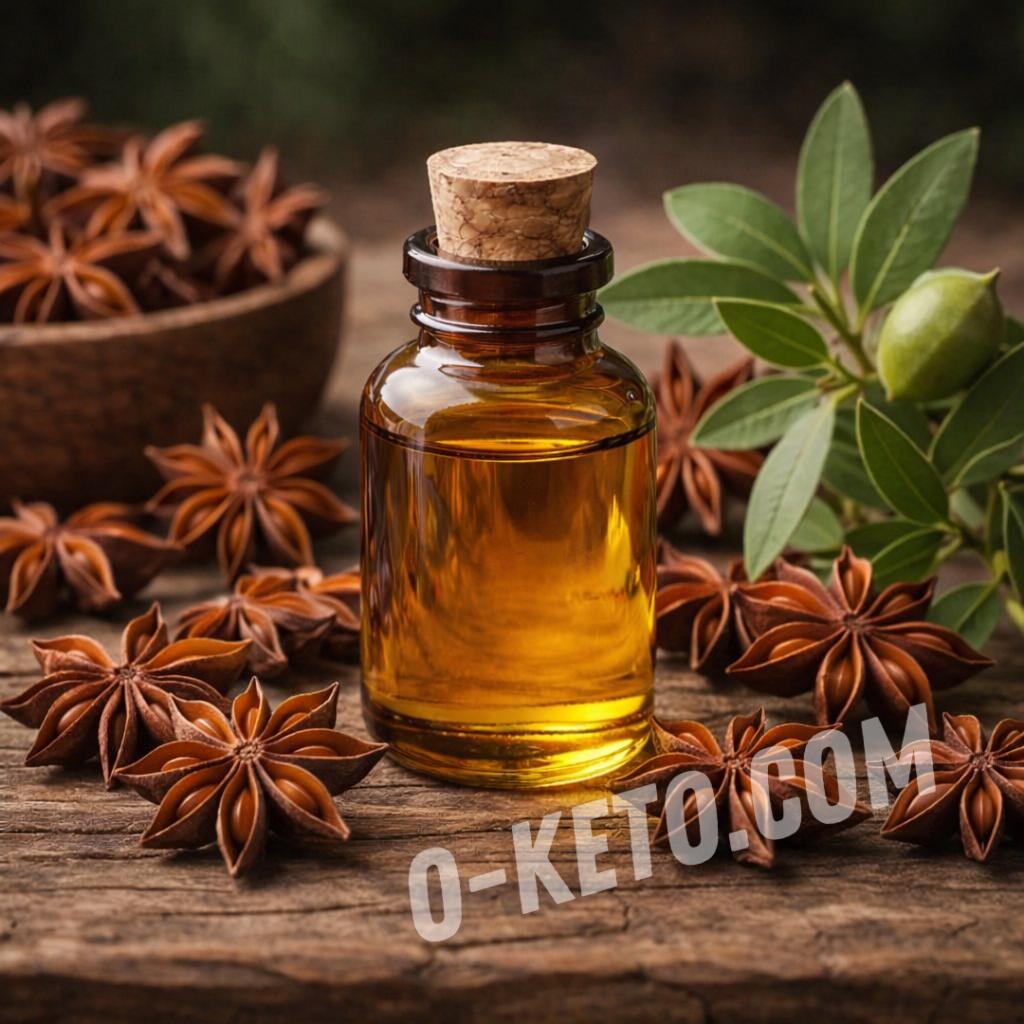

Anise essential oil is obtained from Pimpinella anisum seeds by steam distillation. It is a concentrated aromatic oil with a very strong sweet-spicy scent, similar to anise seed, licorice and warm dessert spices. It is used in aromatic blends, cosmetic formulas, home fragrance and sometimes in food production, but home use requires caution.
It is important to distinguish essential oil from anise seeds, ground spice and food extract. Seeds can be added to baking, tea or marinades as an ordinary spice. Essential oil is far more concentrated: one drop contains a large amount of volatile compounds, so it should not be treated as a casual kitchen seasoning.
Composition and Aroma
The main aromatic component of anise oil is anethole. It gives the sweet licorice-like profile associated with anise, fennel and star anise. Small amounts of other volatile compounds may also be present; the exact profile depends on the raw material, batch and distillation method.
The scent is dense and noticeable even in a very small amount. In blends it can easily overpower citrus, herbal and floral notes, so it is used in trace amounts. For a soft aroma, it is often enough to use a minimal share in a carrier if the producer allows that method.
Is It Keto-Friendly?
From a carbohydrate perspective, anise essential oil is not a meaningful source of sugar or starch because it is used in micro amounts. But for keto it is not an ordinary food. In low-carb cooking, it is safer to use anise seeds, star anise, fennel or a food extract with clear dosing than to experiment with essential oil.
If the product is sold as essential oil, read its intended use on the label. Oils for aromatherapy and cosmetics should not be added to food. Even food-grade status does not remove dosing concerns: such products are used under a formula, not added by eye to a drink or dessert.
Recipe Substitutes
When an anise flavor is needed in a keto dessert, drink or marinade, anise seeds, star anise, fennel or a food-grade anise extract are more practical. Seeds can be warmed in cream, coconut milk or sugar-free syrup and then strained. This gives a softer aroma and makes the dose easier to control.
For baking, ground spice or a seed infusion is usually more predictable. Essential oil can give a sharp perfume-like note and spoil the whole batch if one drop is too much. In savory dishes, the anise profile usually works only as a faint background with fennel, citrus, pork or fish.
Household Use
For room fragrance, anise oil should be used very moderately because the scent quickly becomes dominant. It can be paired with orange, lemon, lavender, cedar, fennel, cinnamon or clove, but the anise share should stay small. In a diffuser, follow the device instructions and the oil producer’s guidance.
In cosmetic and massage blends, essential oils are not applied to skin undiluted. They are added to a carrier oil or finished formula in a low percentage, and tolerance is checked first on a small skin area. For sensitive skin, the face and the eye area, this oil is usually too active.
How to Choose
The bottle should list the Latin name Pimpinella anisum, plant part, extraction method, volume, batch, expiry date and usage warnings. It is useful when the producer states whether the oil is only for fragrance and cosmetics or may be used in food under specific dosing.
Very cheap oil with a flat candy-like smell may be a fragrance or a blend. For such products, quality documents and a clear composition matter especially much. If the bottle does not explain the raw material and intended use, it is better not to use it near food or skin.
Storage
Store anise essential oil tightly closed in a dark cool place, away from children, animals, fire, the stove and direct sun. Volatile compounds are sensitive to air and light, so the bottle should be closed immediately after use.
If the aroma becomes rancid, harsh, chemical or noticeably different, do not use the oil. Old essential oils are more likely to irritate skin and perform poorly in aromatic blends. For home use, a small bottle that can be used within its shelf life is more practical.
Limits
Anise essential oil is not suitable for uncontrolled internal use. It should not be used for children, during pregnancy or lactation, with individual reactions to anise, fennel, celery and other Apiaceae plants, or in situations where a clinician has advised avoiding essential oils or aromatic concentrates.
With asthma, tendency to bronchospasm, skin sensitivity, medication use or chronic conditions, use should be discussed with a qualified specialist. The practical conclusion is simple: for flavor in keto recipes, use food spices; keep essential oil for uses clearly allowed by its instructions.


