


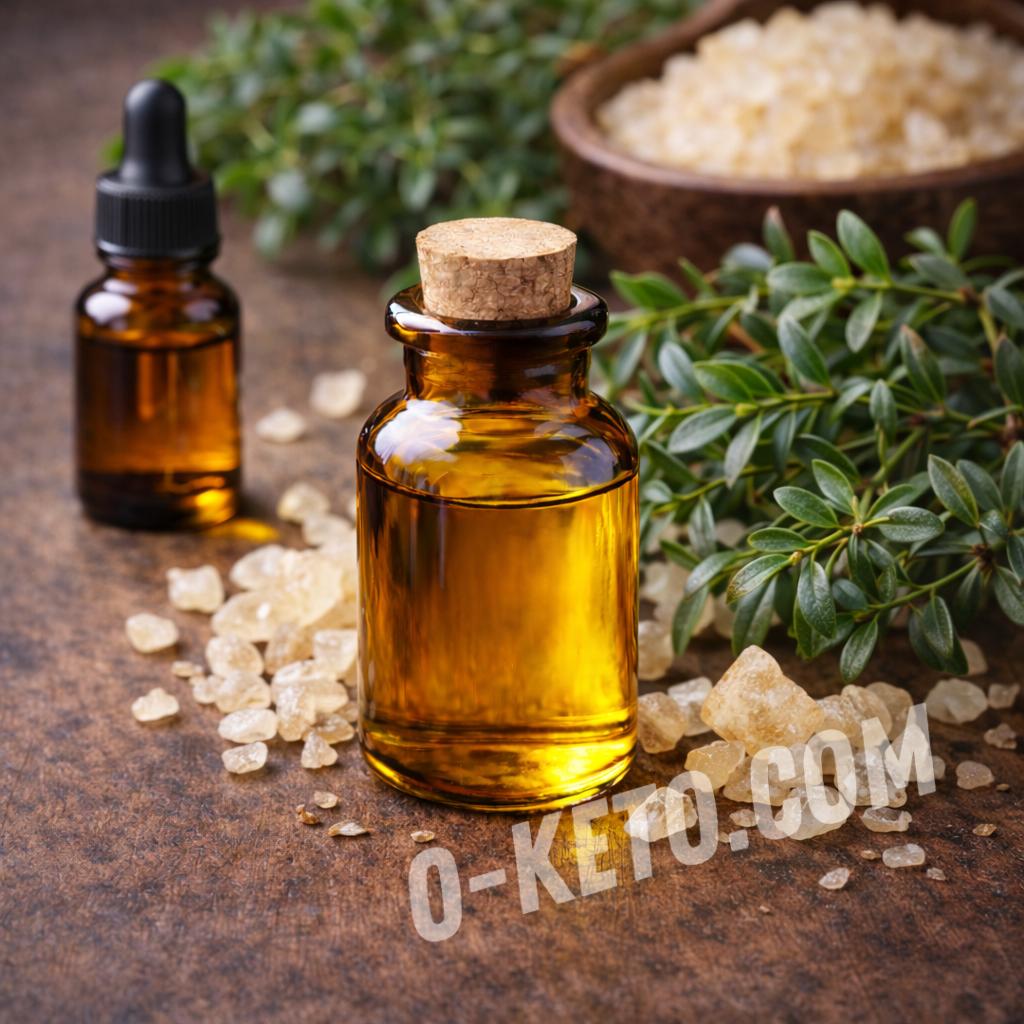

Mastic essential oil is obtained from the resin or parts of Pistacia lentiscus, a Mediterranean tree known for mastic. It is not pistachio nut oil and not a nut flavoring for desserts. Its scent is warm, resinous and woody, with herbal, conifer-like and slightly green facets, so it is used in aromatic blends, natural perfumery and diluted cosmetic formulas.
Mastic is especially associated with the Greek island of Chios, where the resin is traditionally collected by hand. In daily life, mastic resin may be used as an aromatic material and culinary resin, but the essential oil is a different and much more concentrated product. It should not be taken internally or added to food.
Aroma and Raw Material
The profile depends on plant part, region, resin freshness and extraction method. A good oil has dry resin, soft conifer notes, woodiness, light greenery and a little tartness. It is calmer than bright citrus oils and more delicate than heavy balsamic resins.
The name can be confusing: this is not about familiar pistachio nuts, but about the mastic tree, Pistacia lentiscus. Do not expect the taste of pistachio ice cream or a sweet nut smell. It is more of a resinous Mediterranean note.
In natural perfumery, mastic often feels like a dry bridge between greens, citrus and resins. It is not as smoky as some frankincense materials and not as sweet as vanilla-like balsams. This makes it useful when clean resin character is needed without a heavy church-like shade.
How to Use It
In a diffuser, mastic oil is used in moderate amounts, usually in a blend with citrus, wood or resin oils. It connects a bright top with a calmer base. For skin, the essential oil is diluted in jojoba, almond oil, grapeseed oil, squalane or a finished cosmetic base.
Practical uses include:
- a diffuser blend with orange, cedarwood and frankincense;
- oil perfume with a resinous Mediterranean note;
- a low concentration in body oil;
- an addition to hand or cuticle cream in a test portion;
- compositions with lavender, neroli, lemon or sandalwood.
In a diffuser, start with one or two drops as part of the whole blend. If the aroma suits the room, the amount can be increased, but too much will make the air dry and tart. For a small room, short sessions and airing matter.
Pairings
Mastic blends well with frankincense, myrrh, cedarwood, sandalwood, vetiver, lavender, rosemary, neroli, bergamot, lemon and sweet orange. With citrus it becomes lighter, with woods drier, and with frankincense and myrrh deeper and more resinous.
If the aroma feels too dry, soften it with orange, neroli or a small amount of vanilla in a perfume composition. For a stricter profile, cedarwood, vetiver and frankincense work well. Avoid overloading the blend: mastic does not need ten competing notes.
For Skin
In cosmetics, mastic oil is used as an aromatic component and part of diluted oil blends. It may suit hand, body, cuticle, beard or scalp products when the concentration is low and the skin tolerates resinous oils well.
Before first use, test a small skin area. Do not apply the oil to mucous membranes, around the eyes, on damaged skin or immediately after exfoliation or shaving. For the face, start with a minimal concentration or choose a neutral base without essential oils.
If the oil is added to cream, do not drop it straight into a full jar. It is more practical to mix a small portion for several uses and see whether the base scent changes or the skin reacts. This avoids spoiling an expensive cream.
Quality and Storage
The label should preferably show Pistacia lentiscus, plant part, country of origin and extraction method. A very sweet nutty smell may indicate a fragrance oil rather than mastic. Natural oil usually smells of resin, wood, herbs and warm Mediterranean dryness.
Store the bottle tightly closed in a dark cool place, away from heat and children. Old oil with sour, plastic-like or rancid notes should not be applied to skin. For home blending, make small batches and write down the date, percentage and carrier oil.
Mastic can color the whole blend even at a low share. For a light fresh composition, pair it with citrus and lavender; for a dry woody base, use cedarwood, vetiver and frankincense nearby.


