


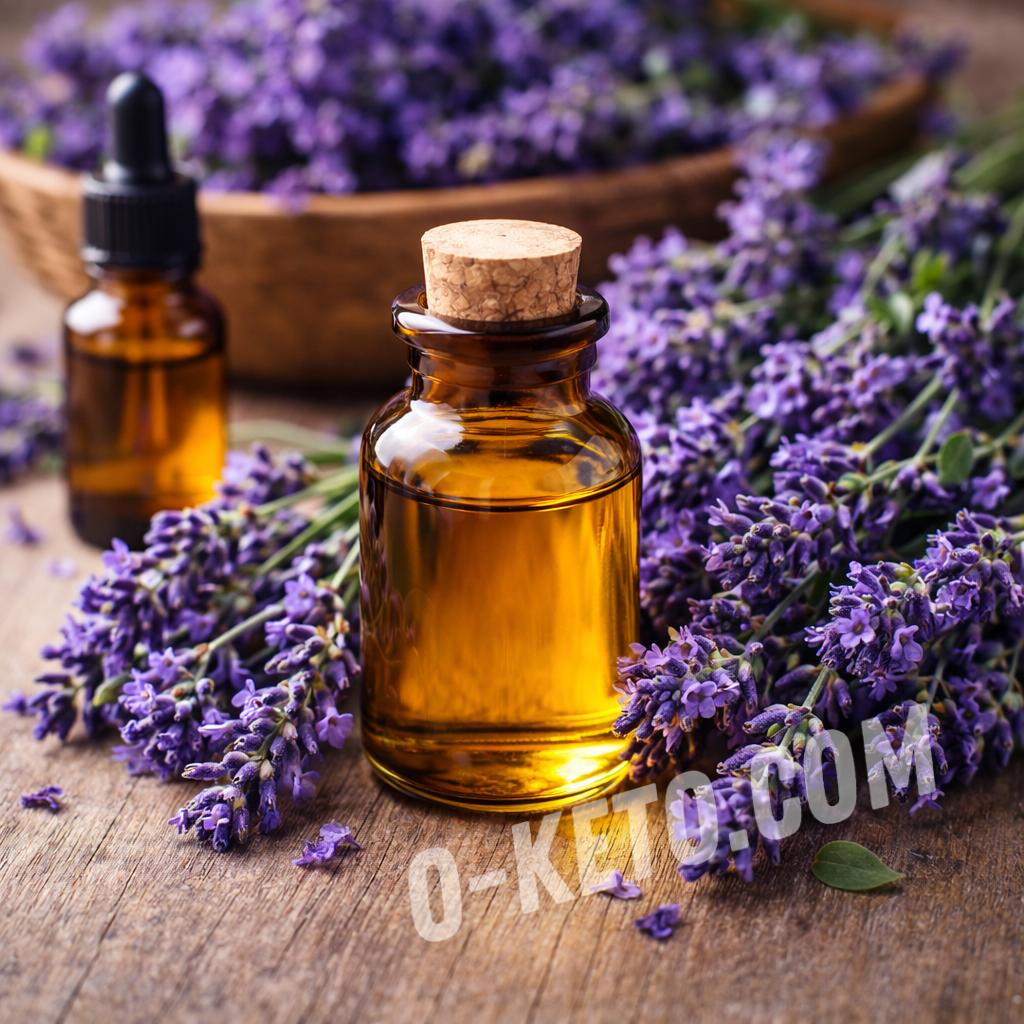

True lavender essential oil is obtained by steam distillation of the flowering tops of Lavandula angustifolia. Its aroma is soft, floral and herbaceous, with a clean slightly sweet note. It is one of the most recognizable oils for aromatic blends, skin care, massage compositions, linen sachets and home scenting. It is important to distinguish true lavender from lavandin and other species: their scent, composition and use profile differ.
Lavender is not a food product and is not related to keto as food. It should not be added to dishes instead of culinary lavender and should not be taken internally. For this product, the important points are raw material quality, careful dilution, pairings with carrier oils and understanding where the aroma is truly appropriate.
Aroma and Raw Material
Lavandula angustifolia usually gives a softer and finer profile than lavandin. A good oil should not have harsh camphor roughness, and the scent should not resemble cheap household fragrance. The main notes are flowers, dry grass, cleanliness, light sweetness and cool green facets.
The label should preferably show the Latin name, country of origin, plant part and extraction method. France, Bulgaria, Italy, Spain and other regions may produce different profiles. Harvest year and batch matter too: natural oils vary slightly from season to season.
How to Use It
In a diffuser, lavender works best in moderate amounts. Too much oil makes the scent flat and intrusive. For a small room, a few drops in a blend with citrus, conifer or wood oil are often enough. In the bedroom, a short session in advance is better than a strong aroma left running all night.
Practical uses include:
- an aromatic diffuser blend with bergamot or sweet orange;
- a low concentration in massage oil for shoulders, neck or feet;
- a few drops on a wardrobe sachet, not directly on clothes;
- an addition to bath salt only after mixing with a base;
- a component of oil perfume in soft floral-woody formulas.
For Skin and Body
On skin, lavender essential oil should be used only diluted. For the face, choose an especially low concentration and test first. For the body, blend it with jojoba, almond, grapeseed, squalane or another carrier oil. Applying neat essential oil can cause irritation even in people who enjoy the scent.
In care blends, lavender is valued for its soft aroma and compatibility with many bases. It suits after-shower oils, hand creams, cuticle products, foot balms and calm massage blends. If the skin is already irritated, after exfoliation or sun exposure, a neutral cream without essential oils is the better first step.
Pairings
Lavender blends well with bergamot, sweet orange, lemon, cedarwood, sandalwood, rosewood, chamomile, marjoram, geranium, clary sage, frankincense and vetiver. With citrus it becomes fresher, with woods drier and deeper, with chamomile softer, and with geranium more floral.
If the aroma feels too “soapy,” it can be balanced with a woody or resinous note. For a cleaner linen-like profile, bergamot and cedar work well. In natural perfumery, lavender often connects bright citrus top notes with a warmer base.
Quality and Adulteration
Lavender is popular, so the market includes many blends, lavandin oils, fragrance oils and diluted products. A low price does not always mean a poor product, but a very cheap bottle without Latin name or raw material data is a risk. The scent should feel alive and layered, without sharp synthetic sweetness.
For skin use, it is better to buy small bottles from suppliers that provide the botanical name and batch information. If the oil is needed only for scenting a wardrobe, requirements may be simpler, but for the skin, transparent origin matters more.
Safety and Storage
Before first skin use, test a small area. Essential oil should not be taken internally, dropped into the eyes, applied to mucous membranes or left accessible to children. During pregnancy, breastfeeding, for small children, with asthma, allergy or regular medication, aromatic concentrates should be discussed with a qualified professional.
Store lavender tightly closed in a dark cool place. Close the cap immediately after use: volatile components escape quickly and the scent changes. Old oil with a sharp, sour or plastic-like note should not be applied to skin; it is better not used at all or kept only for household tasks if the scent is still acceptable.


