


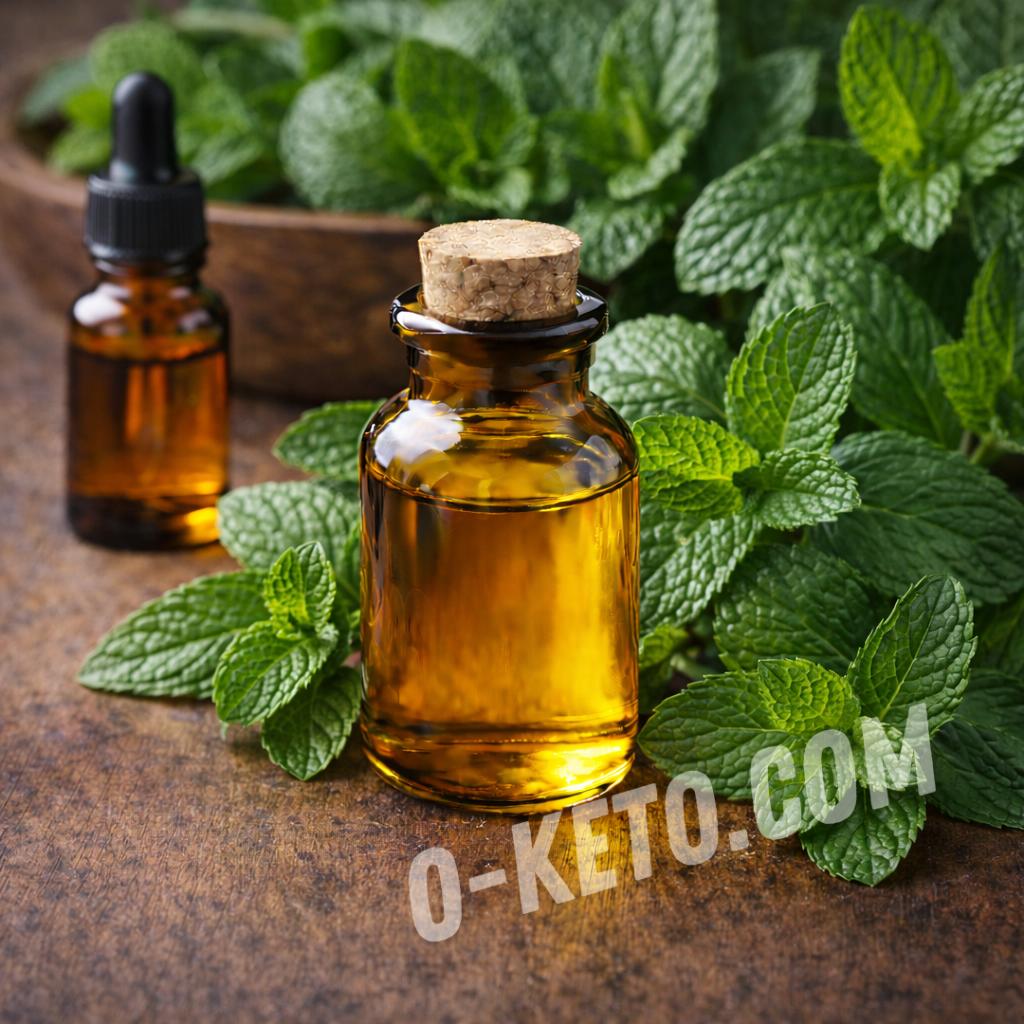

Peppermint essential oil is obtained from the aerial parts of Mentha piperita by steam distillation. It is a highly concentrated aromatic product with a cold, sharp, clean scent in which menthol is easy to recognize. It should not be confused with dried mint, mint tea, syrup, or a food flavoring: essential oil behaves very differently in recipes and blends.
It is used in diffusers, cosmetic formulas, diluted massage blends, scalp products, household aromatic mixtures, and sometimes in food recipes when the bottle is clearly marked for that use. For keto and LCHF, it adds almost no carbohydrates because it is used by the drop, but dose safety matters more than macros.
Composition and aroma
The main components of peppermint oil are menthol and menthone. Depending on the batch, isomenthone, 1,8-cineole, limonene, beta-pinene, and other volatile compounds may also be present. Because of menthol, the aroma feels cooling and very direct. Even a small amount can cover softer smells.
Good oil smells fresh, dry, and minty, without mustiness, rancidity, or a heavy chemical note. An overly sweet smell may point not to quality but to a perfume composition or flavor blend. For culinary use, it is especially important that the label states food use, not just a pleasant scent.
Is it suitable for keto?
From a carbohydrate perspective, peppermint oil does not interfere with a low-carb diet. The issue is the whole recipe: alcoholic cocktails, desserts, syrups, and sweet drinks with mint flavor may be far from keto even when the mint note itself contains no sugar. The full formula matters more than the aroma.
In keto cooking, food-grade peppermint oil is used rarely and only through dilution. It can flavor sugar-free chocolate mousse, cream filling, a cold drink, a sauce for tart berries, or a homemade cacao-butter candy. Dried mint, fresh leaves, or a good extract are often easier because the dose is more predictable.
How to use it
Essential oil should not be dropped straight into a cup, cream, or finished dish. First make a weak dilution in a fatty, alcoholic, or otherwise suitable base, then add part of that dilution. This makes the flavor repeatable and helps avoid ruining the whole portion with a sharp chill. For a diffuser, a few drops per room are usually enough.
In cosmetics, peppermint oil should be used only in low concentration and after a patch test. It gives a cooling sensation, but that sensation does not mean gentleness: too much can cause burning, tearing, skin irritation, or mucous membrane discomfort. For face, lips, eye area, and children’s products, it is often too active.
The aroma pairs well with cacao, vanilla, lemon, lime, rosemary, eucalyptus, lavender, and conifer notes. In food, it fits sugar-free chocolate desserts, cream, coconut, cucumber, lemon water, and tart berries. In savory dishes, use it carefully so the mint does not make the dish taste like toothpaste.
How to choose
The label should show Mentha piperita, plant part, extraction method, country of raw material, shelf life, and intended use. A dark glass bottle with a dropper and tight cap is preferable. If the label says only “peppermint fragrance” or “mint aroma,” it may not be essential oil.
For food, a separate food-use indication is needed. For cosmetics, batch information, dilution guidance, and producer testing are useful. Cloudiness, a sticky cap, suspiciously low price, solvent-like smell, and missing Latin name are reasons to choose another product.
Limits
Peppermint oil is concentrated and is not suitable for undiluted application. Do not use it near the eyes, on mucous membranes, for small children, or without caution in asthma, pregnancy, sensitive skin, or regular medication use. Do not take it internally without food-use labeling and professional dosing.
Strong mint diffusion before sleep may be unsuitable because of the sharp refreshing smell. If coughing, burning, dizziness, skin irritation, or tearing appears after use, remove the blend with a fatty base or mild cleanser and stop using it.
Storage
Keep the bottle tightly closed in a cool dark place, away from the stove, window, and damp bathroom. After opening, write the date on it. Wipe the cap and neck so the oil does not evaporate or affect plastic around the dropper. Dilutions are better made in small portions.
What can replace it?
In food, peppermint essential oil is easier to replace with fresh leaves, dried mint, mint tea, food extract, or lime zest with a little green herb. In aromatic blends, eucalyptus, rosemary, bay, lemon, or conifer oils can give a related cold direction, but they will not match exactly. If a soft mint note is needed, leaves are usually better than essential oil.


