


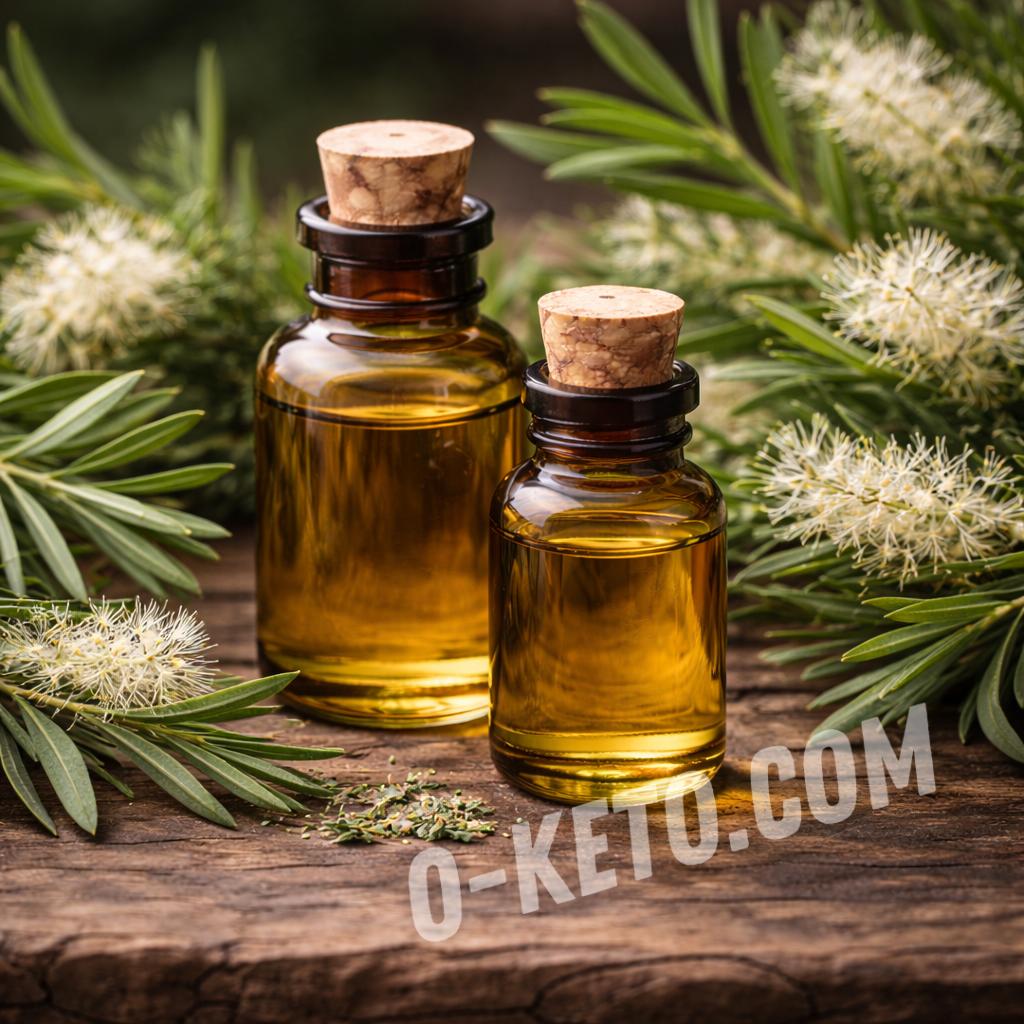

Niaouli essential oil is obtained by steam distillation of the leaves of Melaleuca quinquenervia. The plant belongs to the same broad group as tea tree and several other melaleucas, but niaouli has its own aroma: fresh, camphoraceous, herbal, slightly eucalyptus-like, and usually softer than classic eucalyptus. The oil is used in aromatic blends, diffusers, cosmetic formulas, and skin-care products only when diluted.
For keto and LCHF, this is not a dietary fat or a seasoning. Niaouli essential oil should not be added to food unless the bottle has specific food-use labeling and clear instructions from the manufacturer. As a product, it is best evaluated by botanical name, chemotype, freshness, application safety, and bottle quality.
Aroma And Composition
Niaouli oil often contains a noticeable share of 1,8-cineole. It may also contain alpha-pinene, beta-pinene, limonene, terpineol, viridiflorol, and other volatile components. The profile depends on region, raw material, harvest time, and distillation, so two bottles with the same common name may smell different.
Good oil smells clean, fresh, dry-herbal, and camphoraceous, without rancidity, mustiness, or a harsh chemical note. If the aroma becomes heavy, sour, or sticky, the product is better not used on skin. In blends, niaouli usually brings a cool and clear impression, but it can easily cover more delicate floral oils.
How To Use
In a diffuser, niaouli should be used in small amounts and for short sessions, especially in small rooms. It blends with lavender, lemon, bergamot, ravintsara, rosemary, tea tree, cedarwood, and frankincense. If the smell feels too camphoraceous, citrus oils or lavender can soften it.
For skin, the essential oil is first diluted in a carrier oil, cream, or another suitable base. It should not be applied to mucous membranes, around the eyes, or on damaged areas without professional guidance. Before first use, do a patch test on a small area.
In household aromatic blends, niaouli can be used for a fresh herbal profile in room sprays, scented sachets, and oil compositions. Dosage matters for these uses: one extra drop can make the blend too sharp.
When building a blend, start with the base oils first and add niaouli last. This makes it easier to stop before the camphor note becomes dominant. For a softer evening blend, use less niaouli and more lavender, cedarwood, or frankincense; for a cleaner daytime profile, a small dry herbal accent can stay in the front.
How To Choose
The label should include the Latin name Melaleuca quinquenervia, plant part, extraction method, country of origin, expiry date, and intended use. It is useful when the producer lists major components or provides batch analysis. A vague name such as “niaouli fragrance” may mean a fragrance oil rather than a natural essential oil.
Choose a dark glass bottle with a dropper and a tight cap. Very low price, missing botanical name, plastic packaging, and universal claims are reasons to be cautious. For cosmetics, dilution instructions matter; for food use, separate labeling is required.
Limits
Niaouli oil is concentrated and may irritate skin, eyes, and airways. It should not be used undiluted, left within reach of children, or taken internally without direct food-use labeling. During pregnancy, for children, asthma, epilepsy, sensitive skin, or regular medication use, application is better discussed with a qualified professional.
If diffusion causes coughing, headache, eye stinging, or an unpleasant throat sensation, ventilate the room and stop use. For skin, redness, itching, or burning after application means the blend should be washed off and not used again at that concentration.
How To Store
Keep the bottle tightly closed in a cool dark place, away from the stove, window, and damp bathroom. Essential oils change quickly under light, air, and heat. After opening, it is useful to write the date on the bottle and check older bottles by smell before each use.
What To Use Instead
In aromatic blends, niaouli can be replaced with ravintsara, tea tree, eucalyptus radiata, cineole rosemary, or a blend of lavender with a small amount of eucalyptus. The substitute depends on the goal: fresh camphor note, dry herbal tone, or softness in a cosmetic formula. There will be no exact match, so dosage should be adjusted again.


