


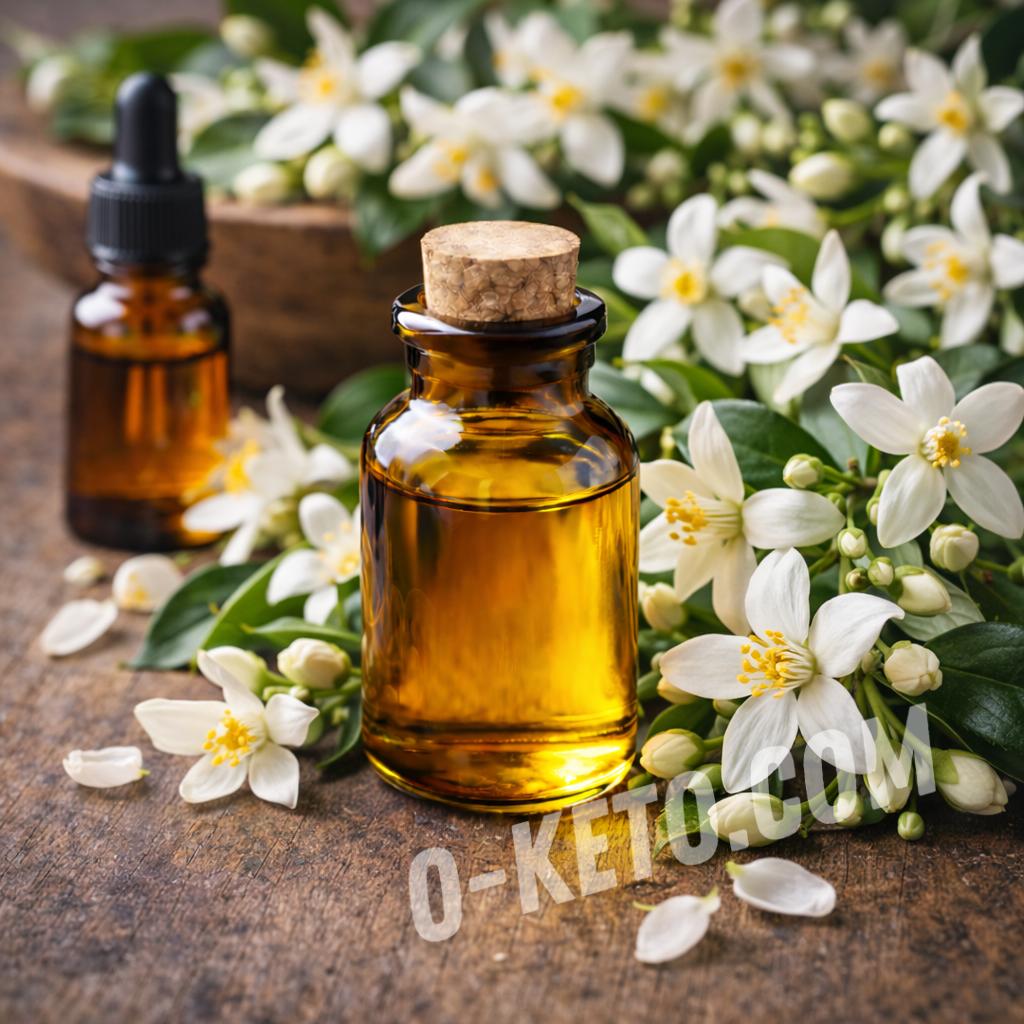

Neroli essential oil is obtained from fresh flowers of bitter orange, Citrus aurantium ssp. amara. It has a delicate sweet-floral aroma with citrus freshness, a green bitter nuance and soft honeyed depth. Neroli is valued in natural perfumery, aromatic blends, care oils and cosmetics where an expensive floral accent is needed without heavy rose density.
It is not a food product and not a keto ingredient. Neroli oil should not be added to drinks or dishes; for food, use edible orange blossom water or flavorings intended for culinary use. The essential oil is used topically or for scenting air, and only in small amounts: the aroma is expressive and the material is costly.
Origin and Aroma
The name neroli is associated with the Duchess of Neroli, who helped popularize bitter orange blossom scent in 17th-century Europe. Today the oil is produced in regions where bitter orange is grown, including Tunisia, Morocco, Egypt, Italy and other Mediterranean countries. Fresh flowers are needed for distillation, so natural neroli is not cheap.
Good oil smells floral, citrusy, slightly green and clean. It should not smell like flat fragrance, soap or sugar candy. Petitgrain is sometimes sold near neroli: it comes from the leaves and twigs of the same plant, but its scent is greener, woodier and less floral.
How to Use It
In a diffuser, neroli is used in a small dose, alone or in a blend. It quickly sets the tone of a composition, so a few drops for the whole blend are enough, and sometimes one drop is plenty. For skin, the essential oil must be diluted in a carrier oil or finished cosmetic base. For the face, choose an especially low concentration.
Practical uses include:
- an aromatic blend with bergamot, lavender or sandalwood;
- oil perfume based on jojoba or squalane;
- a few drops in a larger batch of body oil after dilution;
- an addition to hand cream or cuticle cream in a test portion;
- a soft floral note in an evening diffuser blend.
Pairings
Neroli blends well with bergamot, sweet orange, petitgrain, lavender, rose, jasmine, ylang-ylang, sandalwood, cedarwood, frankincense, vetiver and vanilla. With citrus it becomes fresher, with flowers richer, and with woods and resins quieter and deeper.
If the aroma feels too sweet, dry it down with petitgrain, cedarwood or vetiver. For a softer floral blend, lavender and sandalwood work well. In oil perfume, neroli often serves as the heart of the scent, linking a citrus top with a warm base.
For Skin
In cosmetics, neroli is used mainly for aroma and the refined feel of a floral blend. It suits after-shower oils, squalane serums, hand creams, cuticle products and massage compositions. But even a pleasant oil can irritate skin if too much is added.
Before facial use, test a small area and check the reaction after a day. With sensitive skin, after exfoliation, shaving, sun exposure or active irritation, neutral care without essential oils is a better choice. Neroli should not be used around the eyes.
Quality and Choice
Natural neroli is expensive because it requires many flowers and labor-intensive distillation. A suspiciously low price, missing Latin name or overly persistent perfume-like smell may suggest a blend or fragrance oil. The label should preferably show Citrus aurantium ssp. amara, plant part, country of origin and extraction method.
Neroli hydrosol and essential oil are different products. Hydrosol is softer and water-based, sometimes used as aromatic water. Essential oil is much more concentrated and requires dilution. For a first try, a small bottle or sample is better.
Safety and Storage
Neroli oil should not be taken internally or applied undiluted. During pregnancy, breastfeeding, for children, with asthma, allergy or regular medication, aromatic concentrates should be discussed with a qualified professional. If the scent causes headache or nausea, there is no reason to tolerate it.
Store the bottle tightly closed in a dark cool place, away from heat. Expensive floral oils should not be left open for long: volatile components escape and the profile becomes poorer. Old oil with sour, plastic-like or rancid notes should not be applied to skin.


