


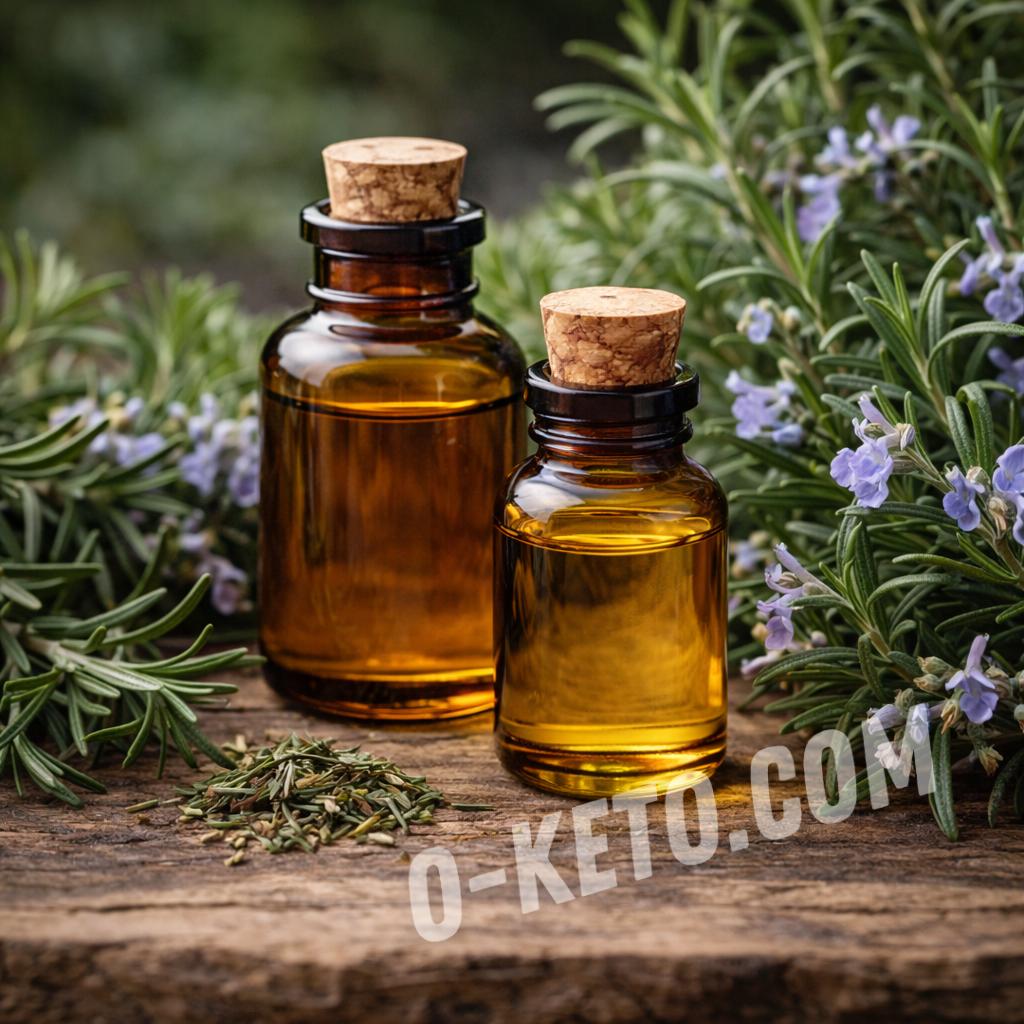

Verbenone rosemary essential oil is obtained from Rosmarinus officinalis of the verbenone chemotype. It is one of several rosemary oil profiles and differs from cineole and camphor types. Its aroma is fresh, herbal, slightly resinous, with a soft woody note and less harshness than many other rosemary oils.
The chemotype matters: different rosemary batches can vary strongly in their main volatile components. The verbenone profile is usually chosen for softer aromatic and cosmetic formulas where a heavy camphor note is not wanted. This is a concentrated product, not dried seasoning and not a culinary oil.
Aroma And Composition
Verbenone rosemary oil may contain verbenone, 1,8-cineole, alpha-pinene, camphene, borneol, limonene, and other components. The ratio depends on plant material, climate, harvest time, and distillation. That is why it is important to look not only at the word “rosemary”, but also at the chemotype or batch analysis.
Good oil smells clean, fresh, herbal, and slightly woody, without mustiness, rancidity, or a harsh synthetic note. In blends, it adds a clear herbal top note and combines well with lavender, lemon, grapefruit, cedarwood, frankincense, clary sage, and soft conifer oils.
Is It Suitable For Keto
For keto and LCHF, verbenone rosemary essential oil is not a food product. It is not used as a fat source, not added to meals without specific food-use labeling, and not a substitute for fresh or dried rosemary. For cooking, the herb is safer and easier to dose.
If a bottle has food-use approval, use still has to be micro-dosed and follow the instructions exactly. In most household situations, this oil belongs in aromatic blends, cosmetics, and perfume compositions rather than in the diet.
How To Use
In a diffuser, use small amounts and short sessions. Its herbal aroma can quickly become too active, especially in a small room. For a softer composition, combine it with lavender, citrus, or frankincense; for a dry herbal profile, use cedarwood, cypress, or clary sage.
For skin and scalp, verbenone rosemary is first diluted in a carrier oil, cream, shampoo, or another suitable base. Do a patch test before first use. It should not be applied to mucous membranes, around the eyes, on irritated areas, or at high concentration.
In cosmetic formulas, the oil is used as an aromatic component and part of the overall blend. It can fit massage oils, scalp products, neutral creams, and aromatic rollers, but the dosage should stay low.
How To Choose
Look for Rosmarinus officinalis CT verbenone or a similar wording, plant part, extraction method, country of origin, expiry date, and intended use. If the label only says “rosemary oil” without a chemotype, it may be a very different profile.
Choose a dark glass bottle with a dropper and a tight cap. It is useful when the producer lists the main analysis components. For cosmetics, dilution advice matters; for food use, separate labeling is required, not just general words about natural origin.
Limits
Despite its softer profile, this is an active essential oil. It should not be used undiluted or left within reach of children. Pregnancy, childhood, epilepsy, asthma, strong scent sensitivity, high blood pressure, and regular medication use are reasons to discuss use with a qualified professional.
If diffusion causes headache, coughing, palpitations, or eye irritation, ventilate the room and stop use. If the skin reacts, wash the blend off and reduce concentration or avoid the product.
How To Store
Keep the oil tightly closed in a cool dark place, away from the stove, window, and bathroom. After opening, it is convenient to write the date on the bottle. If the aroma becomes flat, sour, or unpleasantly sharp, an old bottle is better not used on skin.
What To Use Instead
In aromatic blends, verbenone rosemary can be replaced with cineole rosemary, lavender with a drop of cedarwood, ravintsara, cypress, or a soft conifer oil. For cooking, the substitute is different: fresh rosemary, dried rosemary, thyme, or sage. Essential oil and herb are not one-to-one replacements.


