


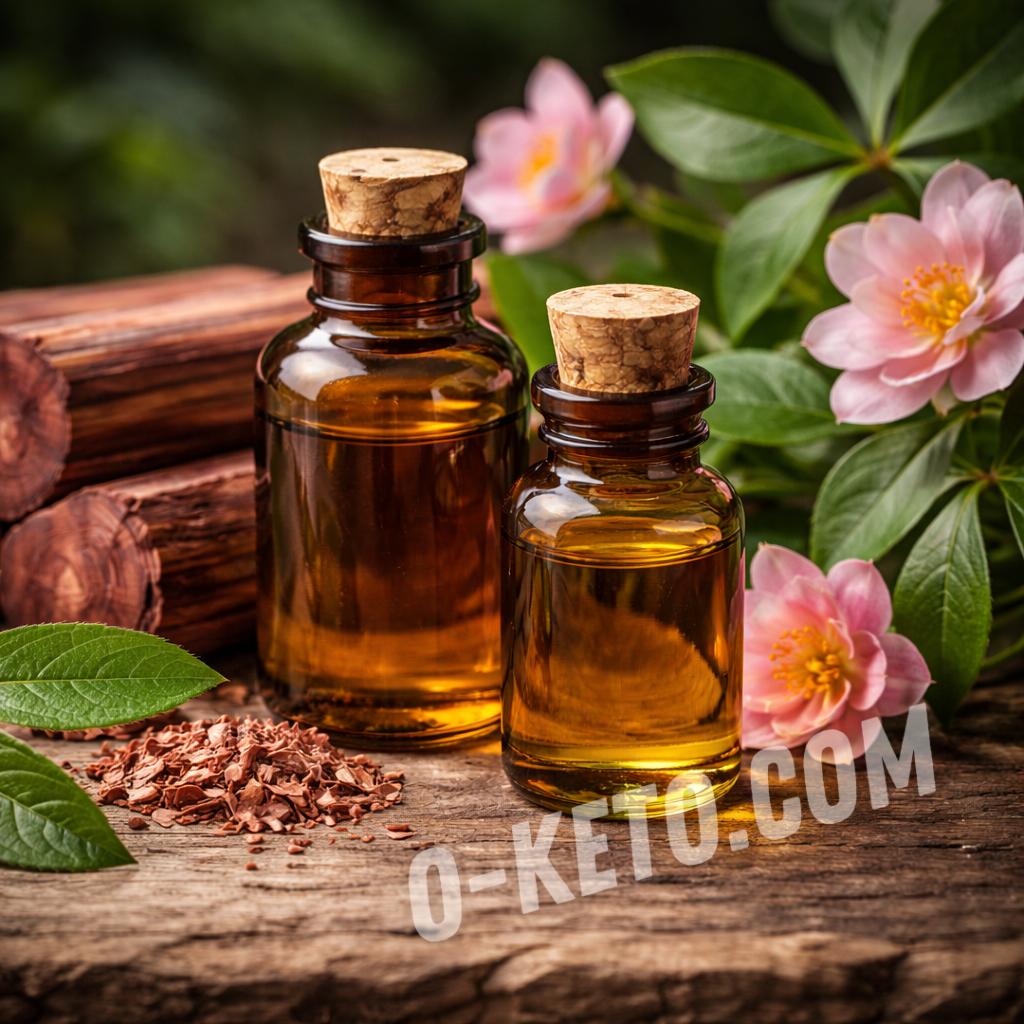

Rosewood essential oil is obtained from Aniba rosaeodora, a tropical tree with a soft woody-floral aroma. The scent has warm wood, light sweetness, floral roundness and a barely noticeable spicy side. It is used in natural perfumery, diffuser blends, oil perfumes and diluted cosmetic formulas where a calm, clean and not heavy woody accent is needed.
Rosewood is not related to rose as a flower and does not smell like rose oil. The name describes the gentle shade of the wood and its floral-woody profile. It is not used in cooking, should not be taken internally and is not a keto food product.
Origin and Sustainability
Aniba rosaeodora grows in the Amazon region, and historically the oil was obtained from wood. This made the product sensitive: demand in perfumery put pressure on natural populations. It is now especially important to choose suppliers that state raw material origin, legal harvesting and, when possible, more sustainable production methods.
The market may include oil from wood, branches or leafy material, as well as substitutes rich in linalool. They may smell pleasant, but they are not always the same in aroma. For expensive and ecologically sensitive oils, the label and supplier transparency matter more than elegant claims.
Aroma and Pairings
The main aromatic theme of rosewood is linalool softness: clean wood, light floral tone and a rounded calm trail. The oil connects citrus top notes with a woody or resinous base without making the blend heavy. It can replace part of lavender or ho wood when a more woody profile is wanted.
Good pairings include:
- bergamot, sweet orange, lemon and mandarin for a fresh top;
- lavender, neroli, geranium and ylang-ylang for soft floral tone;
- cedarwood, sandalwood, vetiver and frankincense for a dry base;
- vanilla, benzoin or tonka in a small share for warm perfume;
- jojoba or squalane as a base for oil compositions.
How to Use It
In a diffuser, rosewood usually feels soft and does not fight other oils. But if too much is added, the blend can become flat and sweet-woody. For a small room, a few drops in the whole composition are enough. In oil perfume it often works as the heart, linking bright citrus with the base.
For skin, the essential oil must be diluted. It can be added to small batches of body oil, hand cream, cuticle care, after-shower oil and massage blends. Before adding it to a full bottle, make a small trial portion for several uses; this makes it easier to judge scent on skin and tolerance.
A common mistake is using rosewood as a “pretty universal scent” and adding it to every blend. Then compositions begin to resemble one another and lose character. It is better to define the task first: soften citrus, add a woody heart, make a cream calmer in scent, or build an oil perfume.
Quality and Substitutes
The bottle should preferably show Aniba rosaeodora, plant part, country of origin and extraction method. Very cheap “rosewood” without a botanical name may be fragrance oil or a blend. Natural material is usually not candy-like: it is soft, woody, slightly floral and clean.
If rosewood is unavailable or raises sustainability questions, ho wood, lavender, linalool basil, cedarwood with neroli, or lavender blended with a soft wood oil can sometimes be used. The substitute will not be exact, but it can cover a similar role in a composition.
A small bottle is usually enough: the aroma is used slowly, and good material is expensive. Before ordering a large volume, try a sample and check not only the scent from the bottle but also how it unfolds in a carrier after several hours.
If the oil is needed for care rather than perfume, choose the simplest possible base without a strong fragrance. This makes the rosewood aroma easier to understand and avoids overloading the skin with many components. In a complex cream with active ingredients, add essential oils only to a trial portion.
Safety and Storage
Do not apply the oil undiluted, drop it into the eyes, use it on mucous membranes or take it internally. During pregnancy, breastfeeding, for children, with asthma, allergy, sensitive skin or regular medication, aromatic concentrates should be discussed with a qualified professional.
Store the bottle tightly closed in a dark cool place. Linalool-rich oils change over time, so an old product with sharp sour or plastic-like notes should not be applied to skin. For home blends, write down the date, percentage and carrier oil.
If a finished blend loses its soft floral-woody tone and becomes harsh, it is better to make a fresh small batch. Delicate oils often show age first in the top notes, even before the carrier oil itself smells old.


