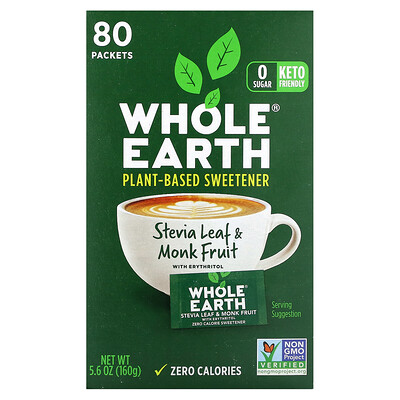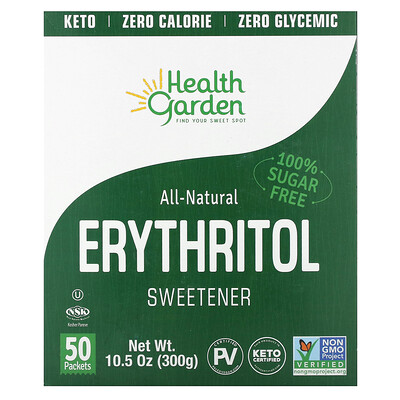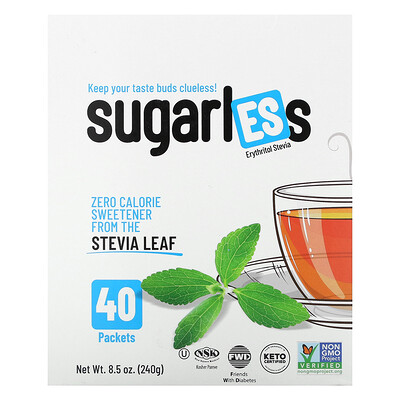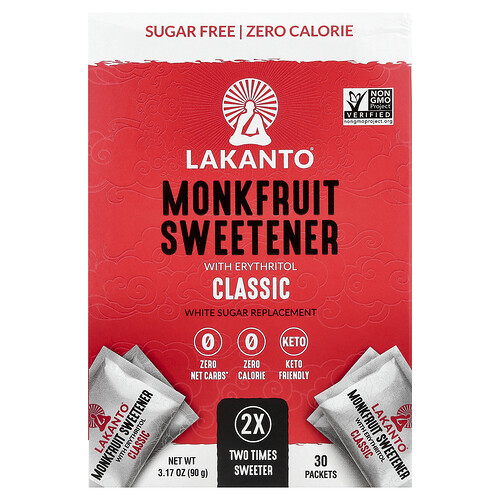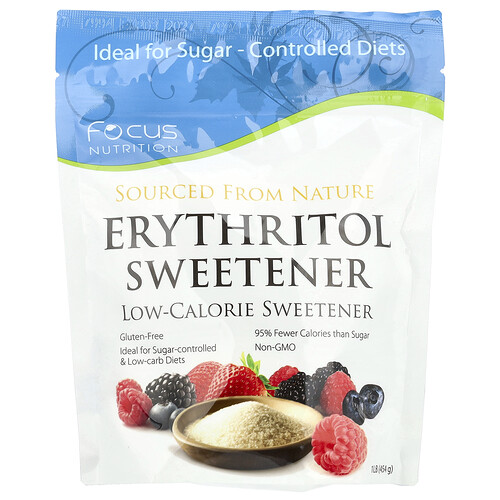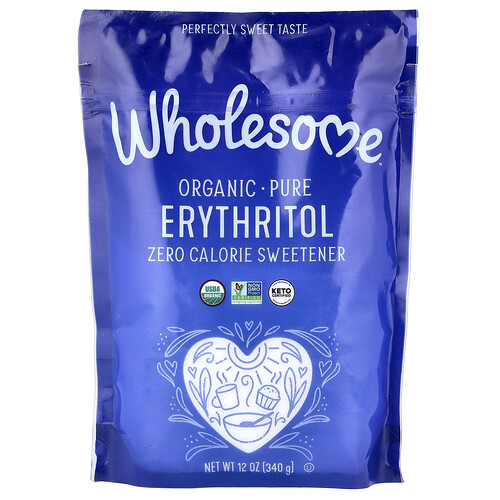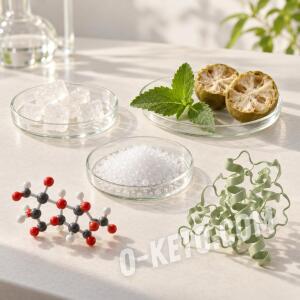


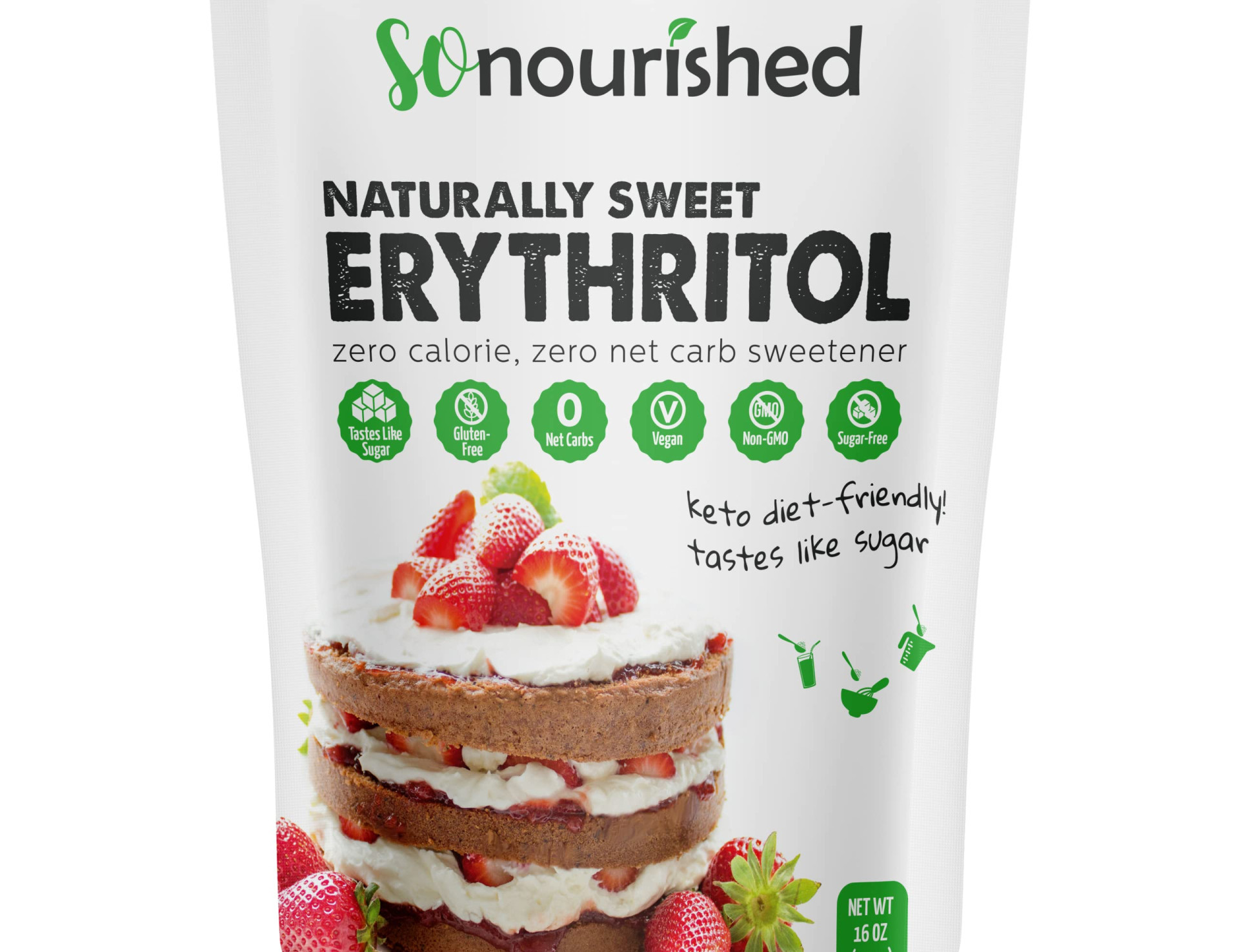

Erythritol is a sugar alcohol used as a sweetener without a significant sugar load. It occurs in small amounts in some fruits and fermented foods, and commercially it is usually sold as crystals, powder or a blend with other sweeteners.
Erythritol is less sweet than sugar: most people perceive it as about 60-70% as sweet. It also has a slight cooling effect, especially in creams, glazes, chocolate and no-bake desserts. This is a normal property of the product, but in a large amount it can interfere with flavor.
Nutrition
Erythritol provides almost no energy: labels usually list about 0-0.2 kcal per gram. It has little effect on glucose and insulin because most of it is absorbed and excreted without being converted into sugar. That is why it is often used in keto desserts, drinks and sauces.
When tracking food, look not only at the word “erythritol” but at the full ingredient list. Blends with maltodextrin, dextrose, sugar, syrups or sweet fillings are not the same as pure erythritol and may bring an ordinary carbohydrate load.
Is It Keto-Friendly?
Erythritol fits keto well when sugar needs to be replaced without the usual carbohydrates. It is convenient in sugar-free cheesecakes, whipped cream, cocoa, coffee, cottage cheese desserts, glaze and some baking. But this does not make a dessert unlimited: cream, butter, nut flour, chocolate and cheese still provide calories.
In everyday eating, sweet taste is better kept as an occasional accent rather than making a sweetener part of every meal. If desserts with erythritol keep increasing cravings for sweets, reduce the frequency or gradually make recipes less sweet.
Sweetness and Dosing
Erythritol rarely gives the same sweetness as sugar, so recipes often use more of it or combine it with stronger sweeteners. This is not always the best choice: too much can intensify the cooling effect, leave crystals on the tongue and make the flavor feel flat.
For a softer profile, erythritol is often combined with stevia, monk fruit or a small amount of allulose when it fits the diet and is available. A blend gives sweetness without relying on a large amount of one polyol.
How to Use It
In baking, erythritol does not behave exactly like sugar: it can crystallize, holds moisture less effectively and does not caramelize in the same way. Powdered erythritol is better for smooth creams, while fine crystals work for waffles and cakes. Even powder may need longer stirring in drinks.
Practical options include:
- powder in cheesecake, glaze or whipped cream;
- fine crystals in batter for muffins and waffles;
- a blend with stevia or monk fruit for fuller sweetness;
- a small amount in cocoa, coffee or a cold dessert;
- a sweetener for sauce where caramel-like stretch is not needed.
Crystals, Powder and Syrups
Granular erythritol is convenient for dough, crumb toppings and dry mixes, but in cold creams it can feel gritty. Powder dissolves better in no-bake desserts. Homemade syrup with erythritol can crystallize after cooling, so for sauces and soaking mixtures it is better to make a small amount and not expect it to behave like sugar syrup.
In caramel, erythritol does not fully replace sugar: color, stretch and texture will differ. If a recipe depends on the properties of sugar, it needs rebuilding rather than a simple ingredient swap.
Tolerance and Storage
Although erythritol is often tolerated more calmly than sorbitol or maltitol, individual response still matters. Large servings can cause bloating, rumbling or loose stools. The whole dessert can also feel heavy: nut flour, cream, butter and sweetener together make a dense mixture.
Store erythritol dry and tightly closed. Moisture causes clumps, and powder absorbs smells especially easily. If the product has clumped but smells normal and the package stayed dry, it can be sifted or ground; if it smells strange, it is better not used.
Substitutes
For keto, stevia, monk fruit, allulose or blends based on them can be used. Replacement is not always one-to-one: each sweetener has its own sweetness, aftertaste, solubility and baking behavior. Smoothness matters in cream, structure in dough and dissolving in drinks.
Common Mistakes
The first mistake is assuming that “sugar-free” automatically means “unlimited.” A dessert with erythritol can still be very calorie-dense. The second mistake is replacing sugar with erythritol one to one in every recipe. In sponge cakes, caramel, jams and crisp crusts, sugar gives not only sweetness but also structure.
The third mistake is not checking sweetener blends. If maltodextrin, dextrose or sugar is added to erythritol, it is already a different product. For strict keto, choose pure erythritol or a clear sweetener blend without carbohydrate fillers.