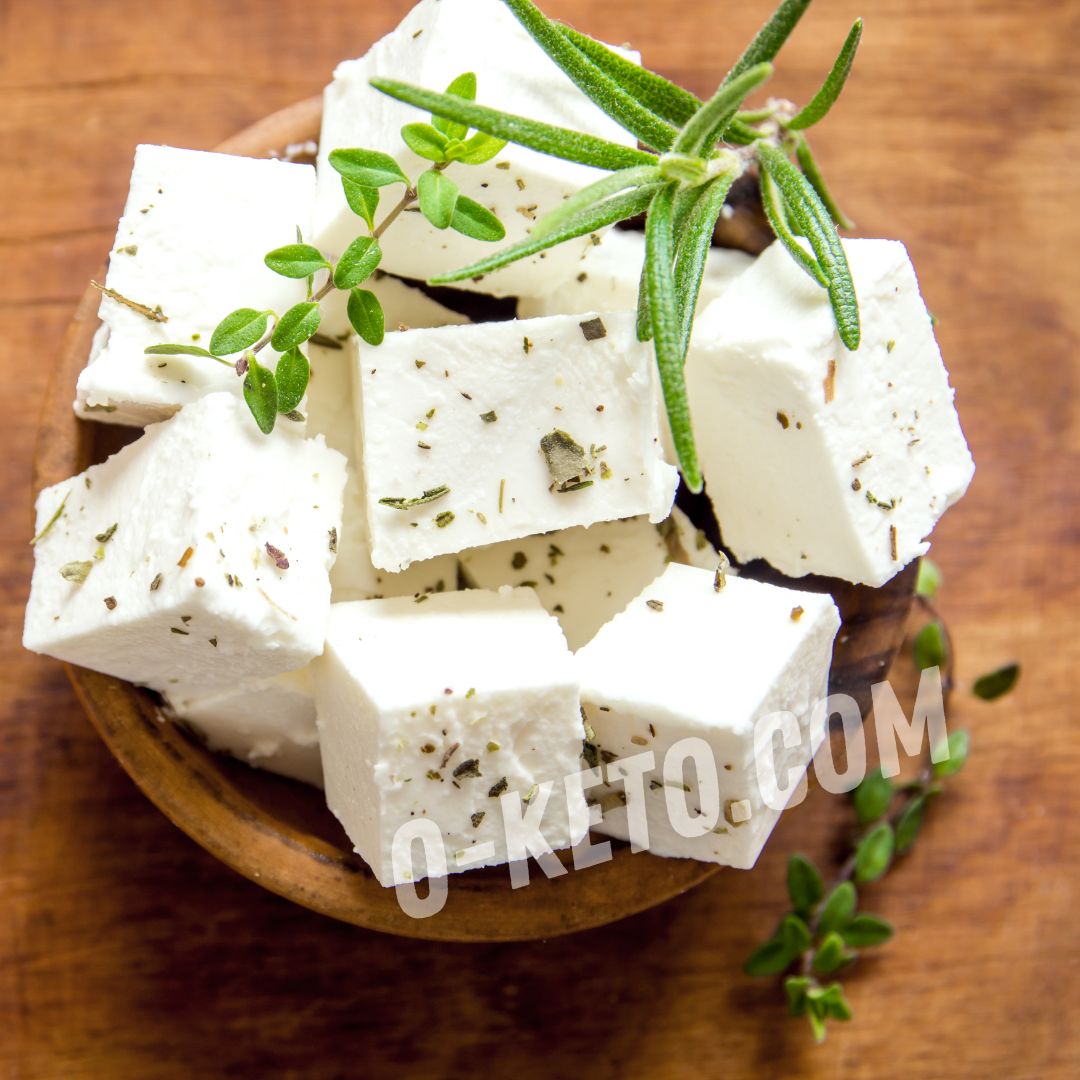

Feta is a brined cheese with a salty-tart flavor and a crumbly yet moist texture. Traditionally it is made from sheep’s milk or a mixture of sheep and goat milk. Feta works well in salads, casseroles, omelets, sauces, fillings and vegetable dishes because it adds saltiness, fat and a bright dairy flavor.
For keto, feta is usually convenient: it is low in carbohydrates, provides protein and fat, and makes vegetables and greens more satisfying. But it is salty and calorie-dense, so portion still matters, especially when the dish also contains nuts, oil, avocado or fatty meat.
Nutrition
Per 100 g, feta usually contains about 250-280 kcal, around 14 g of protein, 20-22 g of fat and about 3-4 g of carbohydrates. Exact values depend on milk, moisture and producer. The glycemic load is low because carbohydrates are low.
Feta contains calcium, phosphorus, vitamin B12, riboflavin and sodium. Calcium and protein matter in the diet, but cheese should not be turned into a special tool for bones or body processes. Practically, feta is a salty dairy product with a strong culinary role.
Is Feta Keto-Friendly?
Yes, feta fits keto and LCHF if it is real cheese without starch, sugar or vegetable substitutes. It pairs well with low-carb vegetables: cucumbers, lettuce, romaine, spinach, zucchini, eggplant, moderate portions of pepper and herbs.
Be more careful with ready-made salads and “feta-style” cheese products. They may contain sweet marinades, starch, cheap oils or additives that change the composition. Feta itself is low-carb, but the dish around it may not be.
How to Use It
Feta can be crumbled into salads, baked as a block, mixed with yogurt or sour cream for sauce, and added to omelets and fillings. Because it is salty, dishes often need less additional salt.
Practical options include:
- Greek salad without sweet dressings;
- omelet with spinach and feta;
- baked feta with a moderate portion of tomatoes and herbs;
- sauce with feta, yogurt and cucumber;
- filling for chicken, peppers or zucchini.
How to Choose and Store
Good feta has a short ingredient list: milk, culture, rennet and salt. Ideally, it is made from sheep’s milk or a mixture of sheep and goat milk. Cheese in brine usually keeps better and stays juicier. After opening, keep it in brine or tightly covered in the refrigerator.
Portion and Common Mistakes
A normal feta portion is 30-50 g. That is enough to flavor a salad or omelet. If added by eye, calories rise quickly, and the saltiness may increase thirst and water retention.
A common mistake is treating Greek salad as light just because it contains vegetables. A large amount of feta, oil and olives can be quite calorie-dense. For keto that is not automatically bad, but portion size should be clear.
Limitations and Substitutes
Feta is not suitable for milk protein allergy and may be problematic for people who do not tolerate dairy. Because of the salt, people who need to limit sodium should portion it carefully. Substitutes include brined cheese, goat cheese, halloumi, cream cheese or aged cheese, though flavor and saltiness differ.
Extra Notes
Feta varies a lot in moisture. Drier feta crumbles easily and works well in salads, while wetter feta is softer and better for baking or sauces. If the cheese is too salty, it can be soaked briefly in water or milk, but some flavor leaves with the salt.
In hot dishes, feta does not melt like mozzarella. It softens and becomes creamy at the edges, but keeps its characteristic graininess. This is good for baking with vegetables, but not for recipes that need a stretchy cheese layer.
For keto, avoid turning feta into a bread-based snack. Serve it with cucumber, lettuce, olives, eggs, meat, fish, baked low-carb vegetables or herbs.
Balancing Saltiness
Feta is strong on its own, so neutral and juicy foods work best beside it. Cucumber, salad leaves, zucchini, herbs, eggs, chicken, fish and olive oil help spread the saltiness through the dish. If feta is combined with olives, salted fish and a heavy dressing, the flavor can become too salty and dense.
For sauces, mash feta first with a little yogurt, sour cream or lemon juice. It spreads more evenly and usually needs no extra salt. For a softer flavor, add cucumber, dill, mint, garlic or a little olive oil.