


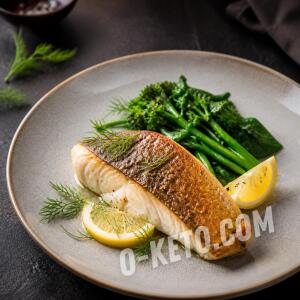
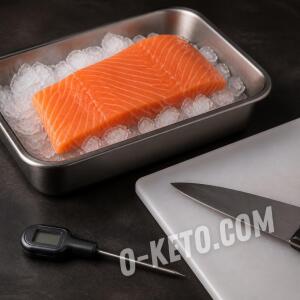
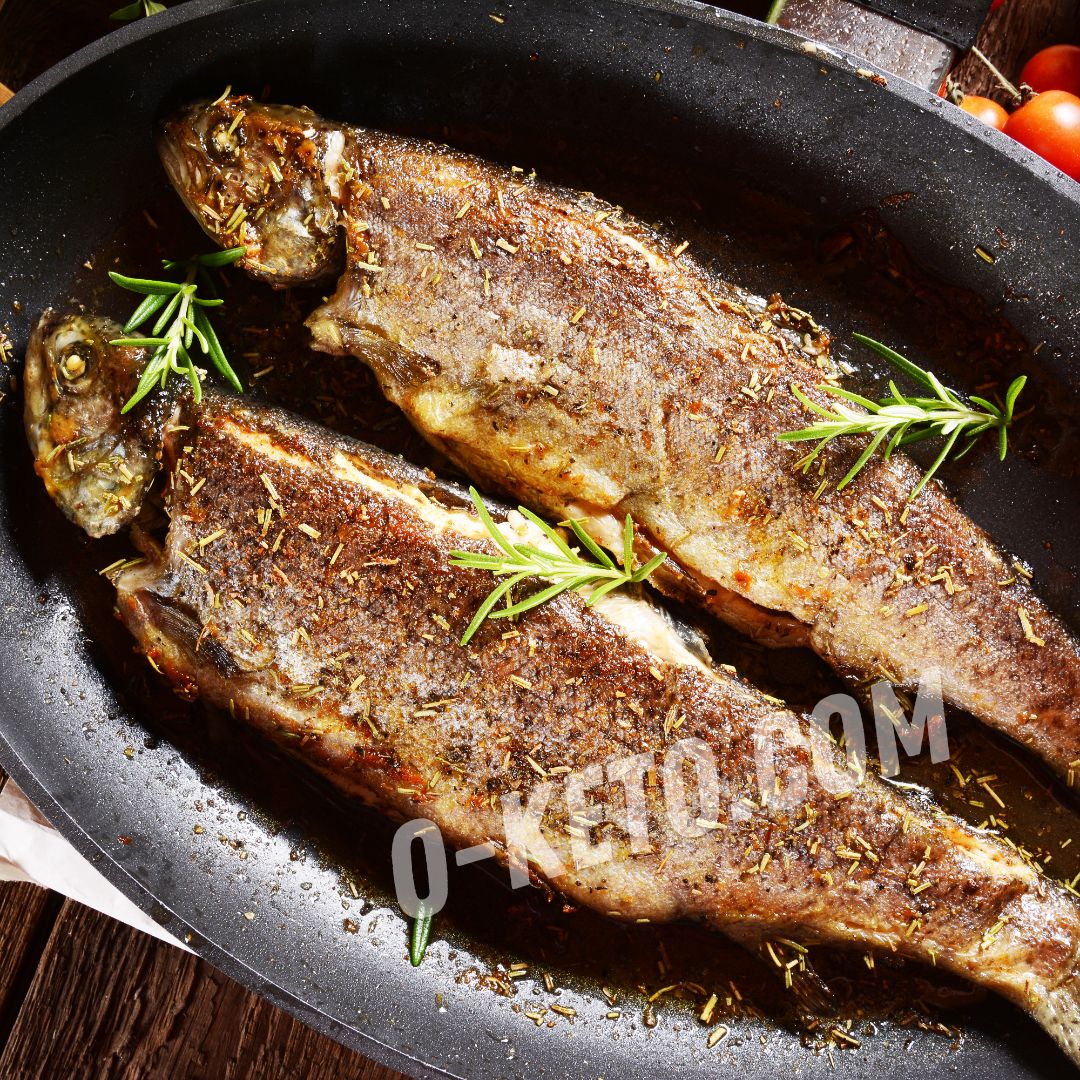

Trout is a fish from the salmon family that lives in cold clean water. Rainbow, stream, lake, and farmed trout are most common in shops. The flesh ranges from almost white to pink, the taste is milder than salmon, and fat level depends on species, feed, season, and part of the fish.
In cooking, trout is valued for tender texture and quick preparation. It is baked whole, pan-fried as skin-on fillets, grilled, salted, smoked, and added to salads, pâtés, and cold appetizers. For keto and LCHF it is a convenient protein food without carbohydrates if flour, sweet marinades, and starchy sides are not added.
Nutritional value
In 100 g of trout there are usually about 140–210 kcal, roughly 19–21 g of protein, 6–13 g of fat, and 0 g of carbohydrates. Fattier pieces and farmed fish may be more energy-dense than lean wild fish. The glycemic load of the fish itself is zero because it contains no sugar or starch.
Trout contains vitamin B12, niacin, vitamin D, selenium, phosphorus, potassium, and marine fatty acids EPA and DHA. These make it a good part of a varied fish menu, but not a remedy. In practice, fish quality, portion, and cooking method matter more.
Is it suitable for keto?
Trout fits strict keto well. A 150–200 g portion gives protein and a moderate amount of fat, while carbohydrates appear only from additions. The best sides are leafy salad, cucumber, broccoli, cauliflower, zucchini, spinach, mushrooms, avocado, or a creamy sauce without flour.
Salted and smoked trout can also be low-carb, but ingredients need a careful look. Ready slices sometimes contain sugar, sweet glaze, starchy thickeners, or unnecessary additives. When salt is being controlled, fresh fish seasoned at home is the simpler option.
How to cook it
Trout dries out easily, so it needs moderate heat and short cooking time. Skin-on fillet is convenient to fry skin side down without moving it for the first minutes, so the skin firms up. Whole fish can be baked with lemon, salt, pepper, dill, and butter.
For grilling, portion steaks or a whole fish in a grill basket work well. Tender skinless fillet should be cooked gently: in parchment, steamed, in a creamy sauce, or over low heat. Strong sweet sauces usually cover trout flavor; lemon, capers, herbs, garlic, butter, and dry spices work better.
How to choose
Fresh trout should smell clean, without ammonia or old fat. The skin should be moist and shiny, eyes clear, and gills without a sharp smell. For fillets, check firmness, even color, and absence of sticky slime. Frozen fish should not be covered with a thick snow crust.
Farmed trout is usually more available and consistent in size; wild trout may have a more pronounced taste and different fat level. Freshness, cold chain, and clear labeling matter more than romantic origin. For lightly salted fish, choose a short ingredient list: trout, salt, sometimes spices.
Limitations
Trout is not suitable for people with fish allergy. With sensitive digestion, fatty pieces, smoked products, and very salty fish may be harder to tolerate than simple baked fillet. Pregnant women, children, and people with fish restrictions should follow clinician advice on frequency and fish types.
Contaminant questions depend on species, catch area, and production. Trout is usually not among the most problematic large predators, but supplier quality still matters. It is better not to build a fish menu around one species only: rotate trout with sardines, mackerel, cod, herring, and seafood.
How to store it
Chilled trout is best cooked on the day of purchase or the next day. Keep it in the coldest part of the refrigerator, away from ready-to-eat food. Frozen fish should be thawed slowly in the refrigerator, then patted dry and cooked immediately. Cooked trout should be cooled quickly and stored in a closed container.
What can replace it?
In recipes, trout can be replaced with salmon, char, mackerel, dorade, sea bass, or another fish of similar fat level. If a leaner option is needed, cod, hake, or zander can work, but they often need added butter or sauce. For keto, the absence of breading and sweet additions matters more than the exact fish species.


