


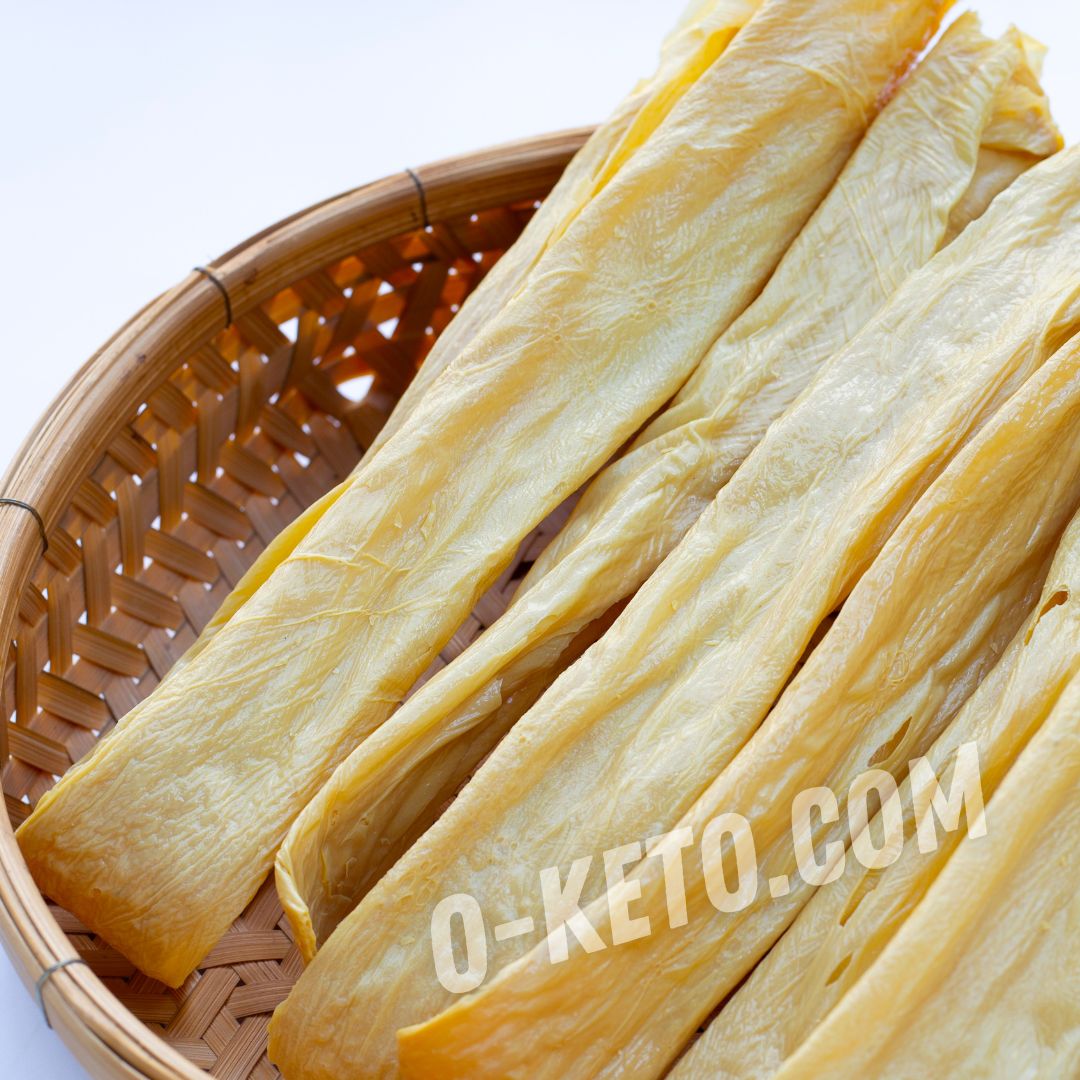

Fuzhu is the dried skin that forms on the surface of hot soy milk. It is lifted off in thin layers, dried, and sold as soy asparagus, yuba, or tofu skin. The name “soy asparagus” is informal: it is not related to real asparagus. This is a soy product with a firm fibrous texture that absorbs marinades, spices, and sauces very well.
When dry, fuzhu looks like brittle yellowish sticks or sheets. After soaking, it becomes flexible, meaty, and slightly springy. It is used in Korean-style salads, soups, stir-fries, stews, spicy snacks, and vegetarian recipes where a texture similar to thin strips of protein food is needed.
Nutrition
Nutrition depends on producer and drying level. In 100 g of dry fuzhu there are often about 350-450 kcal, plenty of plant protein, a noticeable amount of fat, and a moderate carbohydrate share. After soaking, the weight increases greatly, so 100 g of prepared product and 100 g of dry product are completely different portions.
Fuzhu contains soy protein, soy fat, fiber, calcium, magnesium, iron, phosphorus, and small amounts of B vitamins. But practical counting is best done by the label: some products are plain, while others may already be seasoned, sweetened, or treated with sauce.
Place in keto and LCHF
Fuzhu can fit keto and LCHF if the portion is small and the product contains no sugar, starch, or sweet marinades. Dry fuzhu is concentrated, so it is best counted by dry weight before soaking. For stricter keto, 15-25 g of dry product per serving is often easier, then the dish can be completed with fat, herbs, low-carb vegetables, and sugar-free sauce.
The main trap is ready-made salads and snacks. Korean-style fuzhu often contains sugar, sweet vinegar, carrot, flavor enhancers, and a lot of oil of unclear quality. A homemade version is easier to control: soak the product, rinse it, then season with spices, garlic, vinegar, sesame or olive oil, and a sugar-free sweetener if needed.
How to prepare
Dry fuzhu is usually soaked in cold or warm water until soft. Time depends on thickness: thin sheets may need 30-60 minutes, while dense sticks need several hours. After soaking, the product is rinsed, squeezed, and cut into strips. If a softer texture is needed, fuzhu can be briefly boiled or warmed in sauce.
Very hot water speeds the process, but may make the surface loose while the center stays firm. It is better not to rush: evenly soaked fuzhu is more pleasant in salads and does not break in a pan. In marinade, it needs at least 20-30 minutes for flavor to move inside.
How to use
Fuzhu pairs well with garlic, coriander, chili, ginger, sugar-free soy sauce, rice or apple cider vinegar, sesame, green onion, cucumber, mushrooms, cabbage, zucchini, and eggplant. In hot dishes it absorbs sauce like a sponge, so salt and spices are better added gradually.
For a keto dish, fuzhu can be mixed with cucumber, herbs, sesame oil, and chili; added to a pan with mushrooms and egg; stewed with chicken and unsweetened coconut milk; or used instead of noodles in a small amount. If a crisp texture is needed, squeeze it well after soaking and fry it quickly.
How to choose
A good dry fuzhu ingredient list should contain soy or soy milk, sometimes water. Sugar, starch, flour, flavorings, ready marinades, and unclear mixes are undesirable. Color is usually pale yellow or cream. Very bright color, stickiness, old-oil odor, or mold smell is a reason to choose another package.
Sheets and sticks should be dry and brittle, without wet spots. Packaging with a clear window is convenient: you can see whether there are crumbs, dust, or clumps. If the product is sold already soaked, the date, marinade composition, and storage conditions matter especially.
Limits
Fuzhu is made from soy, so it is not suitable for people with soy allergy. With sensitivity to soy products, bloating, heaviness, or individual reactions are possible. It is better to start with a small portion, especially if the dish contains hot spices, vinegar, and a lot of oil.
Dry fuzhu expands strongly after soaking, and the portion can look smaller than it really is. For controlling carbohydrates and protein, weighing the dry product is easier. Ready spicy salads should not automatically be treated as keto-friendly: the sauce composition decides almost everything.
Storage and substitutes
Store dry fuzhu in a tightly closed bag or jar, in a dry dark place, away from moisture and strong odors. After soaking, keep it in the refrigerator and use it quickly, usually within 1-2 days. Marinated product should be stored according to the producer’s date.
Fuzhu can be replaced with tofu, tempeh, yuba sheets, omelet strips, chicken, squid, mushrooms, or shirataki noodles if the goal is texture in a salad. The substitute depends on the dish: tofu is softer, tempeh is firmer and stronger in taste, shirataki is closer to noodles, and chicken gives a protein base without soy.


