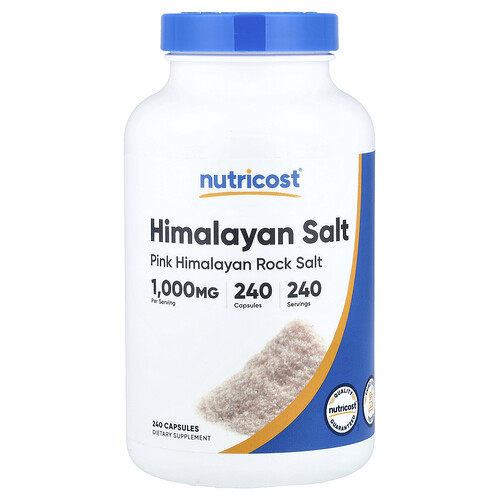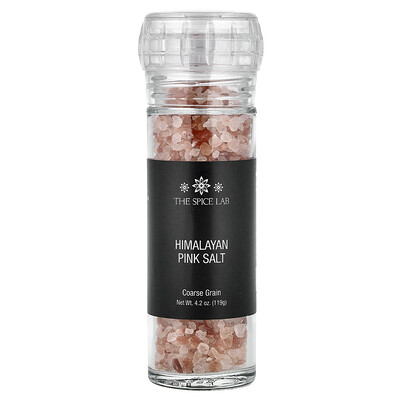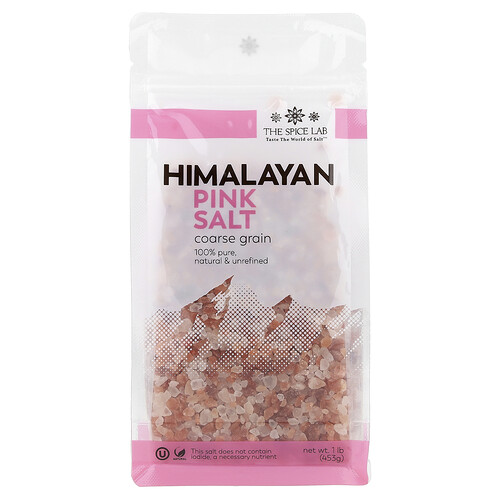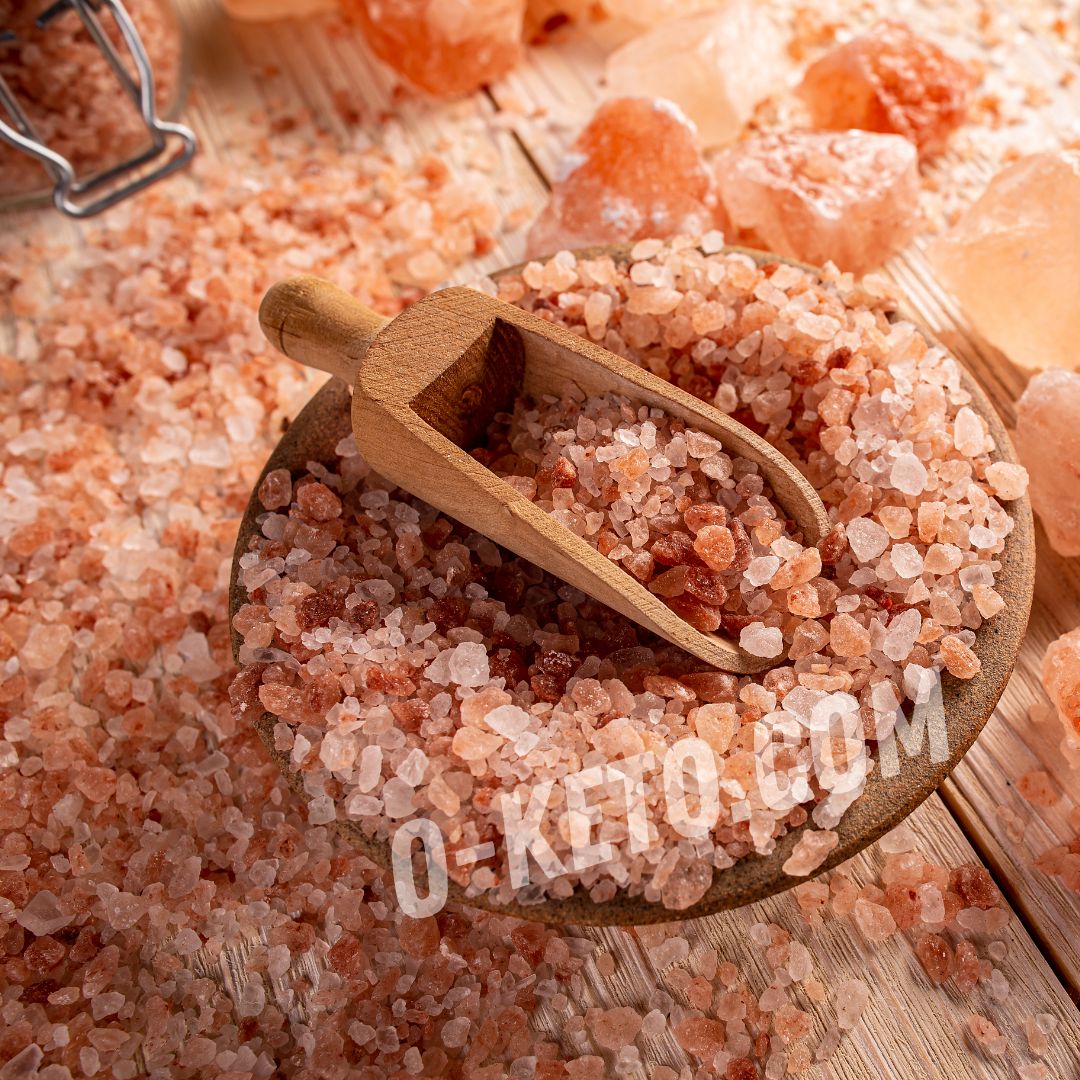

Himalayan salt is rock salt with a pink, peach, or almost white shade. It is most often associated with deposits in Pakistan, near the Himalayan foothills. The color comes from trace minerals, especially iron compounds, but its main food role is still salt: a source of sodium and chloride.
In the kitchen it is used like other edible salt: for seasoning finished dishes, marinades, broths, meat, fish, eggs, vegetables, and homemade sauces. The difference is usually not a strong mineral taste, but grind size, moisture, crystal texture, and visual effect on the plate.
How it differs from ordinary salt
Regular table salt is usually refined to almost pure sodium chloride and may be iodized. Himalayan salt is less uniform in color and is often sold as coarse crystals, flakes, or in a grinder. It does contain trace elements, but the amounts are small: it should not be treated as a meaningful source of magnesium, potassium, or iron.
The most practical difference is that most versions are not iodized. If the diet contains no iodized salt and little seafood, this matters. Pink salt does not automatically replace iodized salt; it can be more practical to keep both at home and use them for different tasks.
Nutritional value
Salt contains no protein, fat, carbohydrates, or meaningful calories. Its glycemic index and glycemic load are zero because there is no sugar or starch. But zero carbohydrates do not mean that the amount is irrelevant: sodium remains an active dietary factor.
In 1 g of salt there are roughly 390–400 mg of sodium. A teaspoon of fine salt may provide about 5–6 g of product, but coarse salt is less accurate by volume: large crystals take up more space and may weigh differently. For repeatable recipes, a scale is more reliable.
Is it suitable for keto?
Himalayan salt fits keto because it adds no carbohydrates. On low-carb eating, salt often becomes more noticeable because water balance changes and fewer processed foods are eaten. Still, this is not a reason to oversalt everything: the amount should reflect personal response, blood pressure, sweating, and clinician advice when restrictions exist.
In keto cooking, pink salt works in broth, eggs, salads, fish, meat, avocado, vegetables with butter, and homemade dressings. For electrolyte drinks, it is sometimes mixed with water and lemon, but the taste quickly becomes sharp and the dose should be careful.
How to use it
Fine grind is convenient for sugar-free dough, minced meat, omelets, and sauces where salt needs to disperse evenly. Coarse crystals work better as a finishing touch on steak, eggs, cucumbers, salad, or fish. If coarse salt replaces fine salt by volume, the dish may turn out underseasoned or oversalted, so weight is more reliable.
Salt slabs and blocks are used for serving or quick searing, but they are a separate kitchen tool. They heat slowly, dislike sudden temperature changes, and gradually season the food. For everyday cooking, regular grind is simpler.
How to choose
Buy edible salt, not decorative or technical salt. The package should state food use, packing country, grind, and composition. Salt should not smell of damp storage, chemicals, or old packaging. A very bright uniform pink color is not proof of high quality; natural crystals are often uneven.
For everyday cooking, medium or fine grind is more convenient. For a grinder, dry coarse crystals are suitable. For a salt shaker, coarse moist salt is inconvenient: it clumps and doses poorly. Check iodization separately, because pink salt is usually sold without added iodine.
Limitations
The main limitation is sodium. With high blood pressure, kidney disorders, edema, diuretics, or a prescribed low-salt diet, the amount of salt should be discussed with a clinician. The pink color does not make it gentler for the body than ordinary salt when the sodium amount is the same.
Claims that this salt cleanses, cures, or replaces mineral supplements should be treated skeptically. Its role in food is simple: salty taste, sodium, texture, and sometimes appearance. Everything else depends on the overall diet, water, protein, vegetables, and medical restrictions.
How to store it
Keep salt in a dry closed container, away from steam and wet spoons. Coarse crystals can last a long time, but they absorb odors and moisture. If salt clumps, it is usually a storage issue rather than spoilage; for convenience, move it to a dry jar.
What can replace it?
For seasoning, Himalayan salt can be replaced with sea salt, rock salt, kosher salt, or ordinary table salt. If iodine matters, choose iodized salt. If sodium needs to be reduced, potassium chloride blends are sometimes used, but they taste different and are not suitable for everyone, especially with kidney restrictions or certain medications.
The colour of Himalayan salt does not prove special benefits
The pink colour of Himalayan salt comes from small mineral impurities, but their concentration is usually too low to make a meaningful nutritional contribution. Its sodium content remains close to ordinary salt. Choose it for flavour, crystals and appearance, not as a replacement for iodized salt or a mineral supplement.