


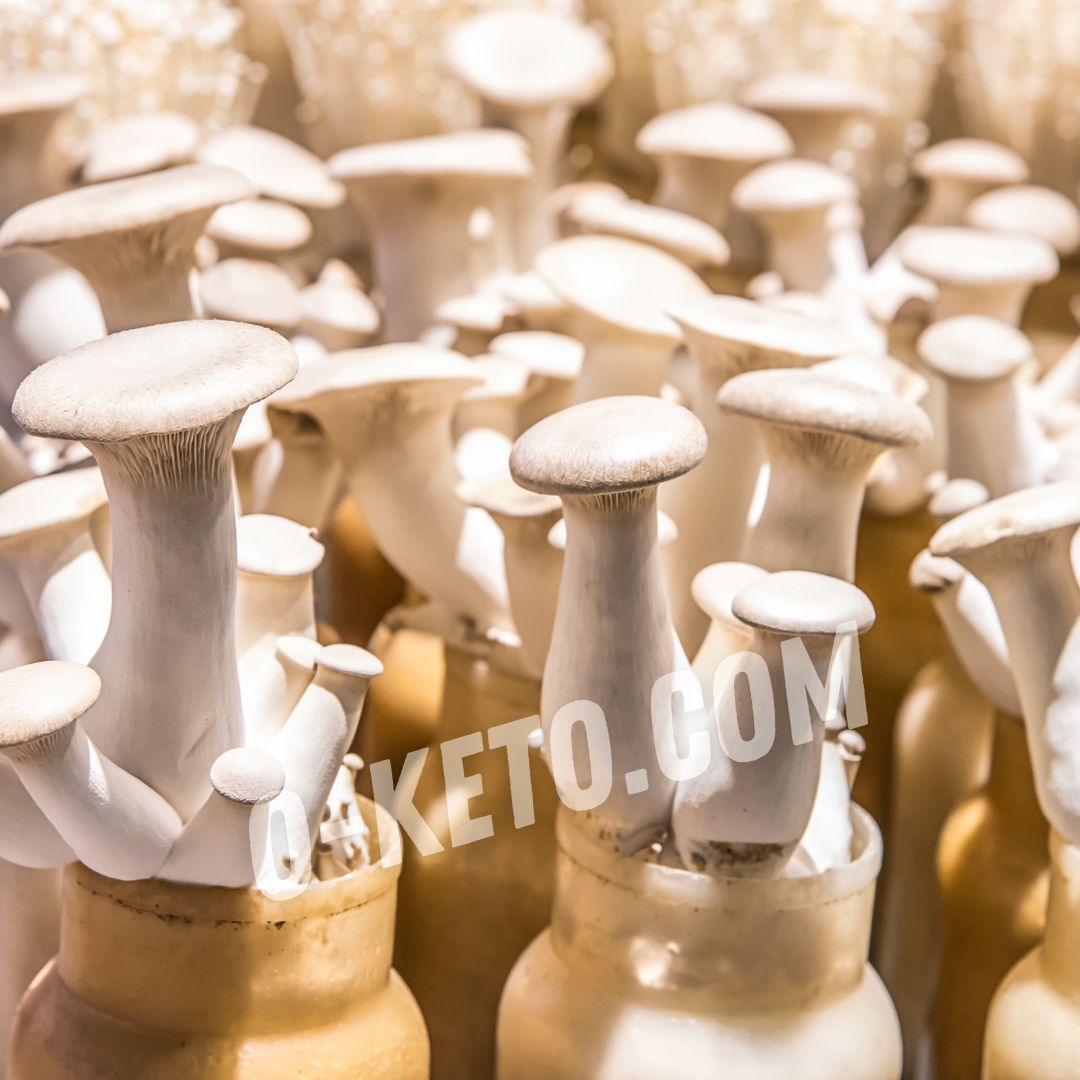

Eringi mushrooms, also called king oyster mushrooms, are firm mushrooms with a thick stem, small cap and meaty texture. Their Latin name is Pleurotus eryngii. Unlike regular oyster mushrooms, eringi are less like thin petals and hold their shape better when fried, roasted or stewed. Because of that density, they are often used as mushroom “steaks,” a base for warm salads and a replacement for more watery mushrooms.
Older descriptions often promise too much, while the product is mainly valuable as a low-calorie mushroom with pleasant texture. Per 100 g of fresh eringi, common values are about 35 kcal, around 3 g of protein, 0.5 g of fat and about 7 g of carbohydrates. Glycemic load in a normal serving is low, especially when the mushrooms are cooked without sugar, flour or sweet sauces.
Nutrition
Eringi contain water, fiber, a little protein, B vitamins and minerals that may include zinc and selenium. They are not a protein replacement for meat and not a main fat source. Their main role on the plate is volume, umami flavor, firm texture and the ability to take in butter, olive oil, creamy sauce, garlic, herbs and spices.
They contain more carbohydrates than leafy greens, but much less than starchy side dishes. For keto, portion and cooking method matter. A serving of 100-150 g in a dish is usually reasonable, while a large pan with thick sweet sauce or breading changes the calculation.
Are They Keto-Friendly?
Eringi fit keto and LCHF when cooked without flour, sugar, starch or breadcrumbs. They can replace side dishes where firm texture is wanted: potato wedges, noodles in some dishes, part of grains in a warm salad, or mushrooms with more watery flesh. Still, they are not a zero-carb food, so carbohydrates should be counted.
They work best with fat and protein: eggs, meat, poultry, fish, butter, olive oil, cheese, sour cream or cream. If the dish is too lean, the mushrooms may feel dry. A little fat and proper browning make the texture much better.
How to Use Them
The thick stem can be sliced lengthwise, into rounds or into large sticks. For mushroom “steaks,” shallow cuts on the surface help the mushrooms absorb oil and spices. It is better to start on a hot pan, evaporate excess moisture and brown the surface; salt can be added near the end.
Practical options include:
- slices fried in butter with garlic;
- roasting with cheese, thyme and olive oil;
- warm salad with egg, herbs and sour cream dressing;
- side dish for steak, chicken or fish;
- mushroom “scallops” from sliced stems without sweet glaze.
How to Choose and Store
Choose firm dry mushrooms without slime, dark wet spots or sour smell. The stem should be elastic, not loose. Color can range from white to cream, with a light brown cap; this is normal. Names such as white or black eringi often describe appearance or market sorting rather than a fundamentally different keto product.
Store eringi in the refrigerator, preferably in a paper bag or a container with some airflow. In a sealed wet bag they become slippery faster. Wash them briefly right before cooking and dry them well. For frying, excess water prevents browning and makes the flavor flatter.
Limits and Substitutes
Eringi are unsuitable for people with individual mushroom intolerance. Like other mushrooms, they can feel heavy for sensitive digestion, especially in a large serving or together with a lot of onion, garlic and rich sauce. Start with a small portion and cook them well rather than eating them raw.
They can be replaced with button mushrooms, regular oyster mushrooms, shiitake, portobello or porcini. If a firm, meaty texture is needed, portobello and large button mushrooms are closest, though the flavor differs. For keto, the more important point is no breading, sweet marinade or starchy sauce.
Getting Good Browning
Eringi often turn watery when placed in a cold pan or salted immediately. Slice the mushrooms, dry them well, heat the pan and first let moisture evaporate without constant stirring. When the surface starts to brown, add butter or oil, garlic, thyme, salt and pepper.
For mushroom “steaks,” slices should not be too thin: otherwise they dry out before a firm texture develops. A thickness of about 1-1.5 cm is often more practical for frying and roasting. For deeper flavor, add butter or a little sugar-free soy sauce at the end.


