


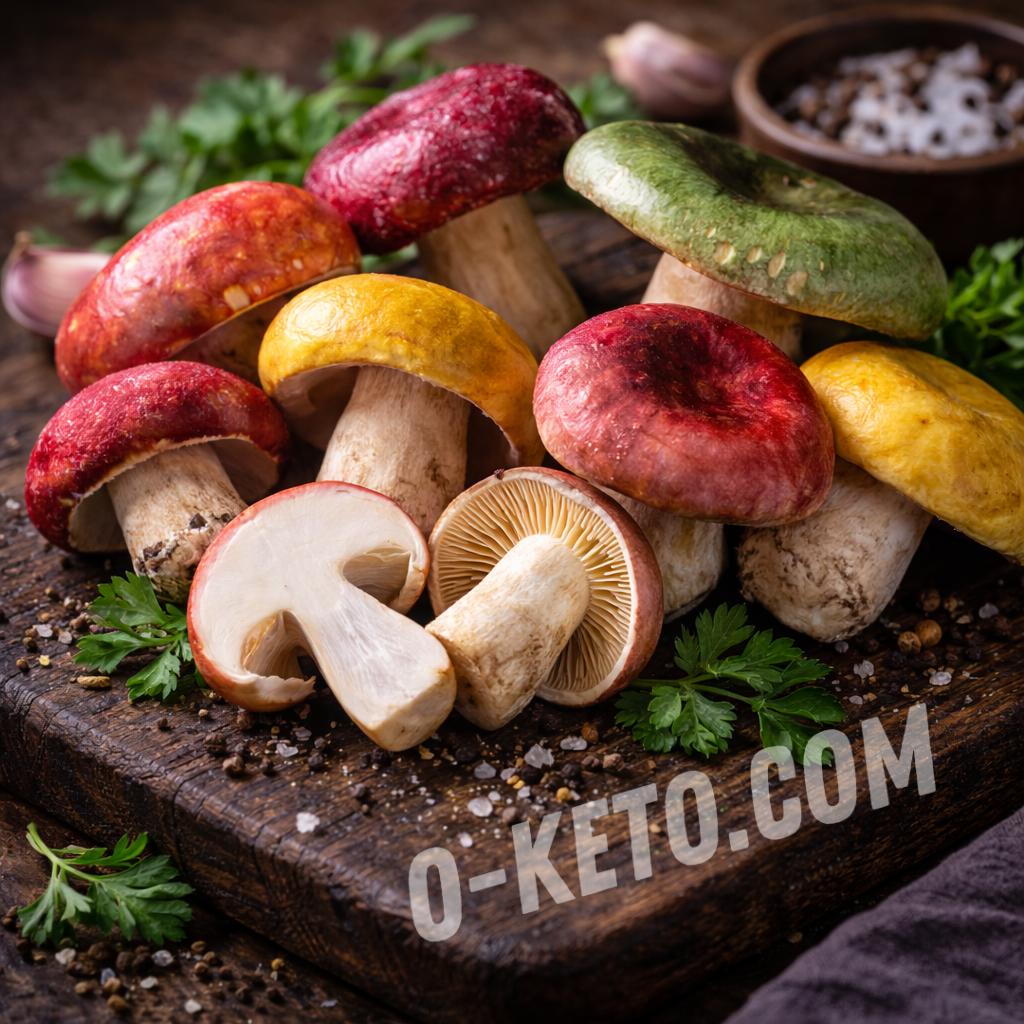

Russula mushrooms are a large group of wild mushrooms from the Russula genus. They are easy to notice because of their bright caps: green, yellow, pink, red, purple, or brown. Color alone does not prove edibility, because the group includes pleasant edible species, bitter species, and species that can irritate digestion.
The Russian name can be misleading and does not mean that any Russula should be eaten raw. In home cooking, edible species are usually fried, boiled, stewed, salted, or pickled. The main task for a forager is correct identification and rejecting doubtful mushrooms. Russulas have brittle flesh and fragile gills, so they do not tolerate long transport or rough cleaning well.
How they look
Russulas usually have a smooth cap about 5-12 cm wide, a white or pale stem, and brittle white or cream gills. The flesh often crumbles rather than separating into fibers. Many species form mycorrhiza with birch, pine, spruce, oak, and other trees, so they appear in mixed, coniferous, and deciduous forests.
Well-known edible species include green-cracking Russula, Russula vesca, and some yellow or brown mild-tasting species. Very sharp or bitter species are not used in ordinary cooking. Tasting raw mushrooms for identification is a bad idea: it is safer to rely on experience, clear features, and refusal of all uncertain finds.
Nutrition
Fresh edible Russulas are low in calories: 100 g usually has about 20-25 kcal, 2-3 g of protein, about 0.3 g of fat, and 3-4 g of carbohydrates. Much of the weight is water, so the mushrooms shrink and release liquid during frying. In a cooked dish, the final calories usually come more from butter, sour cream, cheese, or marinade.
Like other mushrooms, Russulas provide fiber, mushroom aroma, and small amounts of minerals. They do not replace meat as a protein source, but they can make a low-carb plate larger and more interesting. For keto, the cooking method matters most: without flour, sugar, and starchy sides, they remain a light ingredient.
Are they suitable for keto?
Edible Russula mushrooms fit keto and LCHF in normal mushroom portions. They can be fried in butter, stewed with sour cream, added to omelets, meat sauces, or cauliflower soup. They contain few carbohydrates, and their flavor pairs well with rich sauces and herbs.
Problems appear when mushrooms are cooked with flour, potatoes, grains, sweet marinade, or a large amount of onion. Salted and pickled Russulas should also be checked by brine ingredients. If sugar or sweet additions are present, the product is different from plain mushrooms.
How to cook
Clean Russulas from leaves, soil, and damaged parts. Because they are fragile, do not soak them for long; a quick rinse and drying are enough. Many foragers boil Russulas for 10-15 minutes and discard the water, especially when a species may taste slightly bitter. After that, they can be fried, stewed, salted, or pickled.
When frying, first evaporate excess moisture, then add butter, salt, pepper, onion, or garlic. Sour cream and cream are better added near the end to keep the sauce smooth. In soups, Russulas give a light forest flavor, but they may break apart, so large pieces should not be stirred too aggressively.
How to choose and store
Only confidently identified edible Russulas should be eaten. Mushrooms should be firm, without mold, worms, sour smell, or soggy flesh. Old specimens with crumbling caps and darkened gills are better left in the forest. Do not gather mushrooms near roads, industrial areas, or polluted soil.
Fresh Russulas are best cooked on the day of gathering. In the refrigerator, they keep worse than many mushrooms because they break easily and lose appearance quickly. For storage, boil and freeze them, salt them, pickle them, or dry them if the species is suitable. Cooked mushrooms should be refrigerated and eaten within 1-2 days.
Pairings and substitutes
Russulas pair well with onion, garlic, dill, parsley, black pepper, sour cream, butter, eggs, soft cheese, and stewed cabbage. In a low-carb plate, they can be combined with cauliflower, zucchini, spinach, chicken, beef, or an omelet.
They can be replaced with button mushrooms, oyster mushrooms, chanterelles, honey mushrooms, or porcini. For a mild neutral taste, button mushrooms work well; for a stronger forest aroma, porcini or chanterelles are better. Each substitute will have a different firmness and cooking time.


