


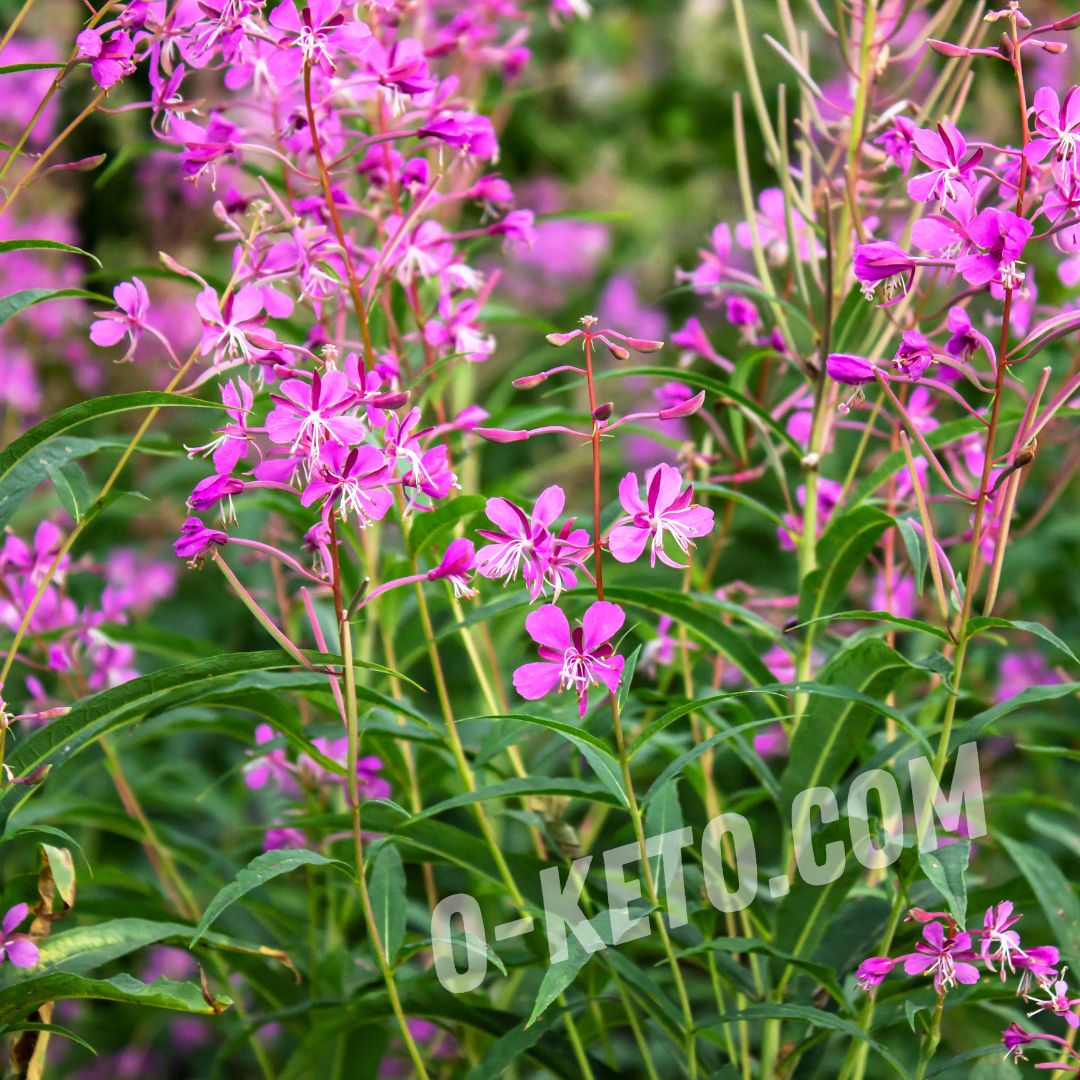

Ivan tea, or narrow-leaved fireweed, is an herbal drink made from the leaves of Chamaenerion angustifolium. The leaves are usually wilted, rolled, fermented, and dried, so the finished infusion is not just dried grass but a drink with a soft floral, herbal, and sometimes slightly berry-like aroma. It contains no caffeine.
Ivan tea is drunk as a hot drink on its own, brewed cold, and mixed with mint, lemon balm, thyme, currant leaves, berries, or zest. In character, it is closer to herbal tea than to black or green tea: it does not stimulate through caffeine, does not give harsh astringency, and can suit an evening cup when tolerated well.
Nutrition
Dry Ivan tea is hardly used as food: the cup contains an infusion, not a large portion of leaves. If it is drunk without sugar, honey, syrups, or sweet jam, the carbohydrate load of the drink is minimal. The calories in a normal cup are also practically negligible.
Fireweed leaves contain tannins, flavonoids, organic acids, and mineral traces, but their amount in a cup depends on the raw material, fermentation, dose, and brewing time. Therefore, Ivan tea is more sensibly viewed as an aromatic caffeine-free drink, not as a replacement for food or supplements.
Fit for keto and LCHF
Ivan tea fits keto and LCHF well when drunk without sugar. It does not require milk, cookies, or sweets, but it can be paired with cream, lemon zest, mint, cinnamon, or a small amount of erythritol when a gentle sweet taste is wanted. The infusion itself does not interfere with a low-carb menu.
Ready herbal blends need caution. They may contain dried fruit, candied pieces, flavored bits, honey granules, and sugar. On the label, it is better to look for a simple ingredient list: fermented Ivan tea or a clear herbal blend without sweet additions.
How to brew it
For a classic cup, use about 1-2 teaspoons of dry leaf per 200-250 ml of water. The water does not have to be at a rolling boil; 85-95 degrees Celsius is often enough. A 5-10 minute infusion gives a mild taste, while longer brewing gives a richer and more astringent drink. If it becomes rough, use less leaf or less time next time.
Fermented leaf can be brewed again, especially when it is large and well dried. The second infusion is often softer and calmer in taste. For a cold infusion, cover the leaves with cool water and leave them in the refrigerator for several hours; this version is less astringent.
Ivan tea pairs well with mint, lemon balm, a small amount of rosehip, lemon zest, thyme, cinnamon, cloves, currant leaves, and sea buckthorn. If berries are added, their amount should be counted separately because even sour berries contain carbohydrates.
The strength of the infusion can be adjusted to the time of day. In the morning, a richer cup may be pleasant; in the evening, a weaker and warmer-tasting version without strong spices is often easier. If the drink will be served cold, it is better not to overbrew it because astringency becomes more noticeable after chilling.
How to choose
Good fermented Ivan tea has a clean herbal, floral, or slightly fruity aroma without mold, dampness, or dusty smell. The leaf should be dry but not turned into gray crumbs. A very bright vanilla, caramel, or berry aroma often means flavoring.
Whole-leaf or large-leaf tea usually gives a cleaner infusion, while small fragments brew faster and may taste more bitter. Drink color depends on fermentation, from light amber to dark reddish brown. Dark color alone does not prove quality; smell, cleanliness, and taste matter more.
When buying a blend, it is worth distinguishing fermented leaf from simple dried fireweed. Fermentation gives a rounder taste and darker infusion, while simply dried herb often tastes greener and rougher. Both versions can be used, but they are not the same in recipes or expectations.
Limits
Herbal drinks do not suit everyone. Ivan tea may be unsuitable with an individual reaction to fireweed or herbal blends. If discomfort, nausea, itching, or unusual sleepiness appears after a cup, it is better to remove the drink rather than increase the dose.
During pregnancy, breastfeeding, medicine use, or chronic conditions, regular large amounts of herbal infusions should be discussed with a qualified professional. One cup as a drink and liters of strong infusion every day are different situations.
Storage and substitutes
Dry Ivan tea should be stored in a closed jar or tight bag, in a dark dry place, away from spices and coffee. The leaf easily absorbs odors. Moisture quickly spoils the raw material, so a wet spoon should never be put into the jar.
Ivan tea can be replaced with rooibos, mint, lemon balm, thyme, sugar-free herbal blends, weak black tea without sweeteners, or water with lemon zest. If the goal is a caffeine-free cup, rooibos and simple herbal infusions are closest.


