


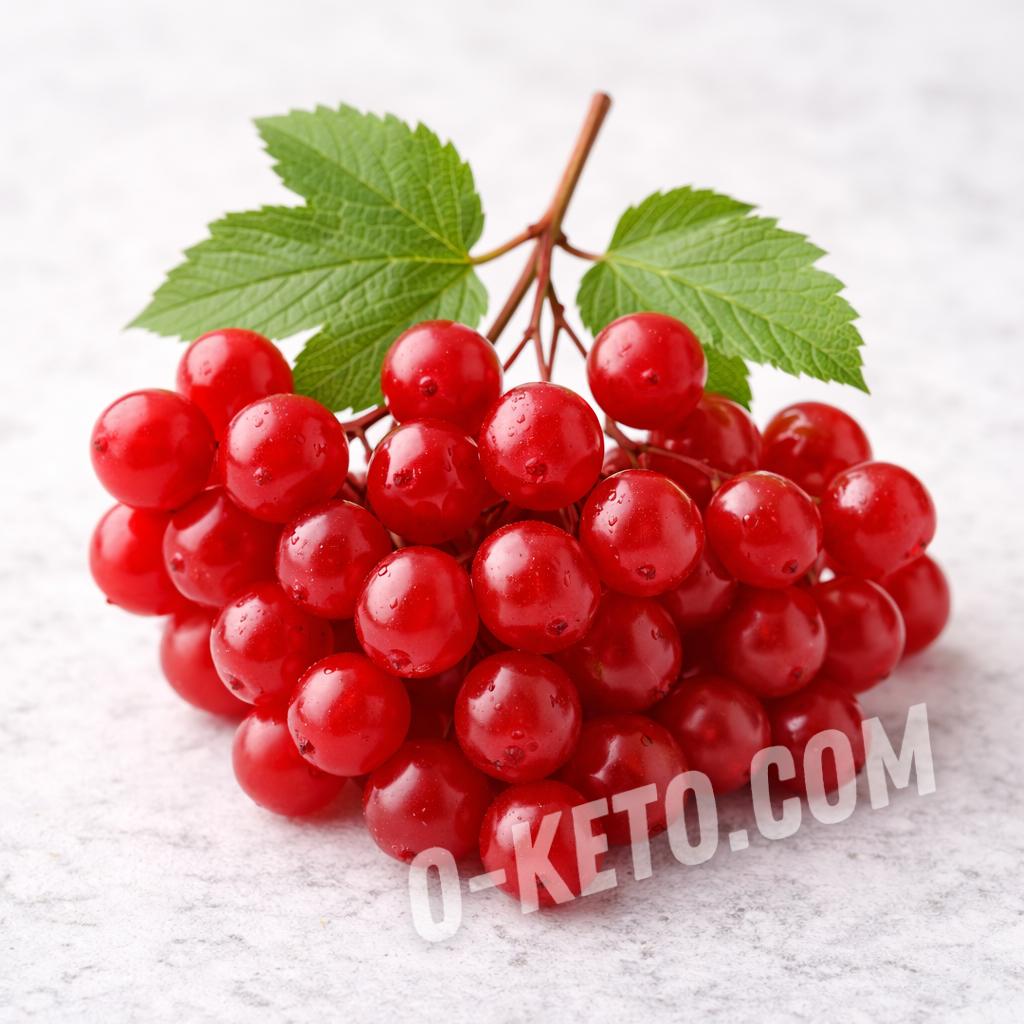

Viburnum is a red tart berry of the shrub Viburnum opulus, common in the temperate climate of Europe and Asia. The berries grow in clusters, ripen in late summer and autumn, and often become softer in taste after the first cold weather. Viburnum has bright acidity, bitterness, and a recognizable aroma, so it is rarely eaten fresh in large portions.
In cooking, viburnum is used as a seasonal sour berry: for fruit drinks, teas, sauces for meat and poultry, jellies, fillings, tinctures, and preserves. Sugar traditionally softens the bitterness, but it is also what most often makes viburnum dishes unsuitable for low-carb eating. Without sugar the berry remains sharp, but works well as an accent.
Viburnum has a stone, firm skin, and pronounced organic acids. When rubbed through a sieve, it gives a thick tart juice-puree that can be added to sauces in small amounts. Heating softens the taste, but some fresh aroma disappears.
The berry is often easier to use after freezing: bitterness becomes softer and the juice separates more readily. This does not make it sweet, but helps when preparing sauce or a warm drink without adding much sweetener.
Nutritional value
In 100 g of fresh viburnum there are usually about 25–35 kcal, little protein and fat, and roughly 5–8 g of carbohydrates. Exact values depend on ripeness, variety, and how watery the berries are. In drinks and sauces, it is more important to count not the berry itself, but sugar, honey, or syrup often added to balance the taste.
The berries contain organic acids, pectins, vitamin C, carotenoids, potassium, magnesium, and polyphenolic compounds. The red color is connected with anthocyanins, as in many bright berries. Still, viburnum should not replace varied berries and vegetables: its taste is too intense and the usual portion is small.
Is it suitable for keto?
Fresh viburnum can fit keto as a small tart addition. A few teaspoons of strained berry in sauce, tea, or dressing are usually easier to count than sweet fruit drink or jam. Ready syrups, jams, and sweetened drinks usually contain too much sugar.
For LCHF, viburnum pairs well with fatty and salty foods: duck, pork, beef, poultry offal, butter, sour cream, and cream cheese. The berry acidity refreshes a fatty dish, but because of bitterness it should be added gradually.
How to use it
For a drink, the berries are crushed, covered with hot water, and infused; long boiling is not required. For sauce, viburnum is warmed with a little water, rubbed through a sieve, and combined with salt, pepper, butter, stock, or erythritol to taste. This sauce works with duck, pork, game, and cheeses.
If bitterness is too strong, the berries can be frozen before use or mixed with milder berries such as lingonberry, cranberry, or raspberry in a small amount. In sugar-free desserts, viburnum works better as a thin tart layer than as the main volume.
The stones are usually not chewed: for smooth texture, the mass is strained and the solids are removed. In cold drinks viburnum tastes sharper; in warm drinks it feels softer and rounder. For meat sauce, it is better made sour-salty with butter and spices rather than sweet.
How to choose
The berries should be bright, firm, and free of mold, fermentation, and musty smell. Slight bitterness is normal, but damp or alcoholic smell points to spoilage. If gathering viburnum yourself, choose clean places and avoid shrubs near roads.
After frost, the berries come off the branches more easily and often taste less harsh. When buying frozen viburnum, avoid bags with one large ice block, which may indicate thawing and refreezing.
Limitations
Viburnum is acidic and astringent, so a large portion may irritate a sensitive stomach. People who do not tolerate tart berries well should start with a small amount. When taking medicines or during pregnancy, concentrated tinctures and extracts should not be treated as an ordinary drink.
How to store it
Fresh clusters keep briefly in the refrigerator. For longer storage, berries are frozen, dried, or pureed and frozen in portions. Sugar preserves are stored differently, but usually do not fit keto. If mold, gas, or a sharp fermentation smell appears, discard the product.
Portion freezing is especially convenient for sauces: small cubes can go straight into a saucepan. Dried viburnum takes less space, but its taste becomes more concentrated and more astringent.
What can replace it?
By role in sauces, viburnum can be replaced with lingonberry, cranberry, red currant, sea buckthorn, or tart raspberry. The taste will differ, but the sour berry note remains. For drinks, rosehip, hibiscus, cranberry, or lemon with berries without sugar can work.


