


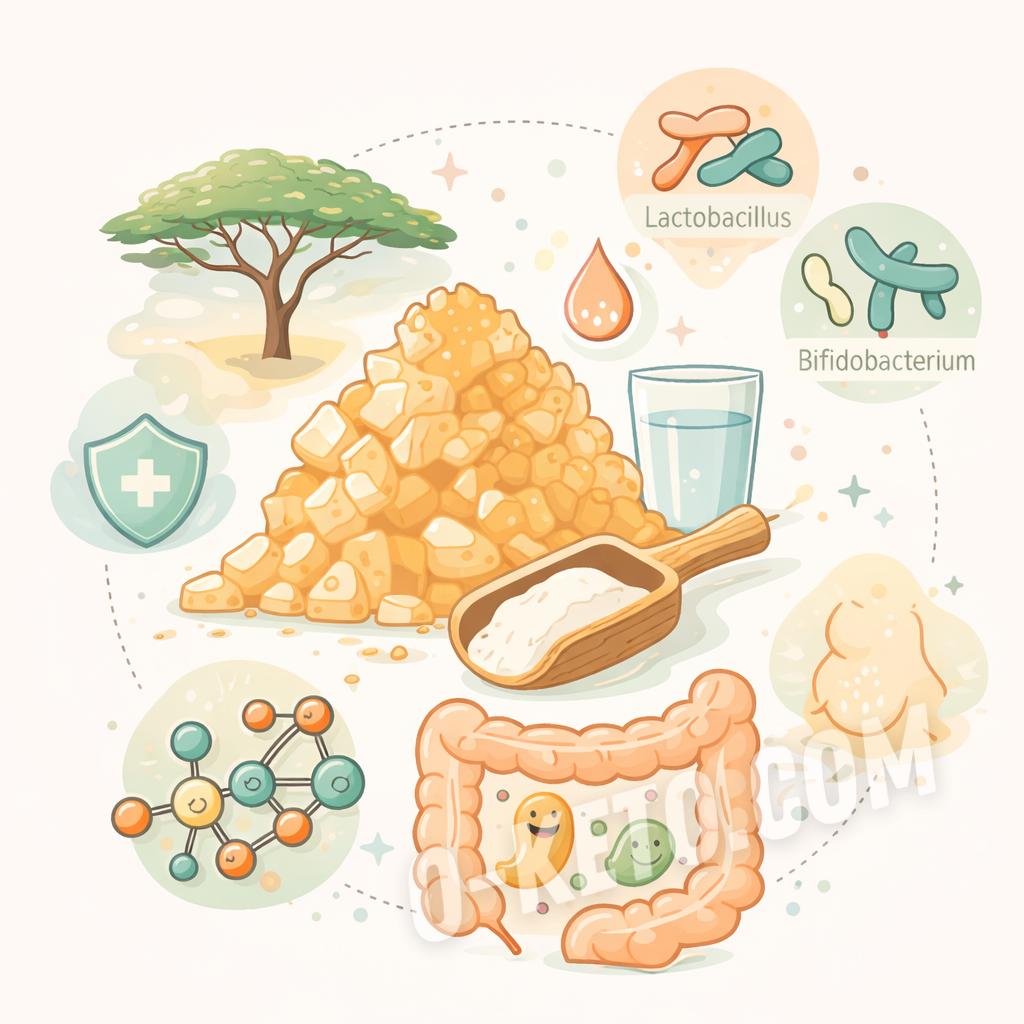

Acacia gum, or gum arabic, is a soluble dietary fiber made from the dried sap of Acacia senegal and Acacia seyal trees. The resin hardens in air, then is cleaned, milled, and used as powder or granules. In food, acacia gum is valued for neutral taste, good solubility, and the ability to change texture without sugar or starch.
It is not a sweetener and not a gelling agent like gelatin. Acacia gum works more gently: it helps stabilize emulsions, carry aroma, smooth watery drinks, improve mouthfeel, and add soluble fiber. In industry it is used in drinks, glazes, sauces, capsules, aroma blends, and some desserts.
Nutritional value
Acacia gum consists almost entirely of complex carbohydrate fibers. In the small intestine it does not behave like sugar or starch, so it usually does not bring a sharp glycemic load. Calories depend on how fiber is counted, but the practical contribution is lower than ordinary flour or sugar.
It contains no meaningful protein, fat, vitamins, or minerals. The main value is technological and fiber-related. If the goal is protein, fats, or micronutrients, acacia gum is not suitable; if a mild-tasting soluble fiber is needed, it can be convenient.
Is it suitable for keto?
Acacia gum can fit keto and LCHF when treated as fiber rather than ordinary sugar. It is not necessary for everyone on keto, but it can help in recipes that lack viscosity: drinks, sauces, sugar-free ice cream, protein shakes, dressings, and some low-carb baking.
It is better to start with small amounts. For a drink, 1–3 g is often enough; for recipes, the amount depends on the texture goal. If too much powder is added at once, the result can become too thick, slimy, or lumpy. Increase gradually, watching taste and tolerance.
How to use it
The powder is easier to add to liquid with active mixing. It can first be blended with dry ingredients, then combined with water, unsweetened milk, cream, or sauce. In hot liquid, lumps form faster, so at home it is often easier to stir it into a cold or warm base first.
In keto cooking, acacia gum combines with cocoa, protein powder, cream, sugar-free yogurt, berry sauces, nut pastes, and oil emulsions. It does not thicken as strongly as xanthan, so it is often used where a softer texture is needed rather than a firm gel.
How to choose
Look for food-grade gum arabic or acacia fiber without sugar, flavorings, or maltodextrin. The ingredient list should contain one ingredient. The color is usually light cream or almost white, and the smell is weak. The powder should not smell of mold, damp storage, or chemicals.
Fine powder is convenient for drinks; granules may work for technological uses. If buying it as a fiber supplement, check serving size, fiber amount per serving, and sweeteners. Blends with inulin, psyllium, or xanthan will behave differently.
Limitations
Even gentle soluble fiber can cause bloating, gas, or discomfort if the dose rises sharply. With sensitive digestion, irritable bowel, or a strict medical diet, start with the smallest amount and do not combine several new fiber types at once.
Acacia gum does not replace vegetables, water, and normal meal structure. If the diet lacks bulky foods, one powder will not solve every issue with satiety and stool. Children, pregnant women, and people with medical restrictions are better using it as an ordinary food ingredient in small amounts.
How to store it
Keep the powder in a dry closed container, away from steam and wet spoons. Moisture quickly creates lumps and worsens solubility. Do not keep the bag near the stove or open spices: neutral powder easily absorbs odors.
What can replace it?
For fiber, psyllium, inulin, partially hydrolyzed guar gum, or bamboo fiber can be used, but texture will differ. For thickening sauces, xanthan, guar, or gelatin are more common. For emulsions, sugar-free mustard, egg yolk, or lecithin may work.


