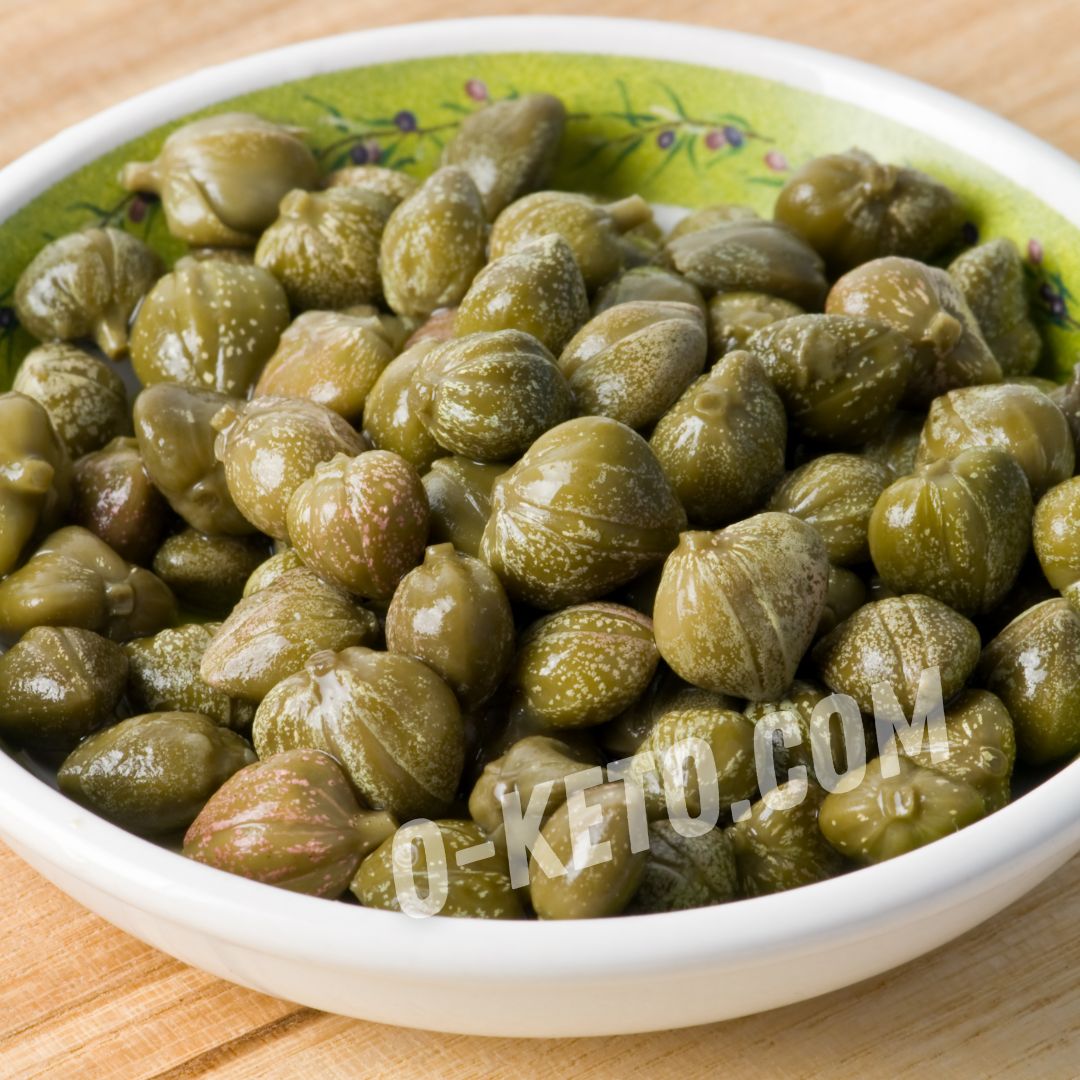

Capers are small buds of the caper bush, usually sold pickled or salted. They have a bright salty-sour flavor, light bitterness and a clear Mediterranean character. Capers are not eaten in large portions: they are used as a seasoning that wakes up simple dishes.
In cooking, capers are especially valuable where acidity, salt and sharpness are missing. A few buds can change fish sauce, egg salad, a meat dish or sugar-free dressing. For keto, they are convenient if salt and marinade composition are considered.
Nutrition
Per 100 g, capers may contain about 23 kcal, around 2 g of protein, less than 1 g of fat and about 3 g of carbohydrates. The glycemic load is usually very low because a real serving rarely exceeds 5-15 g. Capers provide flavor, not a meaningful amount of energy.
They contain small amounts of vitamins A, C and K, calcium, iron, magnesium and plant polyphenols. Their main value is not nutrient density, but the ability to make food brighter without sugar, flour or sweet sauces.
Are Capers Keto-Friendly?
Yes, capers usually fit keto well. A small serving is low in carbohydrates, and the flavor is intense enough that much is not needed. They help replace sweet sauces, ketchup and marinades that often hide sugar.
The main limit is salt. Pickled capers can be very salty, and salt-packed capers are often rinsed or soaked before use. If a dish already contains anchovies, olives, bacon or cheese, add extra salt only after tasting.
How to Use Them
Capers pair well with fish, chicken, eggs, veal, butter, olive oil, lemon, parsley, dill, olives and sugar-free mayonnaise. They can be added whole, chopped into sauce or warmed very briefly.
Practical options include:
- butter and lemon sauce for fish;
- an addition to egg and avocado salad;
- chopped capers in homemade mayonnaise;
- an accent in sauce for chicken or veal;
- an addition to olives and soft cheese.
How to Choose
Check the ingredient list: caper buds, water, salt and vinegar are a good basic option. Sugar, syrups, starch and sweet marinades are undesirable for keto. Smaller buds are usually more delicate, but larger ones also work in sauces and stews.
Salt-packed capers may have a more concentrated flavor but need rinsing. Pickled capers are easier for quick dishes. After opening, keep the jar refrigerated and make sure the capers remain covered with brine or marinade.
Limits and Substitutes
When sodium intake is limited or a person reacts poorly to very salty foods, caper portions should be controlled. They can also feel too sharp for a sensitive stomach because of acid and salt. Start with a small amount.
Substitutes include green olives, sugar-free cornichons, chopped pickles, anchovies, lemon zest with salt or a mix of parsley, vinegar and olive oil. The substitute should provide a salty-sour accent, not just volume.
Portion and Plate Balance
Capers are best added in small amounts with tasting. Their flavor quickly becomes dominant, especially in cream sauces, egg salads and white fish dishes. If there are too many capers, the sauce can become harsh and oversalted even when the other ingredients are good.
Good balance usually comes from three elements: fat, acidity and fresh herbs. Butter or mayonnaise softens the salt, lemon or vinegar supports acidity, and parsley, dill or basil makes the flavor cleaner. That is why capers rarely need complicated spices.
In hot dishes, capers are often added near the end. Long stewing flattens their flavor and softens the texture. If only aroma is needed in a sauce, chop part of the capers finely and leave some whole for accents.
Rinse or Not
Capers in vinegar brine are usually fine if simply dried. Salt-packed capers often need rinsing or a short soak, otherwise they overpower the dish. After rinsing, taste them: if the flavor becomes too mild, some salty accent can be restored with lemon, olives or anchovy.
For thick sauces, capers should be dried especially well. Extra brine thins the sauce and can sharply increase saltiness even when only a few buds are used.