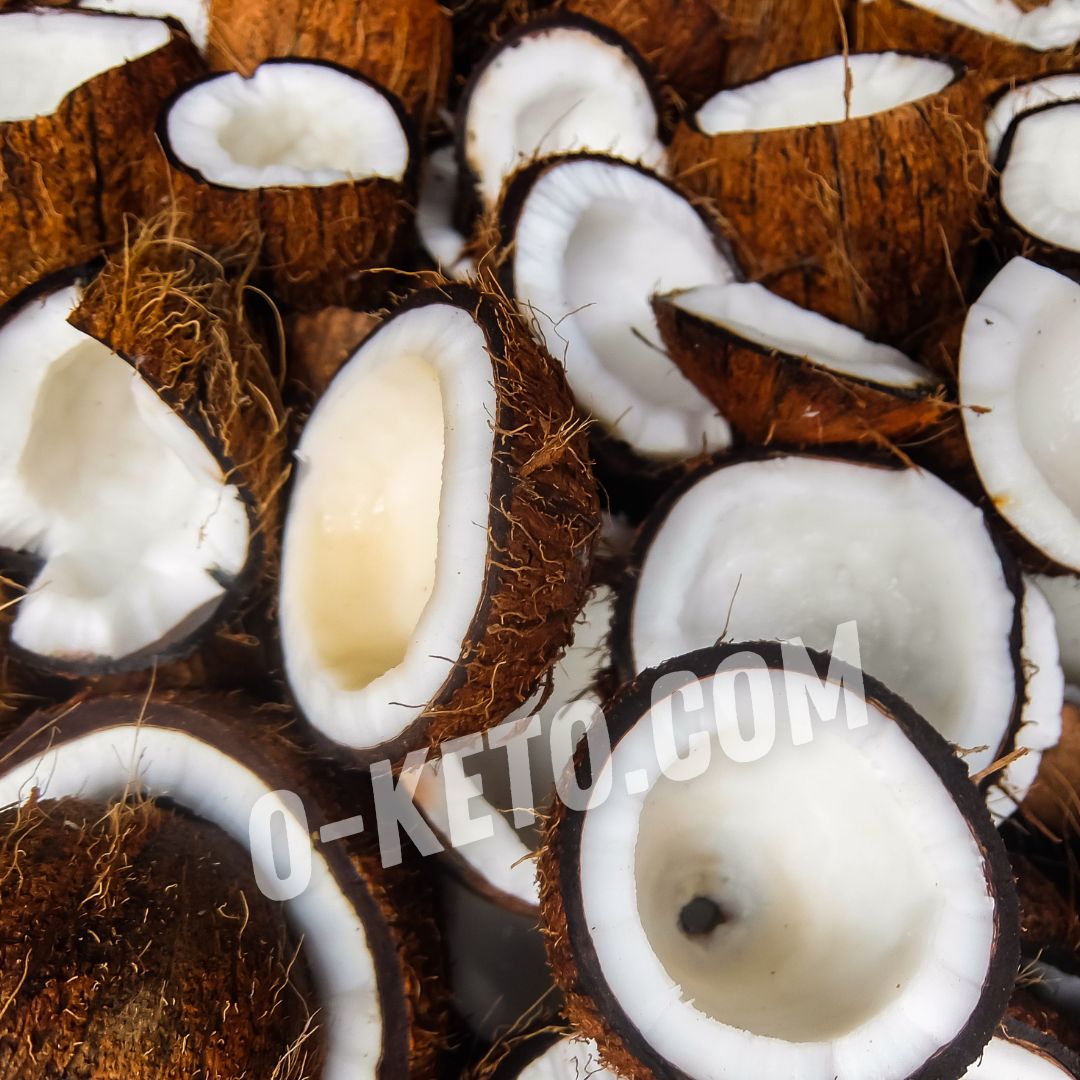

Coconut is a tropical fruit whose dense white flesh, coconut water, coconut milk, cream, flakes, flour and oil are all used in food. These products differ greatly in water, fat, fiber and carbohydrates. Therefore, the word “coconut” in a recipe should always be clarified: fresh flesh, dry flakes and coconut milk behave differently.
Per 100 g of fresh coconut flesh, common values are about 354 kcal, 3.3 g of protein, 33 g of fat and 15 g of carbohydrates, of which about 9 g are fiber. The glycemic index is around 45, and glycemic load in a moderate serving is usually low. It contains fats, fiber, potassium, magnesium, copper and small amounts of B vitamins.
Nutrition
Coconut is valued mainly for fat, dense texture and aroma. It contains saturated fats, including medium-chain triglycerides, but that does not make it unlimited. Calories are high, and carbohydrates depend on the product form. Dry flakes and coconut flour are much more concentrated than fresh flesh because they contain less water.
Coconut milk and cream also differ. Thick milk contains more fat and calories, while boxed coconut drinks may contain more water and additives. Coconut water is a separate product: it is much less fatty and contains more sugars per serving, so for keto it is usually less convenient than flesh or unsweetened milk.
Is It Keto-Friendly?
Coconut can fit keto and LCHF if the product is unsweetened and the portion is moderate. Fresh flesh, unsweetened flakes, sugar-free coconut milk and coconut cream are often used in low-carb recipes. But they still need counting, especially when a dish also contains nuts, berries, sweeteners or coconut flour.
The main mistake is trusting only the word “coconut.” Sweetened flakes, dessert coconut drinks, bars, yogurts and condensed coconut milk may contain sugar, syrups, starch and flavorings. For strict keto, the ingredient list should be sugar-free and the serving clear.
How to Use It
Fresh flesh can be eaten in small pieces or added to unsweetened desserts, salads and sauces. Flakes are used in baking, flour-free coatings and fatty desserts. Coconut milk works in curry, soups, stewed fish, chicken and sauces. Coconut flour absorbs a lot of liquid, so it cannot replace wheat flour one to one.
Practical options include:
- unsweetened flakes in a keto dessert with a moderate portion;
- sugar-free coconut milk in curry with chicken or fish;
- coconut cream in sauce instead of sweet cream products;
- a little flesh with nuts and unsweetened yogurt;
- coconut flour only in recipes that account for its absorbency.
How to Choose and Store
Flakes, milk and cream should not contain sugar, syrup or starch. Water and coconut are clear ingredients, and some stabilizers may be acceptable if they suit you. Fresh coconut should have no mold, sour smell or leaking cracks. The flesh should smell clean, not fermented.
Fresh flesh should be refrigerated and used soon. Dry flakes need a tightly closed container away from heat because the fats can turn rancid. Opened coconut milk or cream should be moved to a closed container, chilled and used within a short time.
Limits and Substitutes
Coconut is calorie-dense, so even with moderate carbohydrates it can make a dessert or sauce very energy-dense. In some people, large amounts of coconut flakes or flour cause heaviness because of fiber and fat. Start with a small serving, especially if coconut is not common in the diet.
Substitutes depend on the form. Flesh can be partly replaced with nuts or seeds, flakes with almond crumbs, coconut milk with cream, sour cream, unsweetened almond milk or a creamy sauce. Flavor and thickness will change, so baking substitutions need a separate recipe.
Do Not Mix Up Coconut Forms
Fresh flesh, flakes, flour, milk and cream do not replace one another automatically. Flakes add texture and absorb moisture, flour absorbs even more liquid, milk softens a sauce and cream raises fat content noticeably. If a recipe calls for coconut milk, replacing it with flour can ruin the texture completely.
For keto, the most practical pantry item is often unsweetened coconut milk or cream, while flakes and flour are better used only in recipes with a clear serving size. This lowers the risk of accidentally making an overly dense dessert with nuts, sweetener and a large amount of coconut at the same time.