


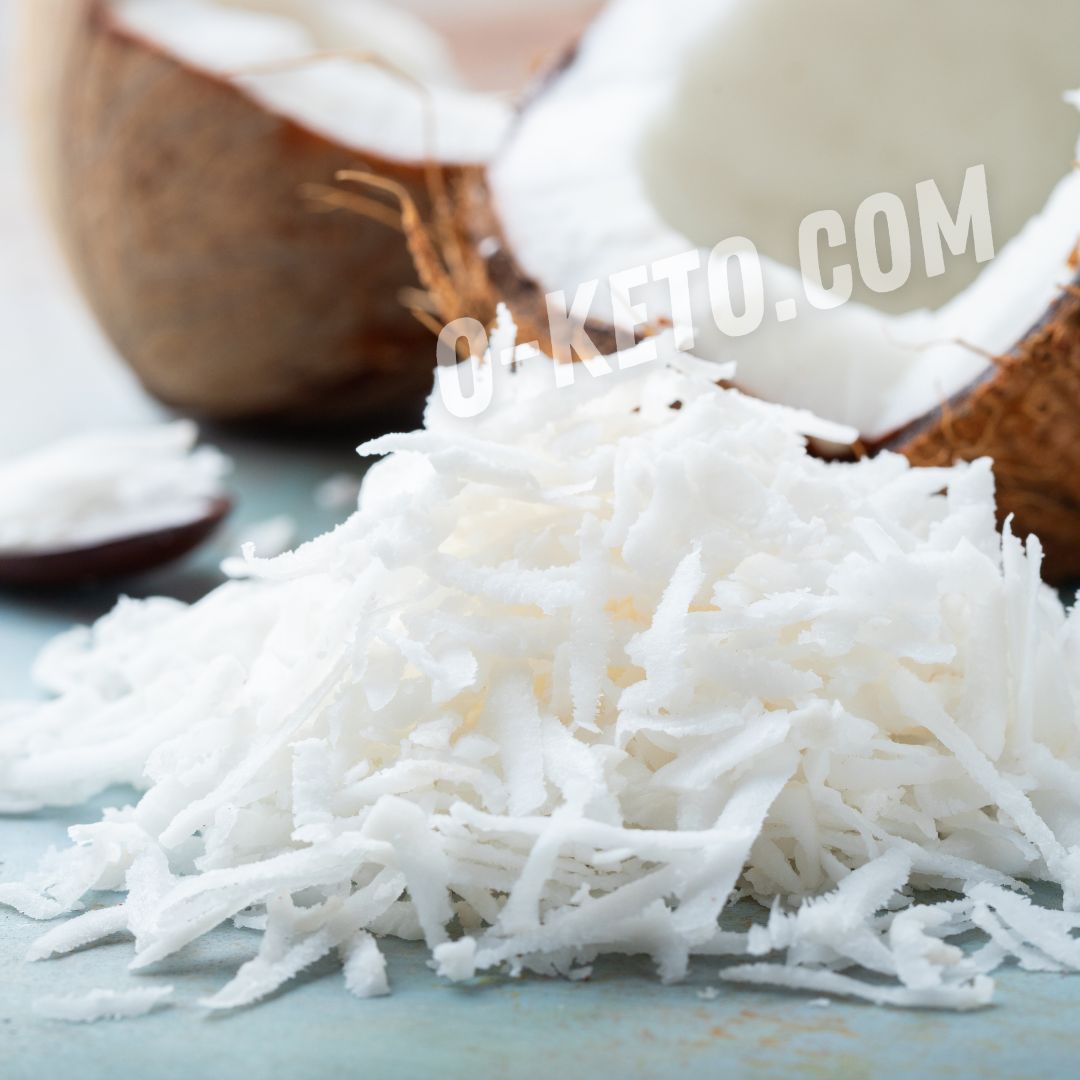

Coconut flakes and coconut flour both come from coconut flesh, but they behave very differently in cooking. Flakes are dried shredded coconut used for flavor, aroma and a light crunchy texture. Coconut flour is a finer dry product, often partly defatted, with a very strong ability to absorb liquid.
Both can be convenient on keto, but they are not interchangeable. Flakes add coconut flavor and some fat; flour changes dough structure, binds moisture and needs careful dosing. Replacing almond flour with coconut flour one to one almost always produces dry crumbs or a dense batter.
Nutrition
Coconut flesh contains fats, fiber and a small amount of protein. Coconut products do contain carbohydrates, but much of it may come from fiber, so net carbohydrates depend on the exact product, grind and whether the coconut has been partly defatted.
Flakes are usually fattier and more aromatic because they keep more of the coconut flesh. Flour is usually drier, finer and richer in fiber. It quickly absorbs moisture, so recipes often use it in small amounts with eggs, cream, butter, psyllium or another low-carb flour.
If carbohydrates are counted strictly, look not only at values per 100 g but also at the real serving. One tablespoon of coconut flour and a handful of sweetened coconut flakes are completely different in culinary role, satiety and recipe behavior.
Is It Keto-Friendly?
Yes, unsweetened coconut flakes and coconut flour can fit keto if the portion is counted. Sweetened confectionery flakes, glazed coconut mixes, syrupy fillings and flavored dessert blends are much less suitable for a low-carbohydrate diet.
Coconut flour is especially convenient in low-carb baking: pancakes, muffins, syrniki-style cakes, cookies and breads. Too much of it makes dough dry, dense and fibrous. It usually needs more eggs or liquid, and the batter often improves after resting for a few minutes so the flour can hydrate.
How to Use It
Flakes work best where flavor and light texture are needed, while flour is better for thickening, binding or building dough. The replacement should depend on the function in the recipe.
Practical uses include:
- flakes in keto candies, bars, desserts, coating and toppings;
- coconut flour in pancakes, muffins, syrniki, cookies and low-carb bread;
- a small amount of flour to thicken sauces, fillings or cottage cheese mixtures;
- lightly toasted flakes for stronger aroma without sugar;
- flakes in coating mixed with cheese, spices or nut crumbs so the flavor is not flat.
How to Choose
Look for products without sugar, syrup, starch or flavorings. Good flakes smell cleanly of coconut, not rancid oil. Coconut flour should be dry, fresh and free of moisture lumps. A strong old-oil smell, bitterness or mustiness means the product is not worth using.
Fine unsweetened flakes are convenient for desserts, while larger flakes are better for coating and toppings. For baking, choose real coconut flour instead of grinding flakes at home: homemade grinding often stays too fatty and coarse, so it behaves differently.
Limits and Storage
Coconut flour is very high in fiber, so large amounts can make baking dry or heavy and may feel uncomfortable. Start with small amounts and recipes where proportions have already been calculated. Flakes are also easy to overeat: they seem light but are still a concentrated food with fat and calories.
Keep coconut products tightly closed in a dry, cool place away from strong light and moisture. After opening, flour is best stored in a jar so it does not absorb smells or form lumps.
Substitutes
In desserts, flakes can be replaced with chopped nuts, almond flakes, sesame, seeds or cacao nibs. Coconut flour usually needs a recalculated mix of almond flour, psyllium, eggs and liquid rather than a one-to-one substitute, because its moisture absorption is very different.
How to Avoid Dry Baking
Coconut flour keeps absorbing moisture after mixing, so a batter that looks right at first may become thick a few minutes later. With new recipes, let the mixture rest and then adjust the texture. If extra liquid is added too early, the finished bake can turn wet on the outside and heavy inside.
Flakes behave differently: they do not build much structure, but they add coconut flavor and texture. In keto cookies and candies, they work well with butter, cream, mascarpone, cocoa, nuts and a pinch of salt. For coating, keep the flake layer thin so it does not burn before the main ingredient is ready.


