


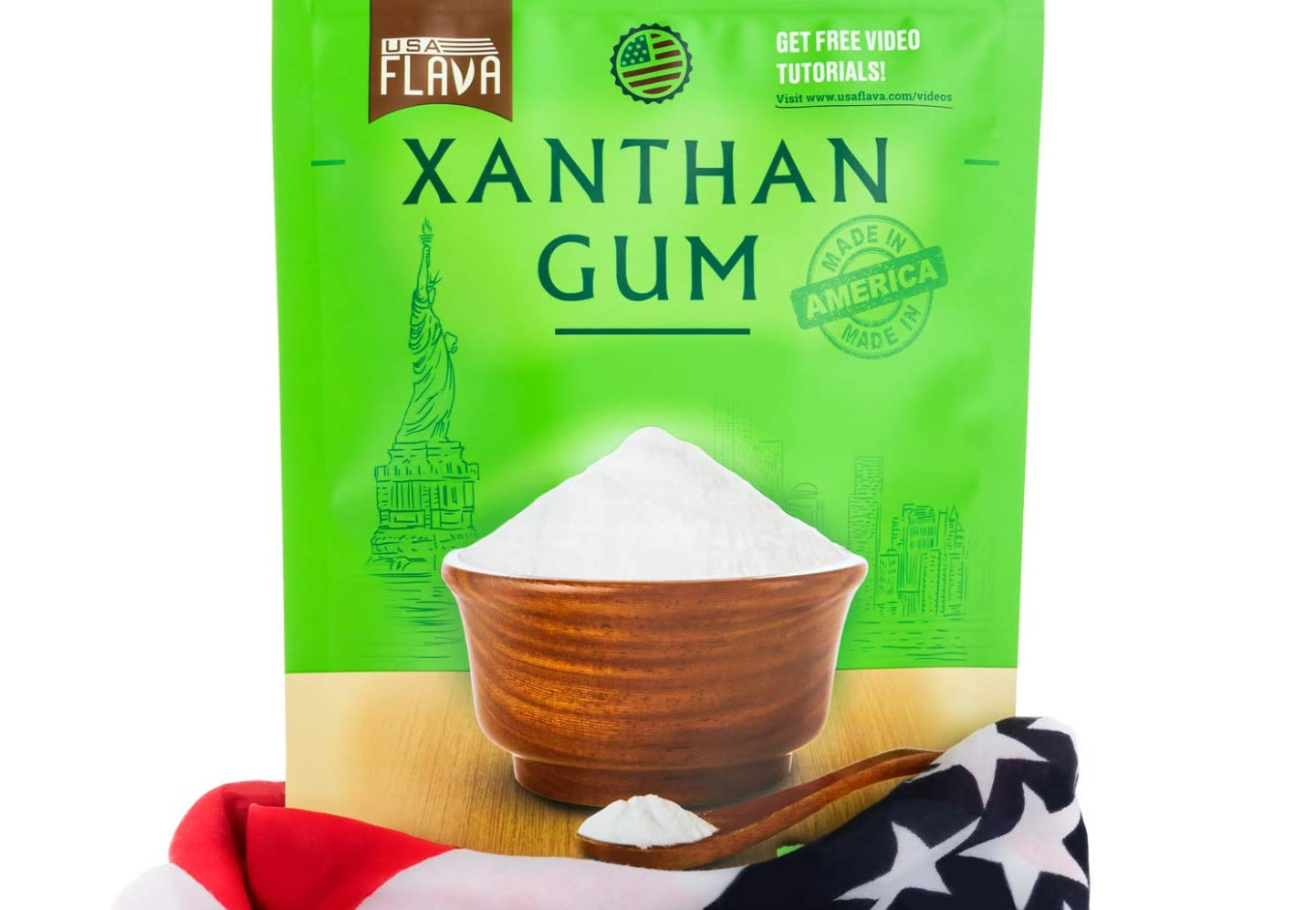

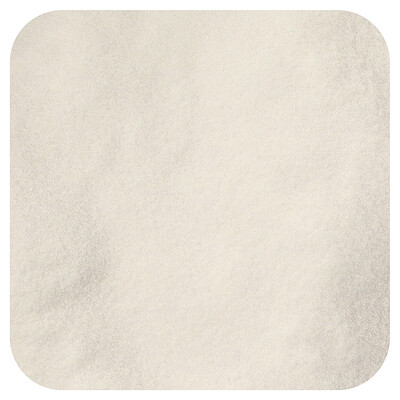
Xanthan gum is a food thickener and stabilizer produced by fermenting carbohydrates with the bacterium Xanthomonas campestris. The finished product is a white or slightly yellowish powder. In water it quickly forms a viscous mixture, so it is used in sauces, creams, gluten-free baking, ice cream, drinks, and keto recipes without flour.
Xanthan is valued not for flavor but for texture. It helps retain moisture, reduce separation, make sauce smoother, and make dough less crumbly. It is added in very small amounts. The dose determines whether the result is pleasant structure or a slippery thick mass.
Nutritional value
Xanthan gum is hardly used as a source of calories, protein, or fat. Its base is polysaccharides, and the working portion is usually measured in fractions of a teaspoon. In low-carb recipes this is convenient: thickening is achieved without flour, starch, or sugar.
On labels of ready-made products, xanthan is often listed closer to the end because little is needed. In a home pantry, it also lasts a long time: for a whole portion of sauce, 0.2–0.5 g may be enough.
Is it suitable for keto?
For keto and LCHF, xanthan gum usually fits well. It can thicken cream sauce, flourless gravy, sugar-free berry sauce, dough made with almond or coconut flour, homemade mayonnaise, sugar-free ice cream, and drinks with a denser texture. The carbohydrate load at such a dose is usually minimal.
Xanthan does not replace a whole food and does not make a recipe good by itself. If sugar, syrup, flour, or starch are present, xanthan gum does not make the dish low-carb. It is a texture tool, not a dietary base.
How to use it
The main rule is to add very little and distribute it well. The powder clumps easily if poured into liquid in a pile. It is easier to mix xanthan with dry ingredients, blend it into a liquid mixture, or sift it in a thin layer while stirring actively.
For sauce, start with a pinch per cup of liquid, then wait a few minutes: viscosity does not always appear instantly. If more is added immediately, a slimy texture is easy to get. In baking, the dose depends on flour, eggs, and moisture; in keto dough, xanthan often works together with psyllium, eggs, and baking powder.
Where it is useful
Xanthan gum works well in cold and hot sauces because it keeps viscosity across a wide range of temperature and acidity. It can stabilize oil-and-vinegar dressing, hold water in a cream sauce, make a sugar-free berry topping thicker, and improve gluten-free baking texture.
In drinks and creams, it should be used carefully: too much creates a slippery mouthfeel. In crisp baking it is not always needed either, because it can make the crumb stretchy.
In hot liquid, xanthan is easier to add after removing the pan from strong heat or while blending actively. This lowers the risk of clumps and gives a more even final texture.
If the mixture becomes too thick, it is easier to thin it immediately while the gum is still evenly distributed through the whole mass.
How to choose
For cooking, choose food-grade xanthan without flavorings or sugar. The package should be dry, sealed, and have a clear date. It is better to start with a small pack: the powder is used slowly, and with poor storage it absorbs moisture and clumps.
If the product is needed for gluten-free or keto baking, use recipes with exact grams. Measuring by eye often causes mistakes because the difference between good texture and excess can be tiny.
Limitations
In some people, xanthan gum can cause bloating, rumbling, loose stool, or discomfort, especially in large portions. Sensitivity is individual. If a reaction appears even to small amounts, another thickener is a better choice.
Xanthan may be inconvenient in recipes for small children or people with very sensitive digestion. The fermentation source may also matter if there is a rare individual reaction to specific industrial additives.
How to store it
Keep the powder tightly closed in a dry cupboard, away from steam and wet spoons. Moisture quickly turns it into clumps. If xanthan smells musty, cakes together, or moisture appears in the package, replace it.
What can replace it?
For sauces, psyllium, guar gum, gelatin, agar-agar, cream cheese, egg yolk, or reducing the liquid may work. For baking, psyllium, ground flax, eggs, gelatin, or more nut flour can be used, but the result will differ. Xanthan is especially hard to replace where smooth viscosity is needed without heat and without starch.
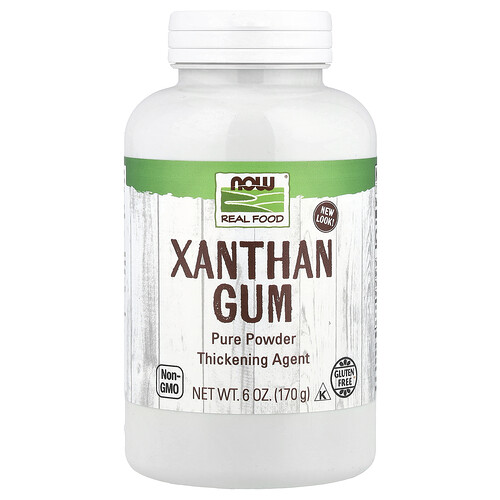
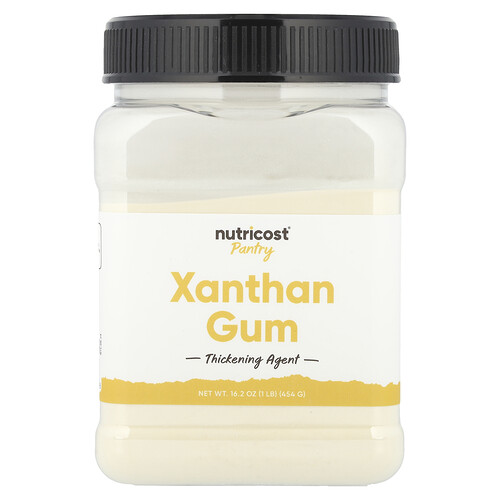
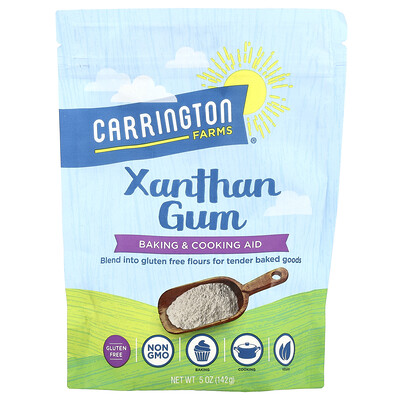
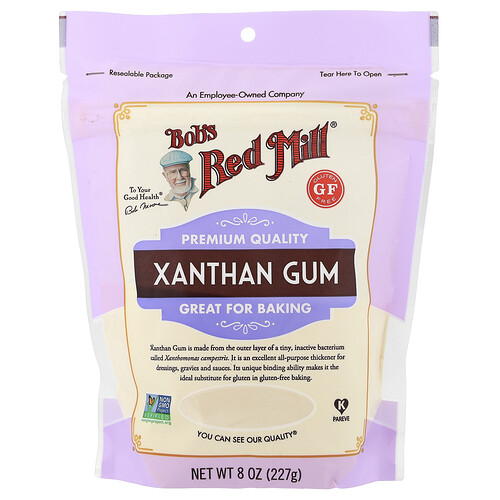
Substitution options in recipes
Psyllium. Take 2 times more than the comedy. First grind into powder. Psyllium holds 6 times more water and gives the bread a fibrous structure. Knead and let it sit for 10 minutes for hydration.


