


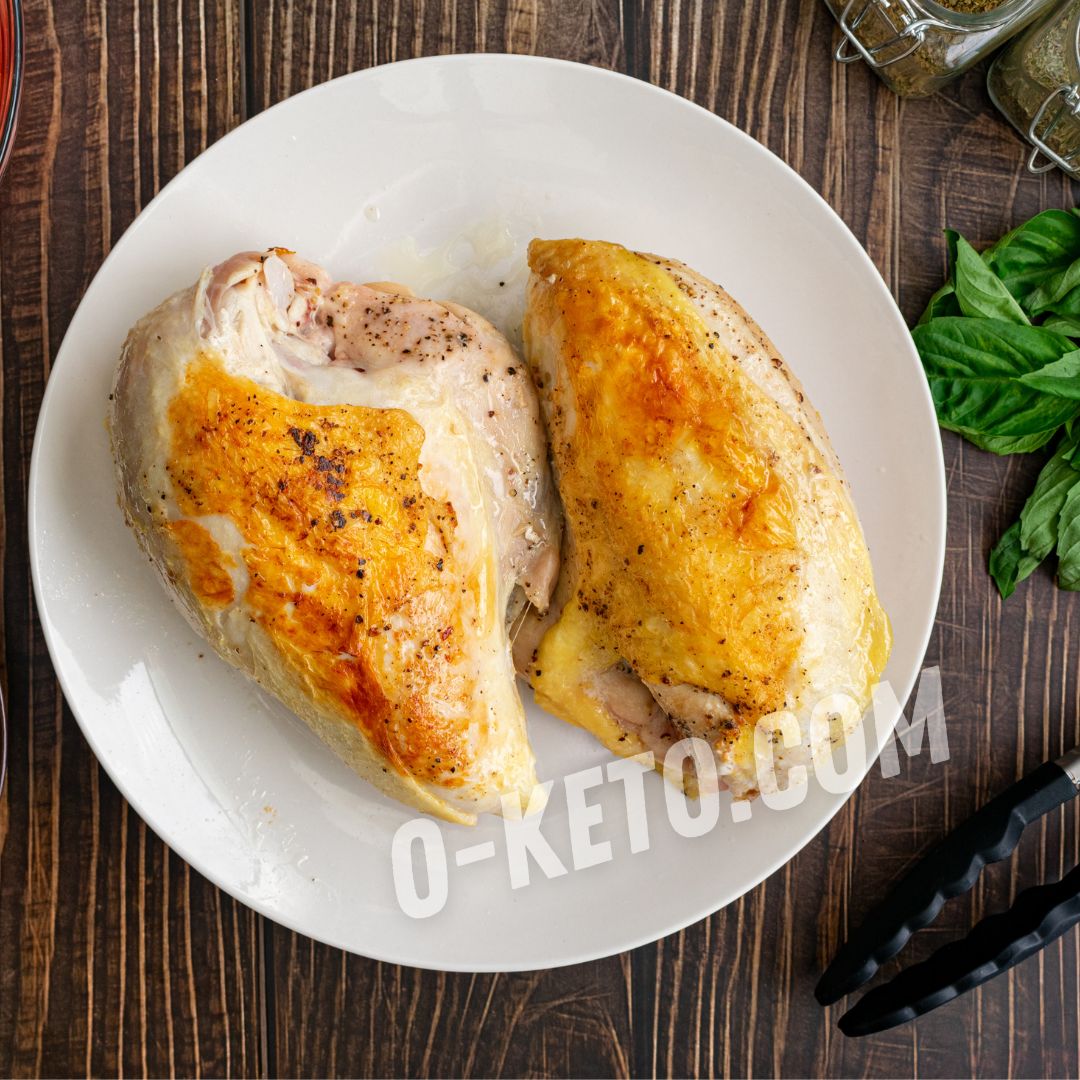

Chicken breast, or fillet, is the lean part of chicken with high protein and almost no carbohydrates. It is one of the most popular foods for calorie-controlled diets, sports nutrition and low-carb eating. On keto it is useful, but it needs proper pairing with fats because the breast itself is very lean.
Nutrition
Per 100 g of cooked chicken breast, there are often about 165 kcal, around 31 g of protein, 3.6 g of fat and 0 g of carbohydrates. The glycemic index is zero if the meat is cooked without breading, sugar, flour or sweet sauces. It is a dense protein food, not a fat source.
Chicken breast contains amino acids, B vitamins, phosphorus, selenium and other micronutrients. But it should not be described as a food that by itself guarantees sports results or muscle growth. Results depend on the whole diet, training and portions.
Is It Keto-Friendly?
Yes, by carbohydrates chicken breast fits keto very well. But because it is low in fat, it is better paired with butter, cream, avocado, cheese, sugar-free mayonnaise, olive oil or a fatty flourless sauce. This makes the dish more balanced for LCHF.
A large portion of dry breast without fat can provide a lot of protein and little satiety. This is not “bad,” but for classic keto it is often inconvenient. A better plate is fillet plus fatty sauce plus low-carb vegetables.
How to Cook It
The main task is not drying it out. Chicken breast can be baked, quickly fried, cooked sous-vide, stewed in cream, boiled for salad or sliced thinly. A marinade with oil, salt, garlic, lemon, paprika and herbs makes the meat softer and tastier.
Practical options include:
- breast in cream sauce with mushrooms;
- salad with avocado, egg and sugar-free mayonnaise;
- baked fillet with cheese and herbs;
- chicken with sugar-free pesto;
- cold slices for keto rolls.
How to Choose and Store
Fresh breast should have a clean smell, even light pink color and springy texture. Too much liquid in the package, stickiness, gray spots or a sharp smell are poor signs. Frozen fillet should not be covered with a thick ice crust.
Keep breast refrigerated and cook soon after purchase. Thaw it in the refrigerator rather than on the counter. Cooked chicken should be kept covered and used within a short time, especially if already sliced for salads.
Limits and Substitutes
Chicken breast may be too lean for people who struggle to get enough fats on keto. In that case, do not endlessly increase protein; add a fatty sauce or choose a fattier part of poultry. Also avoid sweet marinades and breading.
Substitutes include chicken thigh, turkey, fish, eggs, lean beef or seafood. If juiciness is needed, chicken thigh is often easier. If very lean protein is needed, breast remains a convenient option.
Portion and Common Mistakes
For keto, chicken breast should not become the only center of the diet. It provides a lot of protein but little fat, so a plate with dry breast and salad leaves often does not satisfy well. Add a fatty element in advance: butter, avocado, cheese, cream sauce or sugar-free mayonnaise.
The second mistake is cooking fillet “to be safe” for too long. Over-dried breast may look diet-friendly, but it is unpleasant to eat and often leads to compensating with sweet sauces. Even pieces, marinade and timing make the product much better.
If fillet is cooked for several days, it is better stored as a whole piece or in sauce rather than as thin dry slices. For salads, slice it before serving. This keeps more moisture and makes it more convenient for keto lunches.
Temperature and Juiciness
Chicken fillet depends strongly on thickness. If one part is thin and another is thick, the thin edge dries out before the center is ready. That is why breast is often gently pounded to an even thickness, butterflied or cooked as pieces of the same size. After frying or baking, let the meat rest for a few minutes so juices redistribute inside.
For keto, methods with deliberate fat work best: cream sauce with mushrooms, herb butter, sugar-free pesto, cheese crust or salad with avocado. If cooked ahead for several days, fillet keeps better in its own juices, broth or sauce. Dry slices quickly become boring and work worse as the base of a proper meal.


