


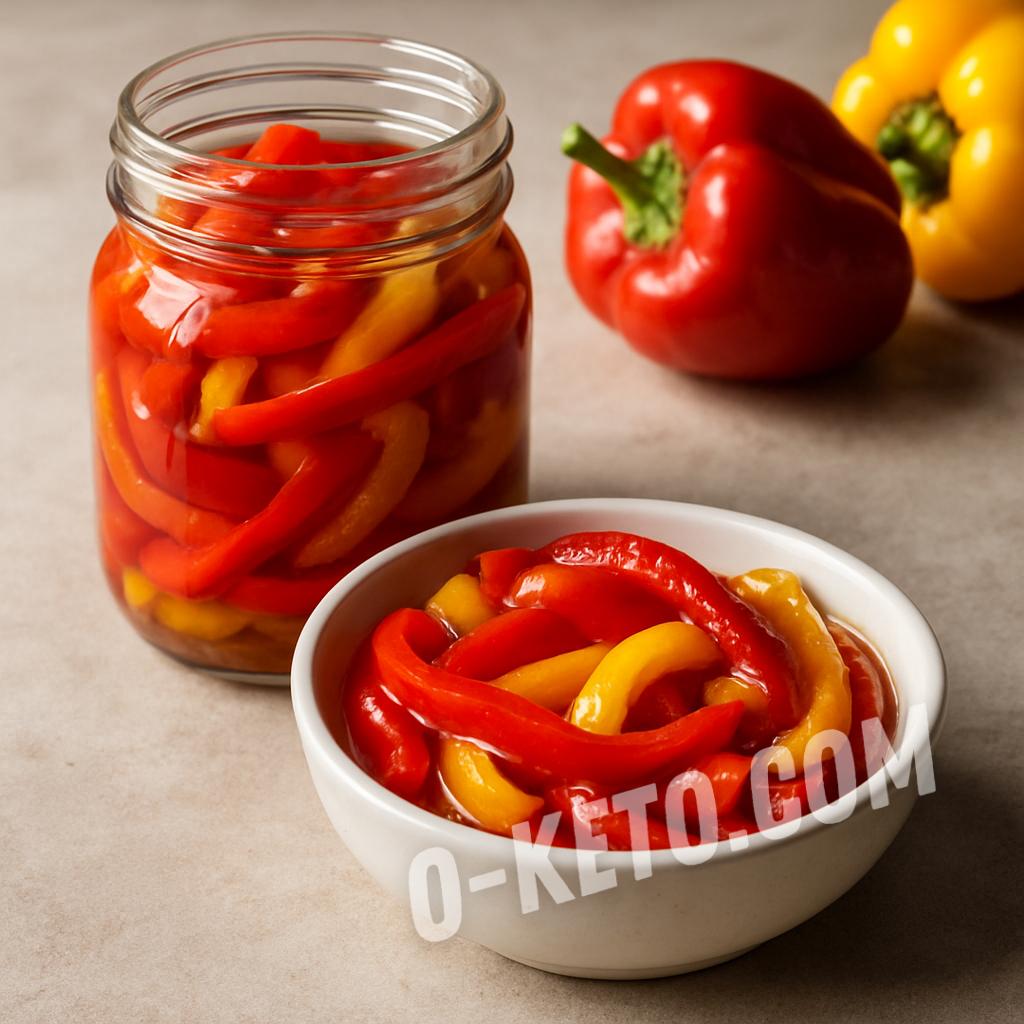

Pickled peppers are a preparation made from sweet or moderately spicy peppers, soaked in a marinade based on water, vinegar, salt, and sometimes sugar, garlic, and spices. Under this name, very different products can be sold in jars and gastronomy: whole small peppers, strips of roasted sweet peppers, spicy peppers in brine, or sweeter vegetable snacks with a pronounced vinegar note. Therefore, it is worth evaluating the product not by its name alone, but by the composition and actual nutritional value of the specific version.
What is this product
Pickling makes peppers softer, juicier, and brighter in flavor, as well as prolonging their shelf life. Depending on the variety and recipe, the product can feel almost crunchy and fresh or, on the contrary, more tender and spicy. Three factors most influence the taste: the type of pepper itself, the amount of vinegar, and the presence of sugar in the marinade.
For keto, this is an important point because some pickled peppers remain a fairly neutral vegetable snack, while others acquire noticeable sweetness and increased carbohydrate load. This is especially true for store-bought antipasti-style snacks and homemade preparations with a more generous sugary brine.
Composition and nutritional logic
Typically, the composition includes peppers, water, vinegar, salt, garlic, spices, and sometimes sugar or sweeteners. Simpler versions have a short ingredient list, while industrial ones often have longer lists due to preservatives, acidity regulators, and aromatic additives. For everyday use, versions where the vegetable remains the main component rather than a carrier of sweet marinade are more convenient.
From a keto perspective, pickled peppers are not equivalent to fresh peppers one-to-one. The main difference is that some products contain more sodium and sometimes more sugars. Therefore, it is especially useful to look at the label here rather than automatically transferring the raw vegetable numbers to the jar.
Taste and kitchen application
Pickled peppers work well as a cold appetizer, a side dish for meat, an ingredient for salads, and antipasti plates. They pair well with feta, brine cheese, goat cheeses, olives, meats, pâtés, omelets, and egg dishes. In keto cuisine, this is a convenient way to add acidity and brightness without much effort.
Such peppers are most often used in several scenarios:
- in salads with olive oil, cheese, and herbs;
- in meat plates and appetizers with pâtés and cold meats;
- as a vegetable accent to kebabs, duck, chicken, and pork;
- in warm vegetable dishes, omelets, and fillings for rolls.
How to choose
When buying pickled peppers, it is important to evaluate not only the appearance but also the composition. It is best to pay attention to several practical signs:
- the composition should not contain excess sugar, syrups, and starches if a stricter keto option is needed;
- the marinade should be clear or expectedly colored, without cloudiness and signs of fermentation where it is not stated;
- the peppers should retain their shape and not look mushy;
- the level of salt and vinegar should correspond to the intended use in dishes;
- for home cooking, jars with understandable piece sizes and moderate spiciness are more convenient.
Storage and limitations
Before opening, the product is stored according to the manufacturer’s instructions. After opening, the jar is usually kept in the refrigerator, using a clean fork or tongs to avoid introducing unnecessary microflora into the marinade. If an unpleasant odor, cloudiness, gas formation, or suspicious lid appears, it is better not to use the product.
For a keto diet, the main risk is not with the pepper itself, but with the recipe of the marinade. If the jar contains a lot of sugar, it can be easier to eat just a little than it seems, especially in the composition of snacks. Therefore, pickled peppers can be a good keto addition, but only with a normal composition and moderate portion.


