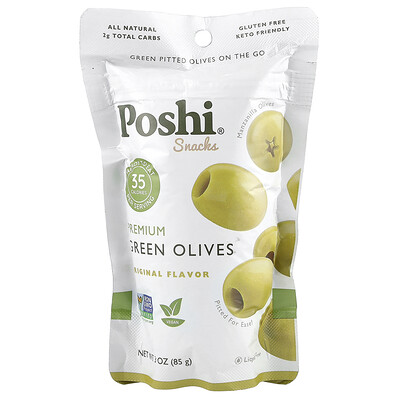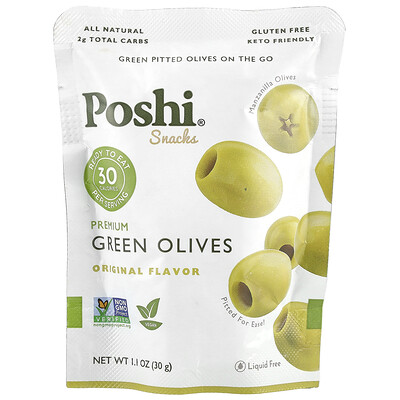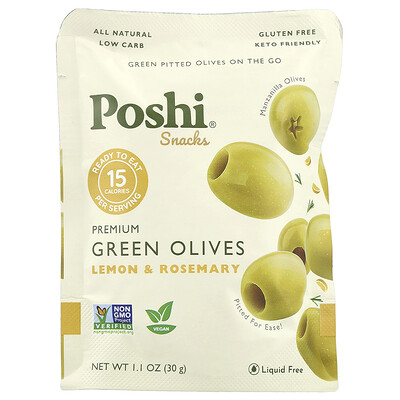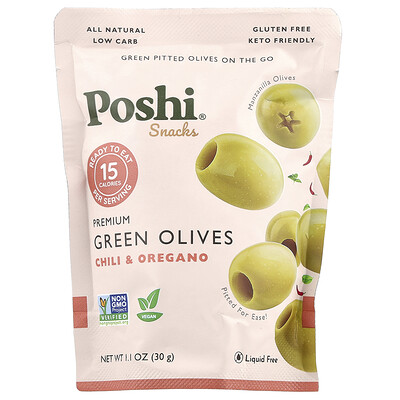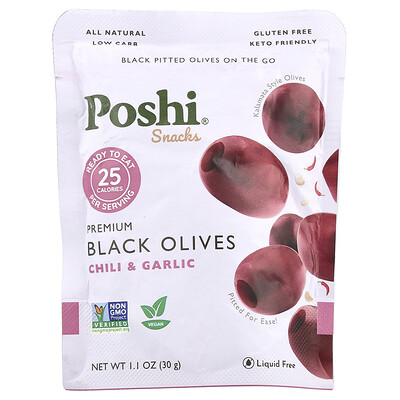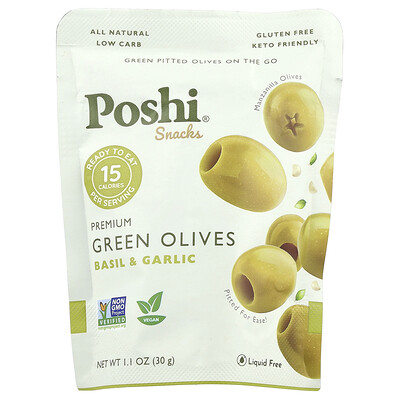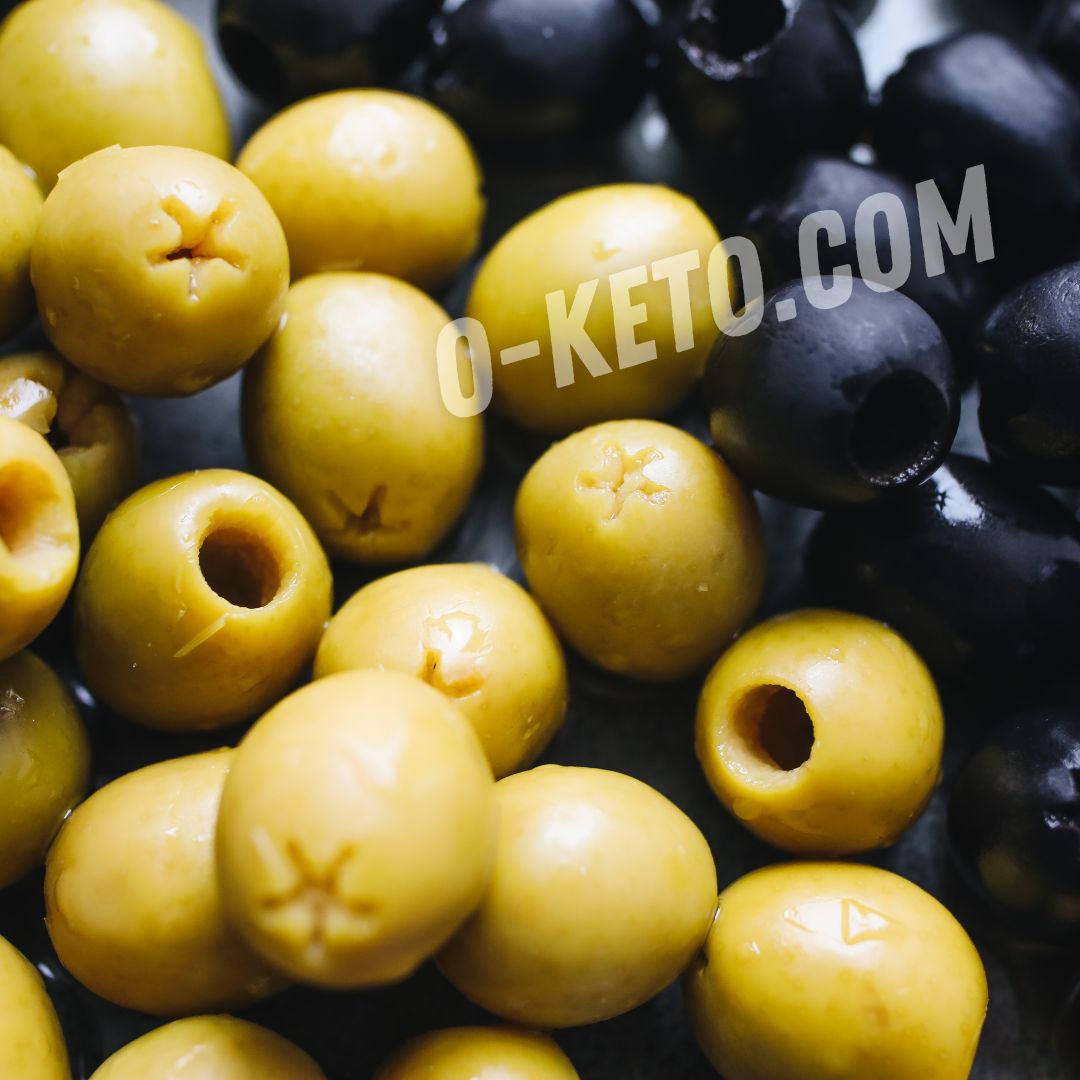

Olives are ripe or processed fruits of the olive tree, eaten after curing, fermentation, or brining. Fresh from the tree, they are almost inedible because of strong bitterness, so the final flavor depends not only on variety but also on processing. In some languages, black ripe-looking fruits and green fruits are named separately, but both come from the same plant.
In cooking, olives are used as a salty fatty accent: in salads, appetizers, sauces, meat and fish dishes, with cheese, eggs, greens, and olive oil. For keto they are convenient because they are low in carbohydrate, but details matter: salt, marinade, portion size, pits, and additives in the jar.
Nutrition profile
In 100 g of olives there are usually about 115–145 kcal, around 10–15 g fat, 0.8–1.5 g protein, and about 3–6 g carbohydrate, some of it as fiber. Exact values depend on variety, ripeness, brine, and oil. A 30 g serving is roughly 8–12 olives, but the number changes a lot with size.
The fat in olives is mostly monounsaturated fatty acids. Their lipid profile is often described as about 70–80% monounsaturated, 10–15% saturated, and 5–10% polyunsaturated fats. Olives also contain polyphenols, vitamin E, iron, calcium, and sodium, but because of salt they are not a limitless snack.
Are they suitable for keto?
Olives fit keto and LCHF well when they are simple fruits in brine, oil, or herbs without sugar and starch additives. They bring fat, saltiness, strong flavor, and require almost no cooking. They are easy to add to eggs, cheese, avocado, fish, meat, salads, cauliflower, cucumbers, and greens.
The main trap is the marinade. Ready jars may contain sugar, glucose syrup, starchy thickeners, a lot of sweet pepper, or sauces. Stuffed options also need reading: fillings with cheese, almonds, garlic, or anchovy are usually clearer than sweet pastes and unclear mixtures.
How to use them
Olives can be served whole, sliced into salads, added to sauces, chopped into tapenade, or mixed with olive oil, garlic, lemon, parsley, and capers. They work well where salty depth is needed: with tuna, eggs, chicken, lamb, soft cheeses, feta, cucumbers, a small portion of tomatoes, and leafy greens.
If olives are too salty for a delicate salad, rinse and dry them quickly before adding. Olives with pits often taste fuller and firmer, but they are inconvenient for slicing and sauces. For tapenade, salads, and fillings, pitted olives are easier, but texture matters: very soft fruits can turn into paste.
How to choose
Good olives should not smell moldy, sharply vinegary, or metallic. The brine may be salty and spiced, but not cloudy and sticky. Black color does not always mean natural ripeness: some inexpensive black olives are made by processing green fruits. That is not automatically a problem, but the flavor will be more uniform and less complex.
Kalamata, Manzanilla, Gaeta, Niçoise, and Spanish black olives differ in size, firmness, and saltiness. Firm olives are better for salads, soft and fleshy ones for sauces and pastes, and bright pitted varieties for appetizer plates.
Limits
The main limit is sodium. Olives can be very salty, so anyone closely controlling salt should limit the portion and consider the brine. A sensitive stomach may react to vinegar marinade, garlic, or hot spices. If the product is sold in oil, calories will be higher than in brined olives.
Storage
After opening, keep olives in the refrigerator, covered with brine or oil. Use a clean spoon, not fingers. If there is too little brine, olives dry out and spoil faster. Moving them from a metal tin into a glass jar with a lid helps avoid a metallic taste and keeps the flavor better after opening.
What can replace them?
For a similar salty role, use green olives, capers, anchovies, sugar-free pickles, a small amount of sun-dried tomatoes, feta, salty cheese, or tapenade. If you need fat, olives, avocado, and olive oil are closest. If you only need a salty accent, capers or anchovies are enough, but the flavor will be much sharper.